Why are Putin and Lukashenko conducting a joint nuclear drill and what does it mean for Europe?


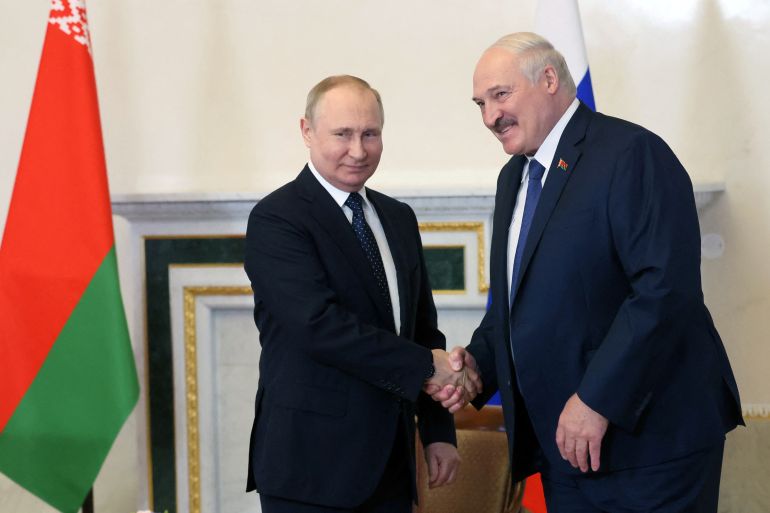
Russia and Belarus have once again drawn international attention after announcing a new round of joint exercises involving forces associated with the deployment and operation of tactical nuclear weapons.
The drill, overseen by Russian President Vladimir Putin and Belarusian leader Alexander Lukashenko, comes at a time of heightened tensions between Russia and NATO, continuing conflict in Ukraine, and growing concerns over military escalation in Eastern Europe.
RECOMMENDED STORIES
The exercise has sparked debate among analysts, diplomats and security experts. Some view it as a political signal aimed at deterring Western support for Ukraine, while others see it as part of a broader effort by Moscow and Minsk to deepen military integration and demonstrate readiness in a rapidly changing security environment.
Below is a detailed FAQ explainer examining the significance of the drill, its geopolitical implications and what it could mean for regional and global security.
What is the joint nuclear drill announced by Russia and Belarus?
The exercise involves military units trained to operate systems capable of delivering tactical nuclear weapons. Although the drills do not necessarily involve the use of actual nuclear warheads, they simulate procedures related to deployment, transportation, command structures and battlefield readiness.
The exercises are designed to test coordination between Russian and Belarusian forces, evaluate command and control mechanisms, and demonstrate operational preparedness under various military scenarios.
Joint drills of this nature have become more frequent since Russia and Belarus intensified defense cooperation following the outbreak of the war in Ukraine in 2022.
What are tactical nuclear weapons?
Tactical nuclear weapons are generally smaller and intended for battlefield use rather than long range strategic deterrence.
Unlike strategic nuclear weapons, which are designed to strike targets thousands of kilometers away and can destroy entire cities, tactical nuclear weapons are intended to affect military formations, infrastructure or specific operational objectives within a limited geographic area.
Military planners often describe them as weapons intended to influence battlefield outcomes rather than determine the fate of entire nations.
However, despite being labeled “tactical,” their destructive potential remains enormous and any use of such weapons would represent a dramatic escalation with potentially global consequences.
Why are Putin and Lukashenko conducting the drill now?
Several factors appear to be driving the timing.
First, the security relationship between Russia and Belarus has become significantly closer over the past several years. Both governments have repeatedly stated that they face growing pressure from NATO and Western countries.
Second, the ongoing conflict in Ukraine continues to shape military planning across the region. Russian officials have frequently criticized Western military assistance to Kyiv, including deliveries of advanced missile systems, air defense systems and long range strike capabilities.
Third, the exercise serves a political messaging function. Military drills involving nuclear capable systems attract global attention and can be used to signal determination, resolve and readiness to adversaries.
Finally, the exercise may be intended to reassure domestic audiences and allied states that Moscow and Minsk remain committed to collective defense arrangements within their regional security framework.
How closely are Russia and Belarus cooperating militarily?
Military cooperation between Russia and Belarus has expanded dramatically during the past decade.
The two countries are formally linked through the Union State framework, which promotes political, economic and military integration.
Joint military exercises occur regularly and include air defense operations, ground force maneuvers, intelligence cooperation and logistics coordination.
Belarus has also allowed Russian forces access to its territory for training, deployments and operational activities.
Since 2022, cooperation has deepened further, with Belarus hosting Russian military assets and participating in expanded defense planning.
Has Russia deployed nuclear weapons in Belarus?
Russia has publicly stated that tactical nuclear weapons have been stationed in Belarus under arrangements agreed between Moscow and Minsk.
According to Russian officials, the weapons remain under Russian control even while being positioned on Belarusian territory.
The deployment marked a significant development because it represented the first time since the collapse of the Soviet Union that Russian nuclear weapons were reportedly stationed outside Russian territory.
Western governments criticized the move, arguing that it increases regional tensions and introduces new security risks.
Russia responded by claiming that the deployment was a defensive measure comparable to arrangements involving nuclear sharing within NATO.
Why is Belarus important in Russia’s security strategy?
Belarus occupies a strategically significant geographic position.
It borders Ukraine, Poland, Lithuania and Latvia, placing it directly between Russia and NATO member states.
Its location makes it a critical transit corridor for military forces and logistics networks.
For Russia, maintaining a close alliance with Belarus helps strengthen its western defense perimeter and provides strategic depth.
For Belarus, security cooperation with Russia offers military support, economic assistance and political backing.
This mutual dependence has become increasingly important amid regional geopolitical tensions.
What message are Russia and Belarus trying to send?
Analysts generally identify several messages.
One message is deterrence. By showcasing nuclear capable military forces, Moscow and Minsk seek to remind potential adversaries of the risks associated with direct confrontation.
Another message concerns alliance solidarity. The exercise demonstrates that Russia and Belarus are prepared to coordinate closely during crises.
A third message is directed toward domestic audiences. Governments often use military exercises to project confidence, strength and preparedness.
Finally, the drill signals that nuclear deterrence remains central to Russian defense strategy despite changing battlefield conditions and evolving international security challenges.
How has NATO reacted to such exercises in the past?
NATO typically monitors Russian and Belarusian military activities closely.
Alliance officials often describe nuclear related exercises as developments requiring careful observation and analysis.
NATO has responded to heightened regional tensions by strengthening its eastern flank, increasing troop deployments, expanding exercises and improving readiness among member states.
Officials generally emphasize that NATO remains a defensive alliance while maintaining the capability to deter threats against member countries.
At the same time, Western governments often express concern that frequent nuclear signaling increases the risk of misunderstanding or miscalculation.
Could the exercise increase tensions in Europe?
Military analysts generally agree that such exercises can contribute to heightened tensions, especially during periods of geopolitical instability.
When nuclear capable systems are involved, public concern often grows because nuclear issues carry unique political and psychological significance.
Even if the exercise is purely defensive in intent, neighboring countries may interpret it differently depending on broader strategic circumstances.
This can contribute to mutual suspicion, increased military preparedness and additional defense spending across the region.
However, large military exercises are common among major powers and do not necessarily indicate imminent conflict.
What risks are associated with nuclear exercises?
The primary concern is miscalculation.
Military movements, public statements and demonstrations of capability can sometimes be misunderstood by other countries.
If one side interprets an exercise as preparation for aggressive action, it may respond with its own military measures, potentially creating a cycle of escalation.
Another risk involves accidents or technical incidents.
Although nuclear capable exercises are conducted under strict procedures, any military activity carries operational risks.
A further concern is the normalization of nuclear rhetoric. Frequent references to nuclear capabilities can make international security environments more unpredictable and increase diplomatic tensions.
How does this relate to the war in Ukraine?
The conflict in Ukraine remains an important backdrop.
Since the beginning of the war, Russian officials have repeatedly highlighted the country's nuclear capabilities when discussing security issues.
Western governments have generally viewed such statements as part of broader strategic messaging.
The deployment of Russian tactical nuclear weapons to Belarus and subsequent exercises are often interpreted within the context of the Ukraine conflict and Russia’s evolving relationship with NATO.
At the same time, both Russia and Belarus insist that their military activities are defensive and intended to protect national security interests.
What is nuclear deterrence?
Nuclear deterrence is the idea that possession of nuclear weapons discourages adversaries from launching attacks because the potential consequences would be unacceptable.
The concept has shaped international security policy for decades.
Supporters argue that deterrence has helped prevent direct wars between major nuclear powers.
Critics contend that reliance on nuclear weapons creates permanent risks and can increase instability during crises.
Russia, the United States, France, the United Kingdom and other nuclear armed states all incorporate deterrence principles into their defense strategies.
How large is Russia’s nuclear arsenal?
Russia possesses one of the world's largest nuclear arsenals.
Together with the United States, it accounts for the overwhelming majority of global nuclear warheads.
The arsenal includes strategic missiles, submarine launched weapons, bomber delivered systems and various tactical capabilities.
Although exact numbers vary depending on definitions and transparency measures, Russia remains a central actor in global nuclear balance calculations.
Its nuclear forces are considered a cornerstone of national defense policy.
Does Belarus possess its own nuclear weapons?
Belarus does not maintain an independent nuclear arsenal.
After the dissolution of the Soviet Union, nuclear weapons located in Belarus were transferred to Russia under international agreements.
Today, Belarus is generally regarded as a non nuclear weapon state under international legal frameworks.
However, the hosting of Russian tactical nuclear weapons has generated renewed debate regarding regional security arrangements and arms control concerns.
How does this affect arms control efforts?
The drill highlights broader challenges facing arms control initiatives.
Many Cold War era agreements have weakened, expired or faced implementation difficulties during recent years.
Trust between major powers has declined significantly.
As military competition increases, negotiations on arms limitations become more complicated.
Experts argue that renewed dialogue regarding transparency, confidence building measures and risk reduction mechanisms may be necessary to prevent misunderstandings and reduce the possibility of escalation.
Could such exercises lead to actual nuclear use?
Most experts believe military exercises themselves do not indicate an intention to use nuclear weapons.
Exercises are common tools for training, readiness assessment and strategic communication.
However, analysts also emphasize that any activity involving nuclear forces deserves careful attention because nuclear weapons carry unique risks.
The overwhelming consensus among governments and security specialists remains that nuclear weapons should never be used in conflict.
Maintaining effective communication channels and crisis management mechanisms is considered essential for reducing risks.
How are neighboring countries likely to respond?
Countries bordering Belarus and Russia are expected to continue monitoring developments closely.
Responses may include increased intelligence gathering, military readiness measures, participation in allied exercises and enhanced coordination with partners.
Governments will also assess whether the exercise represents a temporary demonstration or part of a longer term shift in regional military posture.
Diplomatic engagement is likely to continue alongside military preparedness.
What does the drill reveal about the future security environment in Europe?
The exercise underscores several long term trends.
Military competition between Russia and NATO remains intense.
Nuclear deterrence continues to play a prominent role in strategic calculations.
Regional alliances are becoming increasingly important as countries seek security guarantees in an uncertain environment.
The event also highlights the growing significance of Belarus within the broader European security landscape.
Whether tensions eventually ease or remain elevated will depend on future diplomatic developments, the trajectory of the conflict in Ukraine and the willingness of major powers to engage in meaningful dialogue.
The bottom line
The joint nuclear drill conducted by Vladimir Putin and Alexander Lukashenko represents far more than a routine military exercise. It reflects the deepening defense partnership between Russia and Belarus, ongoing geopolitical tensions across Europe and the enduring importance of nuclear deterrence in contemporary security policy.
While the exercise does not necessarily signal imminent military escalation, it serves as a reminder that nuclear issues remain central to international relations. For policymakers, military planners and ordinary citizens alike, the developments reinforce the importance of transparency, communication and diplomacy in managing risks within an increasingly complex global security environment.
By Faig Mahmudov


Similar news