Why did the Thai and Cambodian leaders meet?


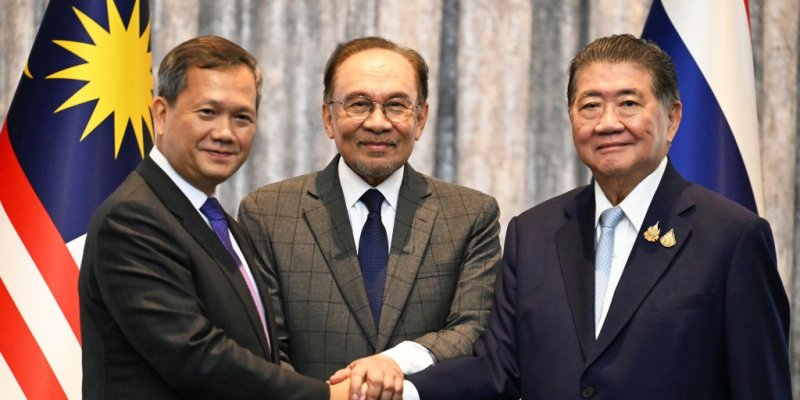
Thailand and Cambodia’s leaders held bilateral talks on the sidelines of ASEAN meetings, drawing attention to growing regional cooperation, economic priorities and geopolitical challenges facing Southeast Asia.
The meeting highlighted efforts by both neighboring countries to strengthen ties while ASEAN countries navigate rising global tensions, economic uncertainty and strategic competition between major world powers.
RECOMMENDED STORIES
The discussions covered a broad range of issues including trade, tourism, border cooperation, infrastructure development and regional security. Analysts say the talks also reflected ASEAN’s increasing importance as member states seek to preserve stability and economic growth in a rapidly changing geopolitical environment.
Below is a detailed FAQ explainer about why the Thai and Cambodian leaders met, what they discussed and why the talks matter for ASEAN and the broader region.
Why did the Thai and Cambodian leaders meet?
The leaders met on the sidelines of ASEAN related meetings to discuss bilateral cooperation and regional developments affecting Southeast Asia.
Such meetings are common during ASEAN summits because they provide opportunities for member states to strengthen diplomatic ties, coordinate policies and address shared concerns.
Thailand and Cambodia share deep economic, cultural and geographical connections, making regular high level discussions important for maintaining stable relations.
What issues were discussed during the talks?
According to officials and regional reports, the discussions focused on several major topics, including:
- Bilateral trade and investment
- Tourism cooperation
- Border management
- Infrastructure connectivity
- Regional security
- ASEAN unity
- Economic integration
The leaders also reportedly discussed broader geopolitical and economic challenges affecting Southeast Asia.
Why is ASEAN important in these discussions?
ASEAN, the Association of Southeast Asian Nations, serves as the main regional organization promoting political, economic and security cooperation among Southeast Asian countries.
The bloc includes:
- Thailand
- Cambodia
- Indonesia
- Malaysia
- Singapore
- Việt Nam
- Philippines
- Laos
- Myanmar
- Brunei
ASEAN meetings provide a platform for leaders to coordinate regional policies and strengthen economic integration.
For countries like Thailand and Cambodia, ASEAN plays a critical role in supporting trade, diplomacy and regional stability.
Why are Thailand and Cambodia economically important to each other?
Thailand and Cambodia maintain close economic ties through trade, labor movement, tourism and investment.
Thailand is one of Cambodia’s major trading partners and investors, while many Cambodian workers are employed in Thailand’s economy.
Cross border trade and transportation links are especially important for both countries’ economic development.
Improving connectivity between the two nations is often viewed as a priority for boosting tourism, commerce and regional supply chains.
What role does tourism play in their relationship?
Tourism remains one of the strongest areas of cooperation between Thailand and Cambodia.
Both countries are major destinations in Southeast Asia and benefit from regional tourism flows involving international visitors traveling across multiple ASEAN states.
Joint tourism promotion, easier border crossings and transportation connectivity are frequently discussed during bilateral meetings.
Tourism cooperation became even more important after the economic damage caused by the COVID 19 pandemic across Southeast Asia.
Were security issues part of the discussions?
Yes. Regional security and border management were reportedly among the key issues discussed.
Thailand and Cambodia occasionally cooperate on issues involving:
- Illegal trafficking
- Cross border crime
- Smuggling
- Cybercrime
- Migration control
- Border stability
ASEAN countries are also increasingly focused on cybersecurity and transnational organized crime as digital threats grow across the region.
Do Thailand and Cambodia have border disputes?
Thailand and Cambodia have experienced border tensions in the past, particularly around disputed territory near the Preah Vihear temple area.
Although military clashes occurred years ago, relations between the two countries have generally improved through diplomatic dialogue and ASEAN mechanisms.
Modern bilateral meetings usually focus on cooperation and preventing future tensions rather than escalating disputes.
Why are ASEAN countries emphasizing unity now?
ASEAN members are facing growing geopolitical pressure due to increasing rivalry between major global powers, especially the United States and China.
Southeast Asia has become strategically important because of:
- Trade routes
- Supply chains
- Technology competition
- Maritime security
- Energy interests
ASEAN countries often stress “ASEAN centrality,” meaning the bloc wants to maintain independence and avoid becoming divided by outside powers.
Unity is viewed as essential for protecting regional stability and economic growth.
How does China influence ASEAN politics?
China is one of ASEAN’s largest economic partners and has enormous influence across Southeast Asia through trade, infrastructure investment and manufacturing supply chains.
At the same time, some ASEAN countries remain cautious about Beijing’s growing regional power, particularly regarding disputes in the South China Sea.
Thailand and Cambodia maintain relatively strong relations with China, though each country balances its foreign policy differently.
Meetings like this often involve discussions about managing external geopolitical pressures carefully.
What role does the United States play in the region?
The United States remains a major strategic and economic actor in Southeast Asia.
Washington has increased engagement with ASEAN countries in recent years through:
- Defense partnerships
- Trade initiatives
- Technology cooperation
- Security dialogues
ASEAN countries generally try to maintain balanced relations with both China and the United States without choosing sides directly.
Why are infrastructure projects important for Thailand and Cambodia?
Infrastructure connectivity is considered vital for economic integration within ASEAN.
Projects involving roads, railways, ports and logistics systems can improve:
- Trade efficiency
- Tourism
- Supply chains
- Regional investment
- Cross border transportation
Thailand plays an important role as a regional logistics hub, while Cambodia continues expanding infrastructure to support economic growth.
Greater connectivity could benefit both economies significantly.
How does this meeting affect regional stability?
High level diplomatic talks help reduce tensions, strengthen cooperation and improve communication between neighboring countries.
In Southeast Asia, stable bilateral relations are especially important because ASEAN’s overall unity depends heavily on cooperation among member states.
The Thailand–Cambodia meeting signals continued commitment to dialogue and regional coordination during a period of global uncertainty.
What economic challenges are ASEAN countries facing?
ASEAN economies currently face several major challenges, including:
- Global inflation
- Supply chain disruptions
- Slower global growth
- Energy price volatility
- Geopolitical uncertainty
- Competition for foreign investment
Countries across Southeast Asia are trying to attract manufacturing investment while adapting to changes in global trade patterns.
Regional cooperation is increasingly seen as necessary for maintaining economic resilience.
Could ASEAN become more influential globally?
Many analysts believe ASEAN’s global importance is continuing to grow.
Southeast Asia has become one of the world’s most dynamic economic regions due to:
- Young populations
- Expanding middle classes
- Manufacturing growth
- Strategic trade routes
- Digital economy expansion
ASEAN’s combined economy already ranks among the world’s largest, and its geopolitical importance continues increasing as major powers compete for influence in the Indo Pacific region.
Why are bilateral meetings during ASEAN summits significant?
Although ASEAN summits focus on regional issues, side meetings between leaders often produce important diplomatic and economic agreements.
These discussions allow countries to address sensitive bilateral issues privately while strengthening political relationships.
For Thailand and Cambodia, maintaining close dialogue helps support broader regional stability and economic cooperation.
What happens next after the talks?
Following such meetings, officials from both countries typically continue discussions through diplomatic, economic and technical working groups.
Future cooperation could involve:
- Expanded trade initiatives
- Tourism agreements
- Infrastructure projects
- Border cooperation measures
- Security coordination
ASEAN meetings also provide momentum for future bilateral engagement throughout the year.
Conclusion
The talks between Thai and Cambodian leaders on the sidelines of ASEAN meetings reflect the growing importance of regional cooperation in Southeast Asia during a period of rising geopolitical and economic uncertainty.
By focusing on trade, tourism, infrastructure and security cooperation, both countries signaled their commitment to strengthening bilateral ties while supporting ASEAN unity and regional stability.
As Southeast Asia becomes increasingly important in global politics and economics, meetings like these are expected to play a larger role in shaping the future of regional diplomacy and economic integration.
By Faig Mahmudov


Similar news