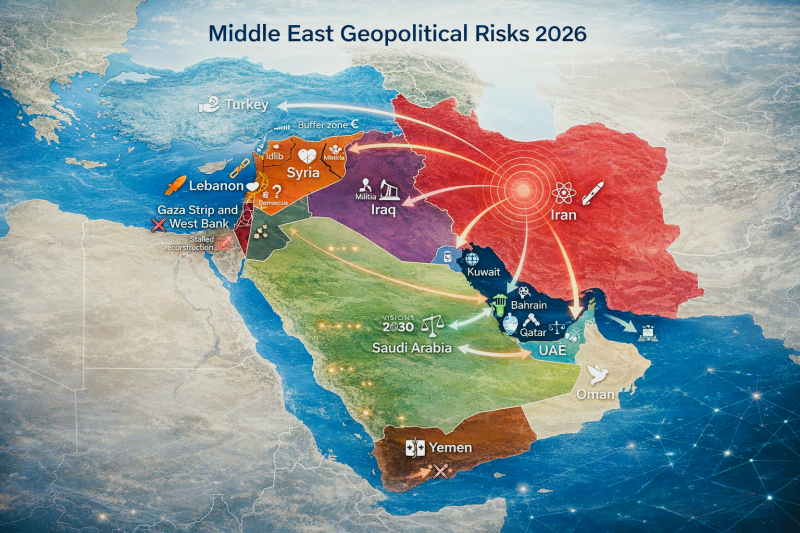
Unlike isolated conflicts of the past, the current situation is characterized by interconnected crises across multiple countries, including Syria, Iraq, Yemen, and Lebanon. These theaters are not independent but part of a broader geopolitical contest for influence, security, and regional order.
The convergence of these tensions increases the likelihood that a localized incident could escalate into a wider regional conflict.
Why is the risk of a wider regional war increasing now
The risk is rising because multiple fronts are active simultaneously. In previous years, tensions were often contained within specific zones. Now, developments in one country quickly affect others.
Military actions, including airstrikes, drone attacks, and missile launches, are becoming more frequent. Political rhetoric has also hardened, reducing space for compromise.
Another critical factor is the erosion of deterrence. When red lines are tested repeatedly without decisive consequences, actors may feel emboldened to take greater risks.
What role do proxy groups play in regional instability
Proxy groups are central to the Middle East’s security landscape. Iran has developed a network of allied armed groups across the region that extend its influence without direct confrontation.
One prominent example is the Hezbollah, which operates in Lebanon and has significant military capabilities. In Yemen, the Houthi movement has demonstrated the ability to target regional infrastructure and maritime routes.
These groups allow Iran to project power indirectly, complicating the strategic environment. For opposing actors, responding to proxy attacks without escalating into direct war presents a major challenge.
How are Israel and Iran shaping the conflict dynamics
Israel and Iran represent the central axis of confrontation in the region. Israel views Iran’s regional expansion and nuclear ambitions as existential threats. Iran, in turn, sees Israel as a key adversary aligned with Western influence.
This rivalry is expressed through indirect conflict, including airstrikes in Syria, cyber operations, and intelligence activities. Direct confrontation is avoided but remains a constant risk.
Both sides are attempting to maintain deterrence while avoiding a full scale war, creating a fragile and unstable balance.
What role does the United States play in the region
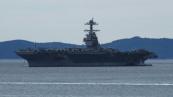
The United States remains a major security actor in the Middle East, with military bases, naval forces, and strategic partnerships across the region.
Its objectives include protecting allies, ensuring the security of energy routes, and preventing the spread of conflict. US forces have been involved in responding to attacks by regional militias and in deterring broader escalation.
However, the United States is also seeking to avoid being drawn into another large scale war, leading to a calibrated approach that balances deterrence with restraint.
How could maritime security become a flashpoint
Maritime routes in the Middle East are highly sensitive and strategically vital. Areas such as the Persian Gulf and the Red Sea are critical for global trade and energy transport.
Attacks on commercial shipping, whether through drones, missiles, or naval actions, can quickly escalate tensions. Such incidents not only affect regional actors but also draw in global powers due to their economic impact.
Ensuring freedom of navigation has become a key priority, but it also increases the risk of confrontation.
What are the economic implications of rising tensions
Rising tensions in the Middle East have direct and indirect economic consequences. Energy markets are particularly sensitive, with oil and gas prices reacting to perceived risks.
Higher energy prices contribute to global inflation, affecting consumers and industries worldwide. Trade routes may also be disrupted, increasing shipping costs and delays.
Investment in the region can decline due to uncertainty, slowing economic development and recovery.
Is a full scale regional war likely
A full scale regional war is possible but not inevitable. Most actors are aware of the severe consequences such a conflict would bring.
However, the complexity of the current situation increases the risk of unintended escalation. A single major incident, such as a large scale attack or miscalculation, could trigger a chain reaction.
The presence of multiple armed groups and external powers makes containment more difficult than in the past.
How are regional powers responding to the situation
Regional powers are adopting a mix of defensive and diplomatic strategies. Some countries are strengthening their military capabilities and security cooperation.
At the same time, there are efforts to reduce tensions through dialogue and normalization agreements. These initiatives aim to create a more stable regional environment.
However, competing interests and deep rooted mistrust continue to limit progress.
What role does technology play in the evolving conflict
Technology is transforming the nature of conflict in the Middle East. Drones, precision missiles, and cyber capabilities are increasingly used by both state and non state actors.
These technologies lower the cost of conflict and enable smaller actors to have a significant impact. They also increase the speed and unpredictability of escalation.
The proliferation of such tools makes the region more volatile and harder to stabilize.
How could global powers be drawn into the conflict
Global powers have strategic interests in the Middle East, particularly related to energy security and geopolitical influence. Escalation in the region could draw them in directly or indirectly.
For example, attacks on international shipping or critical infrastructure could prompt military responses from outside the region. Alliances and partnerships may also lead to broader involvement.
This increases the stakes of any potential conflict, making it a global concern.
What scenarios could unfold in the near future
Several scenarios are possible. The most likely is continued low intensity conflict across multiple fronts, with periodic escalations.
Another scenario involves a significant incident that triggers a rapid escalation, potentially involving multiple countries. The least likely but most severe scenario is a full scale regional war.
Each scenario carries different implications for security, economics, and global stability.
Why does the Middle East conflict risk matter globally
The Middle East remains central to global energy supply and trade routes. Instability in the region has immediate global repercussions.
Beyond economics, the region’s conflicts influence migration, security policies, and international relations. They also shape the broader geopolitical landscape.
Understanding these risks is essential for anticipating global developments.
Conclusion
The Middle East is entering a period of heightened risk, where multiple conflicts and rivalries intersect. The potential for escalation is higher than in recent years, driven by complex and interconnected factors.
While a full scale war may still be avoided, the margin for error is shrinking. Managing this environment requires careful balancing of deterrence, diplomacy, and strategic restraint.
The coming months will be critical in determining whether the region moves toward greater stability or deeper conflict.