Why European leaders have gathered in Armenia


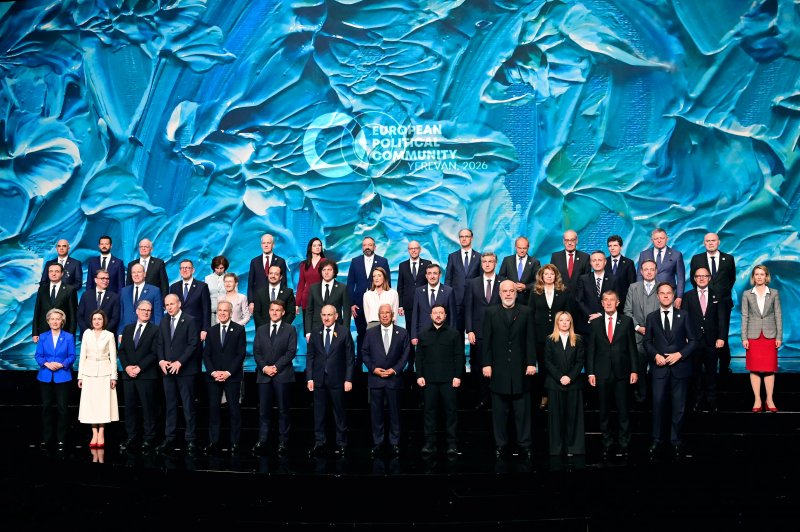
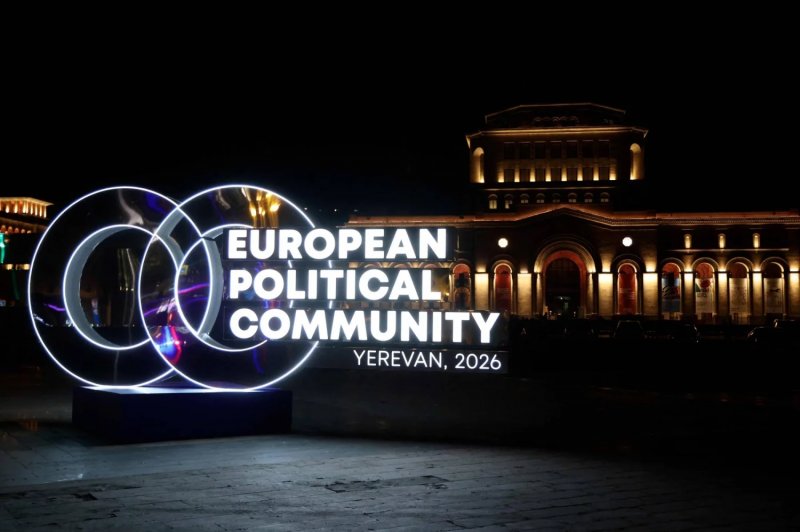
Today, Yerevan has found itself at the center of major European politics. The Armenian capital is hosting the eighth summit of the European Political Community — a format that brings together leaders of EU member states and non-EU countries to discuss security, the economy, energy, connectivity, and the future of the European continent. The official motto of this year’s meeting is “Building the Future: Unity and Stability in Europe.”
At first glance, this may appear to be just another international summit. In reality, however, the meeting in Yerevan carries a much deeper political meaning. For Armenia, it is not merely a diplomatic event, but an attempt to consolidate its new foreign policy course. For the European Union, it is an opportunity to demonstrate that the South Caucasus is no longer viewed as a peripheral region. For Russia, it is a troubling signal that one of its traditional allies is increasingly seeking support in the West. And for the region as a whole, it is an indication that the struggle for influence in the South Caucasus is entering a new phase.
The main reason European leaders have gathered specifically in Yerevan is the desire to show political support for Armenia. The choice of venue is not accidental. After the developments of recent years, Yerevan has been increasingly distancing itself from Moscow and seeking to build closer ties with Brussels. Against this backdrop, the very fact that such a major European forum is being held in the Armenian capital becomes a powerful symbol: Europe is demonstrating that it is ready to see Armenia as part of a broader European political architecture.
RECOMMENDED STORIES
According to Euronews, leaders from nearly 50 countries have arrived in Yerevan, including Canadian Prime Minister Mark Carney. Canada’s participation is particularly noteworthy: this is the first time a non-European country has taken part in a European Political Community summit. This expands the significance of the forum, turning it not only into a European platform, but also into a broader Western venue for political coordination.
The second reason is the security of the South Caucasus. Europe is closely watching the process of normalization between Armenia and Azerbaijan, including issues related to borders, transport routes, and regional stability. For Brussels, the South Caucasus has long ceased to be merely a post-Soviet space. It is a region through which Europe’s energy, trade, and logistics interests pass. Therefore, any discussion of Armenia’s security is inevitably linked to the future of the entire region.
The third reason is Europe’s attempt to strengthen its ties with Armenia at the institutional level. Immediately after the European Political Community summit, Yerevan is hosting the first-ever EU–Armenia summit on May 4–5. The European Union is represented by European Council President António Costa and European Commission President Ursula von der Leyen, while Armenia is represented by Prime Minister Nikol Pashinyan. This is no longer simply a gesture of support; it marks a transition in relations to a new political level.
The fourth reason is support for Pashinyan’s course toward rapprochement with the West. In recent years, Armenia has been undergoing a difficult reassessment of its foreign policy. Dissatisfaction with Russia’s role after the 2020 war and the events of 2023 has strengthened demand in Yerevan for new security guarantees and new international partnerships. The Guardian has reported that the EU is sending a team of 20–30 experts to Armenia to help counter Russian propaganda, cyberattacks, and foreign interference, particularly ahead of the upcoming parliamentary elections.
The fifth reason is transport and energy corridors. The official agenda of the summit includes three key areas: strengthening democratic resilience, developing connectivity — meaning transport, digital, and infrastructure links — and enhancing economic and energy security. For Europe, this is extremely important. After the war in Ukraine and the energy crisis, the EU has been searching for new routes, new partnerships, and new strategic footholds. In this context, the South Caucasus is becoming one of the key nodes connecting Europe, the Black Sea, the Caspian region, Central Asia, and the Middle East.
The sixth reason is the effort to counter Russian influence. The summit in Yerevan is taking place at a time when relations between Armenia and Russia remain tense. Formally, Armenia is still linked to Russian-led integration structures, but politically Yerevan is increasingly signaling its intention to move in a European direction. Reuters previously reported that in 2025 Armenian President Vahagn Khachaturyan signed a law launching the country’s process of moving toward integration with the EU, although Pashinyan stressed that this did not amount to a formal application for membership.
The seventh reason is Ukraine and the new European security architecture. The Yerevan summit has become a platform not only for the Armenian agenda. According to Reuters, British Prime Minister Keir Starmer is expected to announce at the summit London’s readiness to begin talks on joining the European Union’s loan package for Ukraine, worth around €90 billion, or $106 billion. This shows that the Yerevan summit is being used as a space to discuss not only the South Caucasus, but also the future structure of European defense.
The eighth reason is Armenia’s desire to raise its international profile. For Yerevan, hosting such a summit is a diplomatic success. Armenia has the opportunity, for several days, to become the venue where European security, Ukraine, Russia, energy, transport routes, and the future of EU relations with neighboring regions are discussed. This sharply increases the country’s political visibility and allows Pashinyan to show the domestic audience that Armenia is not isolated, but is in demand on the international stage.
It is also noteworthy that the summit is taking place ahead of an important political period inside Armenia itself. The Guardian notes that parliamentary elections in the country are scheduled for June 7, while the EU is increasing its support for Yerevan in countering disinformation and external interference. This means European leaders are viewing the Armenian case not only as a foreign policy issue, but also as a matter of democratic resilience.
For Azerbaijan, this summit is also of considerable importance. Any strengthening of the European presence in Armenia inevitably affects the regional balance. On the one hand, Europe is interested in stability and a peace agreement between Baku and Yerevan. On the other hand, active support for Armenia by European structures may raise questions about Brussels’ impartiality in regional processes. That is why Baku will be watching closely not only the statements, but also the practical decisions that may follow from the meetings.
The role of France and Paris’ presence deserve separate attention. France has traditionally been an active supporter of Armenia, and in the context of a broader European summit, this adds further political sensitivity to the event. For Baku, the French factor remains one of the most complicated aspects of relations with European institutions, as Paris often takes an openly pro-Armenian position. Therefore, the summit in Yerevan may be perceived not only as a pan-European forum, but also as part of a wider diplomatic game around the South Caucasus.
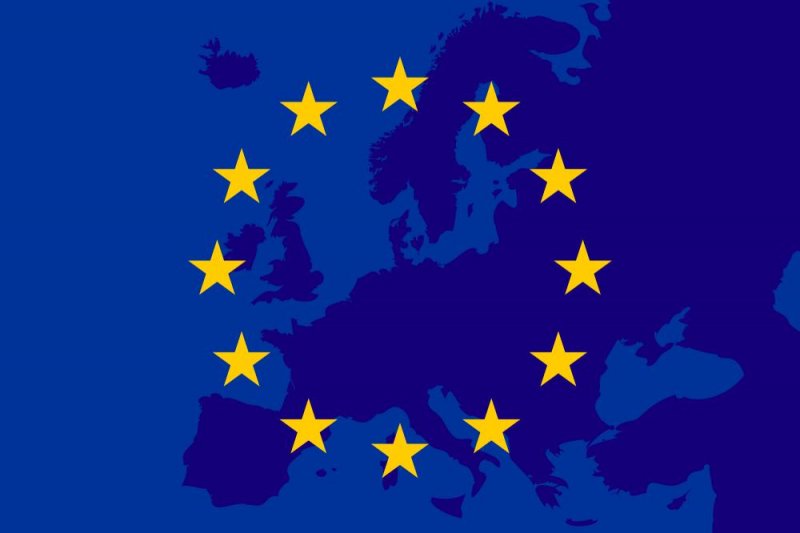
However, it would be a mistake to view this meeting only through the prism of Armenia–Russia or Armenia–Azerbaijan relations. The European Political Community was created after the outbreak of the war in Ukraine as a platform for broader dialogue among European countries. Its purpose is to discuss issues that go beyond the EU framework: security, energy, migration, infrastructure, state resilience, cyber threats, and new geopolitical risks. In this sense, Yerevan today has become not merely a host city, but a symbolic point where several crisis lines of modern Europe intersect.
The main conclusion is already clear: the summit in Yerevan is a powerful political signal. Europe is demonstrating that it is ready to work more actively in the South Caucasus. Armenia is showing that it seeks deeper rapprochement with the West. Russia is receiving a signal that its influence in the region is gradually weakening. Azerbaijan is carefully assessing how this new European activism may affect the peace process and the broader regional architecture.
That is why the meeting in Yerevan is not merely diplomatic protocol. It is a moment when the South Caucasus, for the first time in a long while, has found itself at the center of a major European strategy. For Armenia, this is a chance to consolidate a new foreign policy course. For Europe, it is an attempt to expand its influence in the region. And for the entire South Caucasus, it marks the beginning of a new stage in which competition among external centers of power is likely to intensify.
By Tural Heybatov


Similar news