Why global trade depends on stable geopolitics!?


Global trade is the backbone of the modern economy, linking nations through flows of goods, energy, capital, and technology, News.Az reports.
Every day, trillions of dollars’ worth of cargo cross oceans, borders, and digital networks to sustain industries and feed populations. Yet behind this system of exchange lies an essential condition: stability. Without predictable political relations, functioning alliances, and secure trade routes, the machinery of global commerce begins to break down. Geopolitical stability is not just a backdrop to trade—it is the framework that makes trade possible.
The foundation of trust and predictability
Trade thrives on confidence. Companies invest, sign contracts, and plan logistics based on the assumption that tomorrow will look roughly like today. Geopolitical stability provides this predictability. When nations maintain peaceful relations, honor international agreements, and protect property rights, businesses can take risks and build long-term partnerships.
Unstable geopolitics—wars, sanctions, or diplomatic breakdowns—destroys that trust. When borders close or sanctions rise, companies lose access to markets, suppliers, and payment systems. Political unpredictability discourages investment, disrupts supply chains, and forces firms to relocate production. The trade slowdown following the Russia–Ukraine conflict showed how regional instability can ripple across the world, causing fuel shortages, food price spikes, and shipping delays far beyond the war zone.
Supply chains and chokepoints under pressure
Modern supply chains are global and fragile. A single disruption in one region can paralyze entire industries elsewhere. Stable geopolitics ensures that trade routes remain open and shipping lanes secure. When political tensions flare, those routes become vulnerable.
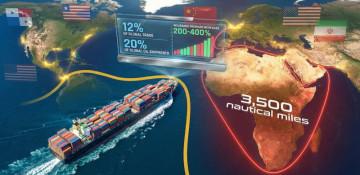
The Strait of Hormuz, through which nearly one-fifth of the world’s oil passes, and the South China Sea, which carries about 30 percent of global trade, are examples of geopolitical chokepoints. Even minor incidents in these regions can send shockwaves through global markets. Similarly, conflict in the Red Sea or sanctions affecting key transit zones can reroute or delay maritime transport, raising insurance costs and commodity prices. Stability along these corridors allows goods to move efficiently; instability turns them into flashpoints that threaten global supply.
Economic interdependence and global growth
Geopolitical stability is also vital because it underpins economic interdependence—the principle that nations prosper more when they trade than when they fight. Stable political relations encourage regional trade agreements, free-trade zones, and the integration of economies. When these ties expand, countries become less likely to resort to conflict because their prosperity depends on mutual exchange.
In contrast, geopolitical rivalry leads to fragmentation. Trade blocs become weaponized, tariffs rise, and supply chains split along political lines. The recent decoupling between the United States and China has demonstrated this danger. Companies have been forced to redesign production networks, moving factories or creating “China-plus-one” strategies to reduce exposure to risk. Such shifts increase costs, slow innovation, and reduce the efficiency that global trade once promised.
Energy security and resource flows
Energy is the lifeblood of trade—and it depends heavily on stable geopolitics. Oil, gas, and critical minerals often come from politically sensitive regions. When conflict erupts or sanctions disrupt energy markets, the effects are immediate: fuel prices rise, transportation costs soar, and inflation spreads.
The Russia–Ukraine war is a prime example. Europe’s reliance on Russian gas exposed how geopolitical conflict can upend entire economic systems. Similarly, tensions in the Middle East or between China and Taiwan could threaten the flow of energy and semiconductor components, both essential to global manufacturing. Stable political relations, in contrast, allow energy to flow freely, keeping supply chains and production stable worldwide.
Technology, sanctions, and trade fragmentation
In the digital age, geopolitical competition increasingly centers on technology. Nations are racing to secure dominance in semiconductors, artificial intelligence, and critical materials. Trade restrictions, sanctions, and export controls have become common geopolitical tools. But these measures also fracture global trade, forcing companies to choose sides and disrupting innovation networks that once spanned continents.
For instance, restrictions on advanced chip exports to certain countries have reshaped entire technology ecosystems. Without geopolitical coordination, innovation slows, costs rise, and global progress becomes uneven. Stability enables cooperation—through shared standards, research partnerships, and investment flows—that drives long-term technological and economic growth.
The human cost of instability
Geopolitical crises do not only affect governments or corporations—they affect people. When trade collapses, jobs vanish, food and fuel prices rise, and poverty spreads. Developing nations, which depend heavily on open markets and affordable imports, suffer the most. Global trade has lifted billions out of poverty over the past three decades, but that progress depends on peace and cooperation.
Refugee crises, currency instability, and disrupted logistics often follow conflict. The humanitarian costs of war—combined with inflation and supply shortages—undermine the economic stability that trade is meant to promote. Peaceful international relations, by contrast, give nations the breathing space to invest in education, innovation, and welfare.
Conclusion
Global trade is a living system that relies on political order, mutual trust, and secure connections. Stable geopolitics keeps sea lanes open, protects investment, and ensures that the rules of commerce remain predictable. Instability, by contrast, fragments economies, raises costs, and spreads fear through markets.
As the world becomes more interconnected, the link between geopolitics and trade grows tighter. A single regional conflict or diplomatic crisis can now disrupt global production, shipping, and finance within days. That is why lasting prosperity depends not only on economic policy but also on diplomacy, cooperation, and peace. Stable geopolitics is the invisible infrastructure that allows the global economy to function—and without it, trade cannot survive.


Similar news