Why has the Africa CDC confirmed an Ebola outbreak in Congo’s Ituri province?


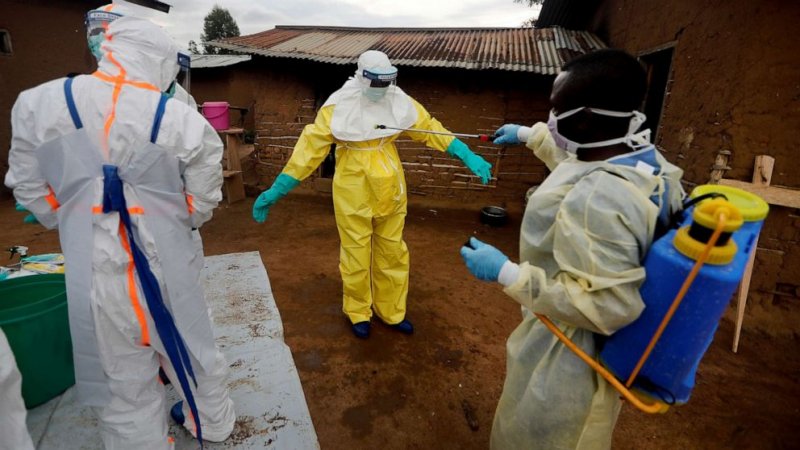
The Africa Centres for Disease Control and Prevention has confirmed a new Ebola outbreak in eastern Democratic Republic of Congo, raising concerns about another resurgence of one of the world’s deadliest viral diseases.
According to health authorities, the outbreak was identified in Ituri Province, a region that has experienced repeated Ebola outbreaks in recent years because of weak healthcare infrastructure, conflict, population displacement, and difficult access to remote communities.
RECOMMENDED STORIES
The confirmation triggered immediate emergency response measures from Congolese authorities, Africa CDC, and international health agencies seeking to contain the virus before it spreads further.
Officials said surveillance teams, contact tracing units, laboratory experts, and vaccination teams were being mobilized to the affected areas.
The Democratic Republic of Congo has experienced more Ebola outbreaks than any other country in the world, largely because the virus is believed to circulate naturally in animal reservoirs in Central African forests.
The latest outbreak has revived fears of renewed public health instability in eastern Congo, a region already struggling with armed violence, humanitarian crises, and limited medical resources.
What is Ebola?
Ebola is a severe and often fatal viral disease that causes hemorrhagic fever in humans.
The illness is caused by the Ebola virus, which spreads through direct contact with bodily fluids of infected individuals or contaminated materials.
Symptoms often begin suddenly and may include fever, fatigue, muscle pain, headaches, vomiting, diarrhea, and internal or external bleeding in severe cases.
Ebola can spread rapidly in communities and healthcare settings if infection control measures are weak.
The disease has one of the highest fatality rates among infectious viruses, although survival rates improve significantly with early medical treatment and supportive care.
Vaccines and treatments developed in recent years have improved outbreak management compared to earlier epidemics.
Where is Ituri province?
Ituri Province is located in northeastern Democratic Republic of Congo near the border with Uganda.
The province has faced years of instability linked to armed conflict, displacement, and humanitarian challenges.
Many communities in the region live in remote areas with limited access to healthcare and transportation infrastructure.
These conditions make disease surveillance and outbreak response more difficult.
Ituri has also experienced previous Ebola cases and other infectious disease outbreaks in recent years.
The combination of insecurity and poor infrastructure often complicates emergency medical operations.
How was the outbreak discovered?
Health authorities detected suspected Ebola cases after patients developed symptoms consistent with hemorrhagic fever.
Laboratory testing later confirmed Ebola virus infection.
Once confirmation was received, emergency response protocols were activated.
These include isolating infected patients, identifying close contacts, increasing surveillance, and deploying vaccination teams where possible.
Authorities are also investigating how the outbreak began and whether additional infections may already exist in surrounding communities.
How dangerous is Ebola?
Ebola is considered one of the world’s most dangerous infectious diseases because of its high mortality rate and potential for rapid spread in vulnerable healthcare systems.
Fatality rates vary depending on the Ebola strain, healthcare access, and speed of treatment.
Some outbreaks historically recorded mortality rates exceeding 50 percent.
However, modern vaccines, improved treatment protocols, and faster outbreak responses have significantly improved survival rates in recent years.
Even so, Ebola outbreaks remain major public health emergencies because the virus spreads through close human contact and can overwhelm fragile health systems.
How does Ebola spread?
Ebola spreads through direct contact with blood, bodily fluids, or tissues of infected people or animals.
The virus can also spread through contaminated objects such as medical equipment, bedding, or clothing.
Family caregiving and burial practices involving direct contact with bodies have historically contributed to transmission during outbreaks.
Unlike airborne diseases such as COVID 19, Ebola generally requires close physical contact for transmission.
Healthcare workers are often at elevated risk if proper protective equipment is unavailable or infection control procedures are inadequate.
Why does Congo experience so many Ebola outbreaks?
Democratic Republic of the Congo has experienced multiple Ebola outbreaks because the virus is believed to naturally exist in animal populations within Central African forests.
Human infections can occur after contact with infected wildlife, including bats or primates.
Congo’s vast rainforest regions create ongoing risks of zoonotic transmission from animals to humans.
The country also faces major structural challenges including weak healthcare infrastructure, poverty, conflict, displacement, and limited transportation networks.
These factors make outbreak detection and containment more difficult.
Eastern Congo in particular has repeatedly struggled with overlapping crises involving armed groups, humanitarian emergencies, and infectious disease outbreaks.
Could the outbreak spread internationally?
At this stage, health authorities have not indicated evidence of widespread international transmission.
However, neighboring countries and international agencies are closely monitoring the situation.
Past Ebola outbreaks demonstrated that cross border spread is possible, especially in regions with population movement and porous borders.
Uganda, Rwanda, South Sudan, and other neighboring countries may increase border screening and surveillance measures.
International health organizations are working to strengthen regional preparedness to reduce the risk of broader spread.
Modern outbreak response systems are generally faster and more coordinated than during earlier Ebola epidemics.
Are vaccines available for Ebola?
Yes. Effective Ebola vaccines now exist and have become important tools in outbreak response.
Health agencies often use “ring vaccination” strategies, where close contacts of infected individuals and frontline healthcare workers are vaccinated to contain transmission chains.
Vaccines significantly improved global capacity to control Ebola compared to earlier decades when no approved vaccines existed.
In addition to vaccines, supportive treatments and monoclonal antibody therapies have improved survival rates.
However, rapid deployment remains challenging in remote or insecure regions.
Why are health officials concerned about conflict zones?
Armed conflict creates major obstacles for outbreak control.
Insecurity can prevent healthcare workers from reaching affected communities safely.
Violence may also damage medical infrastructure, interrupt vaccination campaigns, and discourage residents from seeking treatment.
Distrust of authorities can further complicate public health efforts.
During previous Ebola outbreaks in eastern Congo, attacks on treatment centers and medical personnel severely disrupted response operations.
Health officials therefore worry that instability in Ituri could hamper containment efforts.
What is Africa CDC doing?
The Africa Centres for Disease Control and Prevention is coordinating with Congolese authorities and international partners to support outbreak response operations.
This includes surveillance, laboratory testing, emergency coordination, contact tracing, and technical assistance.
Africa CDC has increasingly expanded its role in responding to infectious disease emergencies across the continent.
The organization works closely with national governments, the World Health Organization, and regional health agencies during outbreaks.
Could this become another major Ebola epidemic?
It is still too early to determine the full scale of the outbreak.
Health officials are attempting rapid containment precisely to prevent wider spread.
The situation differs significantly from the devastating West Africa Ebola epidemic of 2014 to 2016 because vaccines, treatments, and response systems are now much stronger.
However, Ebola outbreaks remain unpredictable, especially in areas affected by conflict and weak infrastructure.
Much will depend on how quickly authorities identify cases, isolate patients, trace contacts, and vaccinate at risk populations.
What happens next?
Health authorities are expected to continue surveillance, testing, contact tracing, and vaccination operations in affected communities.
Additional cases may still emerge as investigators track people exposed to infected individuals.
Neighboring regions and countries will likely increase preparedness measures while monitoring for cross border transmission.
International agencies are also expected to provide logistical, medical, and technical support.
For now, officials are emphasizing rapid containment while urging communities to cooperate with health measures designed to stop the outbreak from spreading further.
By Faig Mahmudov


Similar news