Why Iran’s nuclear program remains a global security issue


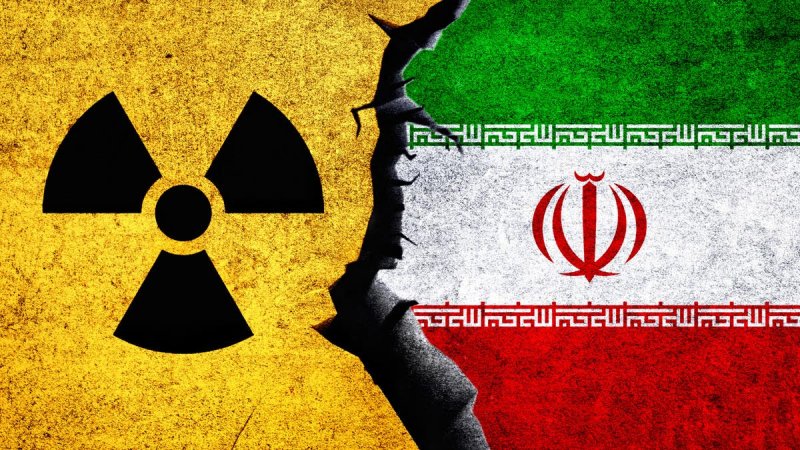
For more than two decades, Iran’s nuclear program has been at the center of international diplomacy, geopolitical tension and strategic competition among major powers, News.Az reports.
It influences Middle Eastern security, global energy markets, regional alliances and the broader non-proliferation system that seeks to prevent the spread of nuclear weapons. Although headlines fluctuate, the fundamental questions surrounding Iran’s nuclear ambitions remain the same: what is Iran trying to achieve, why does the world care, and how might this issue shape future geopolitical dynamics? This evergreen explainer examines the origins, evolution and long-term implications of the Iran nuclear issue.
Historical origins: the development of Iran’s nuclear ambitions
Iran’s nuclear program began in the 1950s under the U.S.-backed “Atoms for Peace” initiative, when the Shah of Iran sought to modernize the country. The United States provided Iran with its first research reactor in 1967. Iran also signed the Nuclear Non-Proliferation Treaty (NPT) in 1968, committing not to develop nuclear weapons.
After the 1979 Islamic Revolution, the program slowed but gradually re-emerged in the 1980s and 1990s, supported by scientific exchanges with Russia, Pakistan and China. Iran insisted it aimed to develop nuclear energy for peaceful purposes, including electricity generation and medical research. However, Western governments increasingly suspected that Iran was secretly pursuing weapons capabilities.
Suspicion intensifies: the 2002 revelations
The international crisis began in 2002 when Iranian dissidents revealed previously undisclosed nuclear facilities at Natanz and Arak. These sites indicated enrichment and heavy-water production activities beyond what Iran declared to the International Atomic Energy Agency (IAEA). Enriched uranium is essential for both civilian reactors and nuclear weapons, depending on the enrichment level.
The secrecy heightened global concern that Iran’s civilian program might be masking military intentions.
Key concerns for the international community
Several issues have shaped international suspicion:
-
uranium enrichment capabilities – Iran has developed thousands of centrifuges capable of enriching uranium to levels closer to weapons-grade.
-
plutonium pathways – the heavy-water reactor at Arak could theoretically produce plutonium suitable for weapons if reconfigured.
-
ballistic missile development – Iran’s missile program provides delivery systems that could theoretically carry nuclear payloads.
-
past nuclear research with military dimensions – IAEA investigations documented studies potentially linked to weapons design.
Iran denies pursuing nuclear weapons, citing religious and strategic reasons, but global concerns persist due to technical capabilities and opaque decision-making.
Sanctions era: pressure builds through economic isolation
Beginning in the mid-2000s, the United Nations, United States and European Union imposed extensive sanctions on Iran, targeting:
-
oil exports
-
banking transactions
-
foreign investment
-
industrial equipment
-
arms trade
These sanctions severely restricted Iran’s economy, reducing government revenue, weakening its currency and limiting access to international markets. The economic pressure eventually pushed Iran toward diplomatic negotiations.
The 2015 Joint Comprehensive Plan of Action (JCPOA)
The landmark nuclear agreement, reached in July 2015 between Iran and the P5+1 (United States, United Kingdom, France, Germany, Russia and China), sought to limit Iran’s nuclear capabilities in exchange for sanctions relief.
Key provisions included:
-
reducing enriched uranium stockpiles by 98 percent
-
limiting enrichment levels to 3.67 percent (far below weapons-grade)
-
cutting centrifuges by two-thirds
-
redesigning the Arak reactor
-
allowing unprecedented IAEA inspections
In return, Iran received relief from nuclear-related sanctions, enabling renewed oil exports and financial transactions.
Supporters viewed the JCPOA as the best available mechanism to prevent Iran from obtaining a nuclear weapon. Critics argued it was temporary, allowed Iran to keep enrichment infrastructure and failed to address ballistic missiles or regional activities.
The 2018 U.S. withdrawal and renewed tensions
In May 2018, the United States withdrew from the JCPOA and reimposed sweeping sanctions under a “maximum pressure” campaign. The move redefined the geopolitical landscape:
-
Iran’s oil exports fell dramatically
-
foreign companies left Iranian markets
-
Iran turned to regional partners and clandestine channels for economic survival
-
diplomatic trust between Tehran and Washington collapsed
In response, Iran gradually reduced its JCPOA commitments.
Iran’s post-2019 nuclear escalation
Starting in 2019, Iran began expanding its program beyond JCPOA limits:
-
enriching uranium up to 20 percent, then 60 percent
-
installing advanced centrifuge models
-
increasing stockpiles of enriched uranium
-
restricting IAEA access and surveillance cameras
While Iran still claims it does not seek nuclear weapons, its technical “breakout time”—the period needed to produce enough fissile material for a bomb—shortened significantly.
The regional dimension: how Middle Eastern players view Iran’s program
Iran’s nuclear progress has major implications for the Middle East.
Israel
Israel considers a nuclear-armed Iran an existential threat. It has conducted covert operations, cyberattacks and strikes against Iran-linked facilities and scientists. Israel insists it will not allow Iran to obtain nuclear weapons under any circumstances.
Gulf States
Saudi Arabia, the UAE and other Gulf countries fear Iran’s regional influence and potential nuclear capability. They worry Iran could shift the regional balance of power, prompting a Middle Eastern nuclear arms race.
Türkiye and Egypt
These regional powers observe the balance carefully, recognizing that Iran’s nuclear status could influence their own strategic calculations.
Global powers and shifting alignments
The Iran nuclear issue is also a theater for major-power rivalry.
United States seeks to prevent Iranian nuclear weapons and limit Iran’s regional activities.
European Union prioritizes diplomacy, stability and avoiding conflict near its borders.
Russia maintains ties with Iran, viewing it as a strategic partner in the Middle East.
China values Iran as an energy supplier and Belt and Road partner.
These competing interests make unified action difficult.
Why Iran might want nuclear capability
Although Iran denies any intention to develop nuclear weapons, analysts identify several possible motivations:
-
deterrence – nuclear capability could deter hostile powers.
-
security – Iran faces U.S. military presence and regional rivals.
-
prestige – technological advancement signals regional leadership.
-
bargaining leverage – nuclear capability could strengthen Iran’s hand in negotiations.
Why Iran might avoid nuclear weapons
At the same time, there are strong reasons Iran may not seek a bomb:
-
explicit religious prohibitions issued by Iranian leaders
-
fear of triggering regional arms races
-
risk of military strikes from Israel or the U.S.
-
potential global isolation
-
wish to preserve ties with strategic partners like China and Russia
Thus, Iran may prefer remaining a “threshold state”—capable but not weaponized.
Possible future scenarios
Scenario 1: negotiated return to a nuclear agreement
Diplomacy could restore limits on Iran’s program in exchange for sanctions relief. This remains difficult but not impossible.
Scenario 2: Iran remains a threshold nuclear state
Iran continues enrichment but stops short of weaponization, maintaining ambiguity.
Scenario 3: weaponization
Iran decides to build a nuclear weapon. This could trigger military conflict or a regional arms race.
Scenario 4: regional proliferation
If Iran obtains nuclear capability, other states may pursue similar paths.
Scenario 5: long-term standoff
Sanctions, covert operations and occasional escalations continue without resolution.
Why the Iran nuclear issue remains globally significant
The stakes are exceptionally high:
-
regional conflict risks
-
global energy market instability
-
credibility of the non-proliferation system
-
broader U.S.–China–Russia strategic competition
-
long-term Middle Eastern security architecture
This explains why major powers and regional actors remain intensely focused on Iran’s nuclear trajectory.
Conclusion
The Iran nuclear issue is one of the most complex and consequential challenges in global diplomacy. Rooted in decades of technological ambition, geopolitical rivalry and regional instability, it continues to shape Middle Eastern politics and the broader global security environment. Whether through negotiation, confrontation or long-term tension management, the world will continue to grapple with Iran’s nuclear aspirations and the profound implications they carry for international peace and strategic stability.


Similar news