Why is Islamic revival reshaping Central Asian societies and politics?
- 1059816
- Explainers (FAQ)
-
Share
https://news.az/news/why-is-islamic-revival-reshaping-central-asian-societies-and-politics
Copied
Islam is rapidly reemerging as one of the most influential social and cultural forces across Central Asia as governments and societies navigate a complex transformation involving religion, national identity, secular governance, generational change, and geopolitical competition in the post Soviet era.
For much of the twentieth century, religion in Central Asia was heavily restricted under Soviet atheist policies.
RECOMMENDED STORIES
Mosques were closed, religious education was suppressed, and public expressions of faith were tightly controlled by the state.
Following the collapse of the Soviet Union in 1991, however, Islamic identity gradually returned to public life across Kazakhstan, Uzbekistan, Kyrgyzstan, Tajikistan, and Turkmenistan.
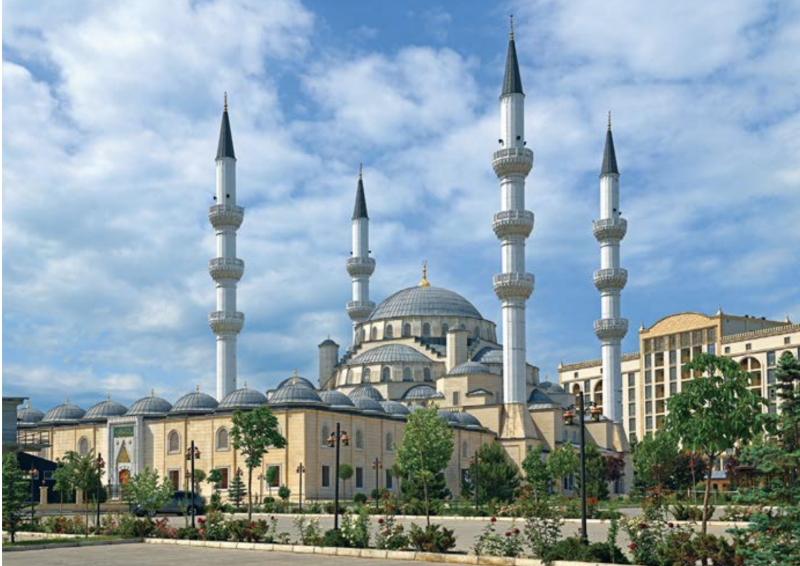
Today, the region is experiencing a broad Islamic revival visible in growing mosque attendance, increased religious education, rising use of Islamic clothing, stronger public religiosity, and expanding interest in Islamic culture and traditions.
At the same time, Central Asian governments remain firmly secular and often deeply cautious about political Islam, extremism, and foreign religious influence.
The result is a complicated balancing act.
Authorities generally support moderate Islamic identity as part of national culture while tightly controlling religious institutions and monitoring movements viewed as potentially destabilizing.
This revival is reshaping social norms, education, politics, gender debates, foreign policy, and regional identity across Central Asia.
It is also increasingly connected to broader geopolitical competition involving Türkiye, the Gulf states, Russia, China, and the wider Muslim world.
Why did Islam decline during the Soviet era?
During the Soviet period, official state ideology promoted atheism and strongly restricted religious activity.
Mosques, madrasas, and religious institutions across Central Asia were closed or heavily controlled.
Religious leaders faced surveillance, persecution, and limitations on public activity.
Islam survived mainly through family traditions, local customs, and underground religious practice.
Many people continued observing basic traditions privately, but public religious education remained extremely limited.
The Soviet Union attempted to replace religious identity with socialist ideology and Soviet citizenship.
As a result, several generations grew up with limited formal religious knowledge.
When the Soviet Union collapsed, religious revival accelerated partly because societies were rediscovering cultural and spiritual traditions suppressed for decades.
Why is Islam becoming more visible now?
Several factors explain the growing visibility of Islam across Central Asia.
First, post Soviet independence created space for religious freedom and cultural revival.
Many people began reconnecting with Islamic traditions as part of broader national identity reconstruction.
Second, younger generations increasingly search for moral, cultural, and spiritual frameworks during periods of rapid economic and social change.
Third, globalization and digital media expanded access to Islamic education, sermons, scholars, and religious content from around the Muslim world.
Fourth, labor migration to countries such as Türkiye and Gulf states exposed many Central Asians to different Islamic cultures and practices.
At the same time, mosque construction and religious education expanded significantly across the region.
The revival therefore reflects both cultural rediscovery and broader social transformation.
How important is Islam historically in Central Asia?
Islam has deep historical roots in Central Asia dating back more than a thousand years.
The region played a major role in Islamic civilization during the medieval period.
Cities such as Samarkand and Bukhara became globally important centers of Islamic scholarship, science, philosophy, and trade.
Prominent Islamic scholars and thinkers emerged from the region, contributing significantly to theology, mathematics, astronomy, medicine, and literature.
The Silk Road also helped spread Islamic culture and commerce throughout Central Asia.
Although Soviet rule weakened religious institutions, Islamic traditions remained embedded in family structures, ceremonies, customs, and cultural memory.
Today’s revival therefore partly represents a return to historical roots rather than an entirely new phenomenon.
How are governments responding to the revival?
Central Asian governments generally pursue carefully controlled approaches toward Islam.
Authorities officially support moderate religious practice while simultaneously maintaining strict oversight of mosques, religious schools, clerics, and Islamic organizations.
Governments fear that uncontrolled religious movements could contribute to political instability, extremism, or foreign influence.
As a result, many states require registration of religious institutions, regulate sermons, monitor online religious content, and restrict unauthorized religious education.
Security agencies often maintain strong surveillance of groups suspected of radical activity.
At the same time, governments increasingly incorporate Islamic heritage into national identity narratives and cultural diplomacy.
This creates a dual policy combining controlled religious revival with strict secular state authority.
Why are governments worried about extremism?
Concerns about extremism strongly influence regional policies toward Islam.
Central Asian governments experienced militant violence and security threats linked to extremist organizations during previous decades.
Some citizens from the region also joined militant groups abroad, including in Afghanistan and Syria.
Authorities therefore remain highly sensitive to political Islam and transnational radical networks.
Governments often argue that strong state oversight is necessary to maintain stability and prevent radicalization.
Critics, however, sometimes warn that excessive restrictions on peaceful religious activity could create frustration and push some individuals toward underground movements.
Balancing security concerns with religious freedom remains one of the region’s biggest political challenges.
How is religion affecting social norms?
Islamic revival increasingly influences daily social behavior across parts of Central Asia.
More women are choosing to wear hijabs or modest Islamic clothing compared to earlier post Soviet decades.
Religious holidays, fasting during Ramadan, halal food practices, and mosque attendance have all become more visible.
Conservative social values regarding family structure, gender roles, and morality are also gaining greater influence in some communities.
At the same time, Central Asia remains socially diverse.
Urban and rural attitudes often differ significantly, and secular lifestyles remain common especially in major cities.
The region therefore reflects a complex mix of traditional Islamic values, Soviet secular legacies, and modern globalization.
Why is Uzbekistan important in the Islamic revival?
Uzbekistan occupies a central position because of its historical Islamic heritage and large population.
Historic cities such as Samarkand and Bukhara remain globally important symbols of Islamic civilization.
Under previous leadership, Uzbekistan maintained particularly strict controls over religious expression.
In recent years, however, authorities gradually relaxed some restrictions while still preserving strong state oversight.
The government increasingly promotes Islamic cultural heritage as part of national identity and tourism strategy.
At the same time, security concerns continue shaping official policy toward religious organizations and political Islam.
How does Tajikistan approach religion differently?
Tajikistan experienced a devastating civil war during the 1990s involving political and ideological factions including Islamist groups.
As a result, the government remains especially cautious about religious politics.
Authorities impose strict regulations on religious education, mosque activity, clothing, and youth participation in religious institutions.
The government also banned several political and religious movements considered extremist.
Critics argue some policies excessively restrict religious freedom.
Officials respond that strong controls are necessary to preserve national stability and prevent radicalization.
Tajikistan therefore represents one of the region’s most tightly controlled religious environments.
How is Kazakhstan different from its neighbors?
Kazakhstan generally maintains a more secular and internationally oriented social environment compared to some neighboring states.
Russian cultural influence remains particularly strong, especially in cities.
However, Islamic identity is also gradually becoming more visible, especially among younger generations and in southern regions.
Kazakhstan promotes interfaith dialogue and religious tolerance while still closely monitoring extremist risks.
The country attempts to balance modern secular governance, Islamic cultural identity, and multiethnic stability simultaneously.
What role do foreign countries play?
External powers increasingly influence religious and cultural developments across Central Asia.
Türkiye promotes educational, cultural, and religious ties through universities, scholarships, media, and cooperation programs.
Gulf states including Saudi Arabia and Qatar have also funded mosques, educational projects, and religious institutions historically.
Meanwhile, Russia promotes secular governance models and worries about instability linked to extremism near its borders.
China additionally monitors Islamic developments carefully because of concerns involving Xinjiang.
The region therefore sits at the intersection of multiple geopolitical and ideological influences connected to the broader Muslim world.
How is social media affecting religious revival?
Digital platforms dramatically expanded access to religious content.
Young Central Asians increasingly consume Islamic lectures, sermons, discussions, and educational material online.
Social media allows religious ideas to spread far more rapidly than during earlier decades.
It also exposes societies to diverse interpretations of Islam from different countries and traditions.
Governments increasingly monitor online religious activity because digital platforms can spread both moderate teachings and extremist propaganda.
The internet therefore became one of the most important battlegrounds shaping modern Islamic identity across the region.
Are women’s roles changing because of the revival?
Debates over women’s roles are becoming increasingly important.
Some women embrace Islamic clothing and religious practices as expressions of faith, identity, or cultural values.
Others worry that conservative trends could limit women’s freedoms or social participation.
Central Asian societies remain highly diverse regarding attitudes toward gender roles.
Urban areas often remain more secular and liberal than rural regions.
Governments generally support women’s education and workforce participation while also attempting to accommodate growing public religiosity.
As a result, gender debates increasingly reflect broader tensions between tradition, secularism, and modernization.
Could political Islam become stronger in the future?
Most Central Asian governments strongly oppose organized political Islam and are unlikely to allow Islamist parties to gain official power.
Authorities view secular governance as essential for national stability.
However, Islamic identity will likely continue growing culturally and socially across the region.
Economic inequality, youth unemployment, corruption, and social frustration could also influence future religious dynamics.
Much will depend on how governments manage modernization, religious freedom, and political participation during coming decades.
Why is the revival connected to national identity?
For many Central Asians, Islam represents not only religion but also historical memory, cultural tradition, and post Soviet identity.
Reviving Islamic heritage helps societies reconnect with pre Soviet history and distinguish themselves from Soviet era ideological frameworks.
Governments increasingly incorporate Islamic architecture, historical figures, and cultural symbols into national narratives.
At the same time, authorities generally emphasize moderate and nationally controlled forms of Islam rather than transnational political ideologies.
Religion therefore functions simultaneously as cultural identity, spiritual revival, and geopolitical issue.
What does the future look like?
Islamic revival across Central Asia is expected to continue shaping society, culture, and politics for decades.
Religious identity will likely become increasingly visible among younger generations.
Governments will probably continue balancing controlled religious openness with strict security oversight.
Foreign influence from Türkiye, Gulf states, Russia, and China may also continue affecting regional religious dynamics.
At the same time, Central Asia is unlikely to become uniformly conservative or Islamist politically.
The region’s future will likely involve continued coexistence between secular governance, growing Islamic identity, nationalism, and globalization.
How successfully governments manage these competing forces may significantly influence regional stability and social development throughout the twenty first century.
By Faig Mahmudov