Hajj, politics and security: Why Saudi Arabia rejected Iran’s airport request


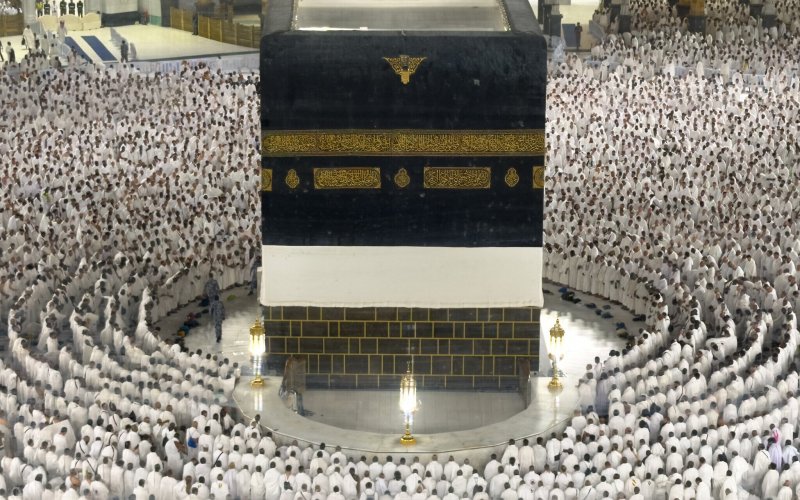
Saudi Arabia’s decision to reject Iran’s request to use Taif Airport for the return of Iranian Hajj pilgrims has drawn attention across the Middle East and the wider Muslim world.
The decision has prompted questions about security concerns, pilgrimage logistics, regional diplomacy, and the broader state of Saudi-Iranian relations. Although Iranian pilgrims were still able to participate in Hajj and return home through alternative arrangements, the controversy surrounding Taif Airport highlights how even technical issues can take on geopolitical significance.
This FAQ Explainer examines what happened, why Taif Airport matters, what may have influenced Saudi Arabia’s decision, and what the incident reveals about the evolving relationship between Riyadh and Tehran.
What happened?
Saudi Arabia declined Iran’s request to use Taif Airport as a departure point for Iranian pilgrims returning home after completing the Hajj pilgrimage.
Instead, Iranian pilgrims were required to use Jeddah’s King Abdulaziz International Airport, which traditionally serves as the primary gateway for millions of Hajj pilgrims arriving in and departing from Saudi Arabia.
The decision sparked debate because Taif Airport is geographically closer to some pilgrimage routes and could have provided a more convenient option for transporting Iranian pilgrims.
Why did Iran want to use Taif Airport?
The primary reason appears to have been logistical efficiency.
During Hajj, millions of people travel across western Saudi Arabia within a relatively short period. Transportation networks become heavily congested as pilgrims move between Mecca, Mina, Arafat, Muzdalifah, Medina, and departure points.
Using Taif Airport could potentially reduce travel times and ease transportation burdens for some pilgrims. For organizers managing tens of thousands of travelers, even modest improvements in logistics can have a significant impact on efficiency and comfort.
From Iran’s perspective, Taif represented an alternative departure point that could help streamline the return process.
Why is Taif Airport important?
Taif International Airport occupies a strategic location in western Saudi Arabia.
Situated relatively close to Mecca, the airport has often been viewed as an auxiliary facility capable of supporting Hajj and Umrah operations. Its location allows it to serve both religious travelers and residents of the broader Mecca region.
Saudi Arabia has invested heavily in modernizing transportation infrastructure associated with religious tourism. Airports, highways, railways, and public transportation systems have all been expanded to accommodate growing numbers of pilgrims.
In this context, Taif Airport represents an important component of the kingdom’s broader transportation network.
Why did Saudi Arabia reject the request?
Saudi authorities have not publicly offered a detailed explanation.
However, regional observers have pointed to several possible factors.
One explanation involves security considerations. Governments often impose additional restrictions on transportation routes, airports, and infrastructure during periods of heightened regional tension.
Another possibility relates to operational planning. Managing Hajj logistics requires careful coordination involving airlines, airports, security agencies, customs authorities, and transportation services. Saudi authorities may have concluded that existing arrangements through Jeddah were preferable from an organizational perspective.
It is also possible that multiple factors contributed to the decision.
Does this mean relations between Saudi Arabia and Iran are deteriorating?
Not necessarily.
The most important fact is that Iranian pilgrims were allowed to participate in Hajj.
Had Saudi Arabia imposed restrictions on the pilgrimage itself, the political implications would have been far more significant.
Instead, the dispute concerned the choice of airport rather than access to religious sites.
While the decision may reflect lingering mistrust or differing priorities, it does not automatically indicate a broader diplomatic crisis.
Why is Hajj so politically sensitive?
Hajj is one of the most important religious obligations in Islam.
Every year, millions of Muslims from around the world travel to Saudi Arabia to perform the pilgrimage. As the custodian of Islam’s two holiest sites, Saudi Arabia plays a unique role in organizing and securing this massive annual event.
Because pilgrims come from dozens of countries with diverse political systems and international relationships, Hajj inevitably intersects with diplomacy.
Any issue affecting pilgrim access, safety, transportation, or accommodation can quickly acquire political significance.
Have Saudi Arabia and Iran disagreed over Hajj before?
Yes.
The history of Saudi-Iranian relations includes several disputes related to pilgrimage arrangements.
One of the most notable controversies followed the deadly Mina stampede in 2015, which resulted in the deaths of hundreds of Iranian pilgrims among many other victims.
The tragedy intensified tensions between the two countries and led to disagreements over responsibility, safety measures, and future pilgrimage arrangements.
For a period, Iranian participation in Hajj was disrupted because of broader diplomatic disputes.
Although relations have improved since then, memories of those tensions continue to influence perceptions on both sides.
How have Saudi-Iranian relations changed in recent years?
The relationship between Saudi Arabia and Iran has undergone significant changes.
For many years, the two countries were viewed as regional rivals competing for influence across the Middle East.
They supported opposing sides in several regional conflicts and frequently exchanged accusations regarding security and foreign policy.
However, diplomatic efforts in recent years have led to a gradual improvement in relations.
Embassies have reopened, official contacts have resumed, and both governments have emphasized the importance of dialogue.
Despite these improvements, differences remain on many strategic issues.
The Taif Airport dispute illustrates that cooperation and caution continue to coexist in the relationship.
Could security concerns have influenced the decision?
Security considerations cannot be ruled out.
The Middle East has experienced multiple periods of heightened tension involving missile attacks, drone operations, and military confrontations in recent years.
Governments across the region have become increasingly focused on protecting critical infrastructure, transportation hubs, and strategic facilities.
In such an environment, authorities may adopt a more restrictive approach to airport access and transportation planning.
Even if security concerns were not the sole factor behind the decision, they may have played a role in the overall assessment.
What impact does the decision have on pilgrims?
For most pilgrims, the impact is primarily logistical.
Instead of departing from Taif, Iranian pilgrims use Jeddah Airport, which remains fully capable of handling large numbers of travelers.
The change may result in longer ground transportation times and additional organizational requirements.
However, it does not prevent pilgrims from completing their journey or returning home safely.
As a result, the practical consequences are relatively limited compared with the political attention generated by the issue.
Could similar disputes arise in the future?
Yes.
Given the scale of Hajj operations, disagreements over logistics, transportation, accommodations, quotas, and security procedures are always possible.
The annual pilgrimage requires coordination on an enormous scale.
As the number of pilgrims continues to grow, governments and organizers will face increasing pressure to optimize transportation and infrastructure.
Future discussions regarding airport access and transportation arrangements are therefore likely.
What does this incident reveal about regional politics?
The controversy demonstrates how seemingly technical decisions can reflect broader geopolitical realities.
Saudi Arabia and Iran have improved their diplomatic relationship, but they have not eliminated all areas of disagreement.
Mutual caution remains an important feature of the relationship.
As a result, even decisions involving airports, transportation routes, or administrative procedures can become subjects of political discussion.
The incident serves as a reminder that regional diplomacy often operates on multiple levels simultaneously, ranging from high-level negotiations to practical issues affecting ordinary citizens.
Why does this matter beyond Saudi Arabia and Iran?
The issue is relevant because it highlights broader questions about religious diplomacy, regional security, and international cooperation.
Hajj is one of the largest annual gatherings in the world. The management of such a complex event requires collaboration among governments, transportation providers, security agencies, and religious institutions.
Any dispute involving pilgrimage logistics attracts attention because it touches on matters that are both deeply religious and politically significant.
For many observers, the Taif Airport issue provides insight into how Saudi Arabia and Iran are managing their relationship during a period of cautious engagement.
What is the key takeaway?
Saudi Arabia’s decision to reject Iran’s request to use Taif Airport does not appear to represent a major diplomatic rupture. Iranian pilgrims were still able to participate in Hajj and return home through existing transportation arrangements.
However, the episode highlights the continuing sensitivity of Saudi-Iranian relations and demonstrates how issues involving transportation, security, and religious travel can quickly acquire geopolitical importance.
The incident reflects a broader reality: while relations between Riyadh and Tehran have improved, they continue to be shaped by a combination of cooperation, competition, and caution. As a result, even routine logistical decisions can become a window into the complex dynamics of Middle Eastern politics.
By Faig Mahmudov


Similar news