Why Latvia is deepening its partnership with Azerbaijan now


Editor's note: Einars Graudins is a military expert and a retired senior officer of the Latvian Armed Forces. This article reflects the author's personal opinion and may not represent the views of News.Az.
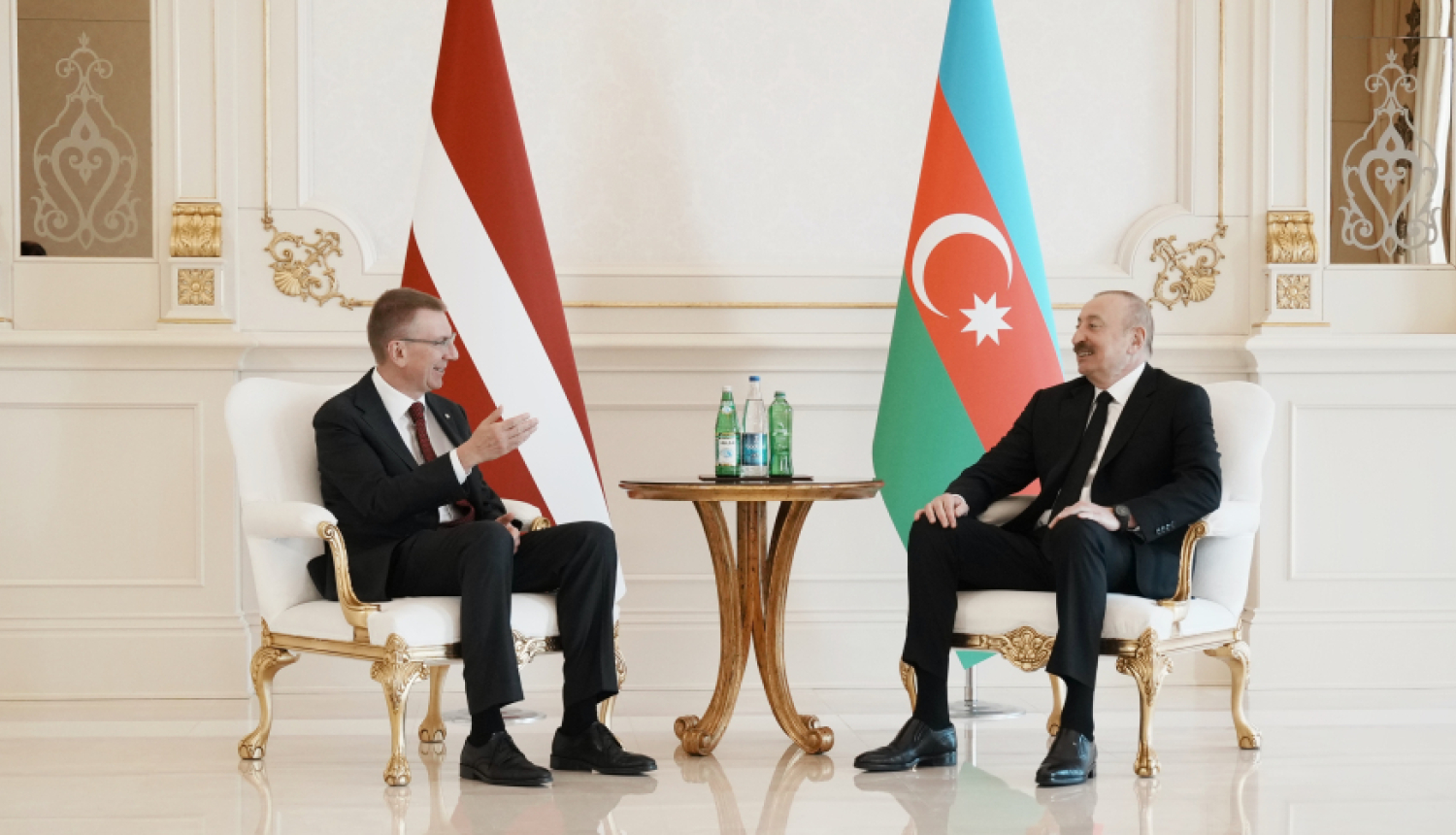
Latvian President Edgars Rinkēvičs' visit to Azerbaijan was far more than a routine diplomatic engagement. It sent a clear and deliberate political signal that leaves little room for alternative interpretations. Riga demonstrated a consistent and carefully calibrated position: Azerbaijan is regarded not simply as a partner, but as a long-term strategic ally, with cooperation that is both relevant today and full of future potential.
This conclusion is grounded in tangible facts rather than diplomatic rhetoric. Since 2017, Latvia and Azerbaijan have operated within a formal framework of strategic partnership. However, the real weight of this relationship lies not in signed documents, but in their practical implementation. The frequency and level of bilateral engagement speak volumes. Among post-Soviet states, Azerbaijan occupies a unique place in Latvia’s foreign policy priorities. High-level visits have become a regular feature of the relationship, reflecting not protocol, but sustained political interest. It is telling that during the latest visit, the Latvian president himself acknowledged that he had lost count of how many times he had travelled to Azerbaijan. Whether it was his sixth or seventh visit is ultimately irrelevant. What matters is the consistency and continuity such visits represent.
The political dimension of this engagement is equally significant. Latvia’s support for the peace process between Azerbaijan and Armenia was articulated clearly and without hesitation. This stance carries particular weight given the broader European context, where positions on regional conflicts can often be nuanced or carefully formulated. In this case, however, Riga’s message was direct. It supports stability, sovereignty, and a peace-oriented framework in the South Caucasus. Importantly, this position was expressed at a time when internal political debates exist within Latvia itself, which only underscores the clarity of the president’s statement.
Source: APA
One of the most symbolically charged elements of the visit was the decision to hold a meeting of the intergovernmental commission on strategic partnership in Shusha. This choice goes far beyond ceremonial significance. Shusha occupies a central place in Azerbaijan’s historical and cultural identity. It represents both a complex past and a powerful process of national revival. The presence of the Latvian delegation in this city can be interpreted as a practical acknowledgement of the new geopolitical realities in the region and as a gesture of support for Azerbaijan’s territorial integrity. In diplomacy, location matters, and in this case, the message was unmistakable.
Equally noteworthy is Latvia’s proposal to contribute to the restoration of Karabakh, particularly in areas such as expanding forest coverage and supporting modernisation efforts. This initiative should not be viewed as a symbolic gesture. It reflects a realistic assessment of Latvia’s own strengths. While Azerbaijan has established itself as a major energy player, Latvia is widely recognised for its expertise in forestry and sustainable land management. This sector is a cornerstone of the Latvian economy, and its experience is both practical and transferable. As such, the offer represents a genuine contribution grounded in capability, rather than a purely political statement.
The humanitarian dimension of the relationship also deserves careful attention. Azerbaijani students studying in Latvia, particularly in Riga, are becoming an increasingly visible part of bilateral ties. Educational cooperation continues to expand, creating long-term connections that extend beyond official diplomacy. These people-to-people links are often underestimated, yet they form the backbone of any sustainable partnership. Trust built through education, cultural exchange, and personal experience tends to endure far longer than political cycles.
At the same time, it is impossible to separate this relationship from the broader geopolitical context. Developments in the Middle East, ongoing instability linked to tensions involving Iran, and the continuing war in Ukraine have all contributed to a growing sense of urgency around energy security in Europe. In this environment, Azerbaijan has emerged as a key partner for the European Union. Its role as a reliable energy supplier has gained increased importance, particularly as European states seek to diversify their sources and reduce vulnerabilities.
Latvia, as a member of the European Union, plays an active role in shaping and supporting this strategic direction. Its engagement with Azerbaijan is therefore not only bilateral, but also part of a broader European policy framework. Cooperation in the energy sector is complemented by political alignment on key international issues, creating a multidimensional partnership.
Latvia’s position on the global stage further reinforces this alignment. As a non-permanent member of the United Nations Security Council, Riga has signalled its readiness to support Azerbaijan’s initiatives within the framework of international diplomacy. This elevates the relationship beyond the bilateral level, integrating it into global political processes. It also provides Azerbaijan with an additional platform for advancing its interests in multilateral institutions.
Source: president.lv
Taken together, these elements point to a clear and consistent conclusion. The strategic partnership between Latvia and Azerbaijan is not merely a formal designation or a diplomatic label. It is a functioning and evolving relationship, built on mutual interests, pragmatic cooperation, and a shared vision of stability and development. It is reinforced by political dialogue, economic interaction, and human connections that deepen over time.
It is also important to recognise that historically, relations between the two countries have been notably free of major conflicts or crises of trust. In a world increasingly defined by volatility, shifting alliances, and geopolitical uncertainty, such consistency is not only rare but highly valuable. Stability in bilateral relations provides a foundation upon which more ambitious projects can be built.
Today, Azerbaijan is perceived in Latvia not only as a strategic partner, but as a friendly and reliable nation. This perception is not the result of a single visit or agreement, but of years of steady engagement and mutual trust. Recent developments suggest that this trajectory is not only steady, but likely to strengthen further in the coming years.
(If you possess specialized knowledge and wish to contribute, please reach out to us at opinions@news.az).


Similar news