Why Trump is increasingly boxed in by his own party


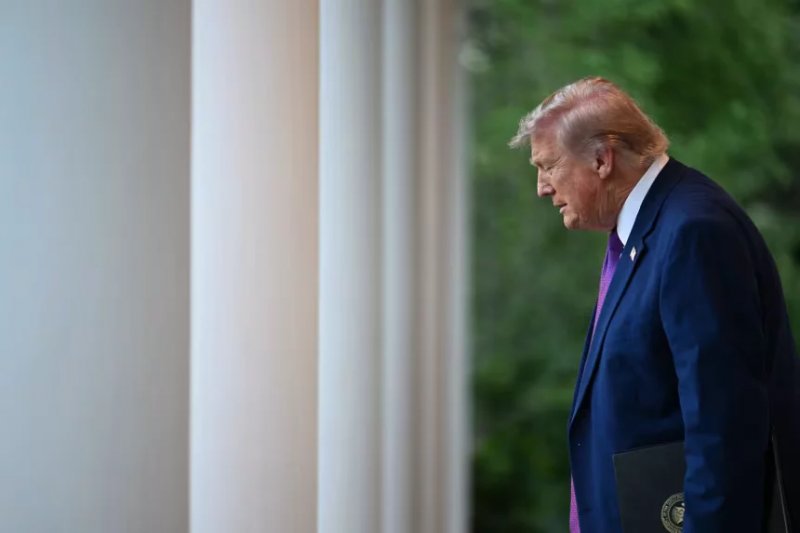
A recent House vote to rein in President Donald Trump’s Iran war powers highlights a growing shift on Capitol Hill: The president is increasingly finding himself boxed in by his own party.
Despite Speaker Mike Johnson’s pleas that restricting these powers would be "dangerous" and sap Trump's negotiating leverage, four Republicans broke ranks. The resulting 215-208 vote delivered one of the biggest legislative rebukes of Trump’s presidency. If a similar measure passes the Senate, Trump will be legally forced to either withdraw troops or secure explicit congressional approval for the conflict, News.Az reports, citing CNN.
This defiance is a striking commentary on how much patience Republicans are losing with an economically exhausting war and Trump's historically low poll numbers. With November elections looming and the conflict trending toward a quagmire, Trump’s grip on his legislative agenda is slipping in several key areas.
RECOMMENDED STORIES
The war powers vote is just the latest in a series of forced retreats for the administration. Following an adverse federal court ruling regarding his name on the Kennedy Center, Trump signaled he would let Congress take over the performing arts center—a rare nod to legislative authority from a president who typically eschews it.
More significantly, the administration is facing intense pushback over its proposed $1.776 billion “anti-weaponization” fund, intended to compensate individuals claiming harm by the Biden administration. Senate Republicans have spoken out almost in unison against the idea, fearing it would become an unaccountable slush fund used to reward political allies, including January 6 defendants. While the administration has sent mixed signals on whether the fund is officially dead, Congress is already considering legislation to permanently block it.
Personnel and Primary Setbacks
Trump's political maneuverability is also taking hits on the personnel front. His choice of Federal Housing Finance Agency director Bill Pulte as acting director of national intelligence—despite a total lack of intelligence experience—has been poorly received by Capitol Hill Republicans. Democrats are already leveraging the pick, threatening to block the renewal of crucial FISA spying powers (Section 702) unless Trump backs down.
Simultaneously, Trump's influence in GOP primaries is showing signs of fatigue. While he successfully unseated several incumbents earlier this year, his endorsed candidate recently lost the Iowa Republican gubernatorial primary. Furthermore, the lawmakers Trump helped defeat are no longer bound by reelection concerns and are beginning to act as thorns in his side. For example, defeated Rep. Thomas Massie voted against Trump on the war powers resolution, while outgoing Sen. Bill Cassidy voted to advance similar restrictions in the Senate.
Hovering over all of these political setbacks is the conflict in Iran itself. Trump has maintained that a strict economic blockade will eventually force Tehran to negotiate a favorable deal. However, there is little evidence that this strategy is working fast enough to salvage Trump's domestic political standing.
Having repeatedly bluffed about restarting large-scale military strikes, Trump's threats appear to have lost their teeth in Tehran. While the president recently suggested to reporters that a ceasefire deal could materialize as early as this weekend, Congress isn't buying the optimism. If the Senate mirrors the House's defiance, Trump will find his options narrower than ever.
By Aysel Mammadzada


Similar news