Why Trump wants Greenland: defense priority or oil & gas play?


Greenland has returned to the geopolitical spotlight following comments by U.S. President Donald Trump, who has repeatedly framed the island as a national security priority, News.Az reports.
After the U.S. capture of Venezuelan President Nicolás Maduro on January 3, 2026, Trump said Washington would “worry about Greenland in about two months,” adding that Russian and Chinese vessels were operating around the island and that “we need Greenland from the standpoint of national security.”
On Friday, Trump warned that the U.S. could impose tariffs on countries that resist his ambitions to annex Greenland, a move Danish officials say would effectively end NATO.
Why Greenland?
Greenland is a self-governing territory within the Kingdom of Denmark, with Copenhagen retaining control over defense and foreign policy. Danish sovereignty dates back to medieval Norse settlements established in the late 10th century.
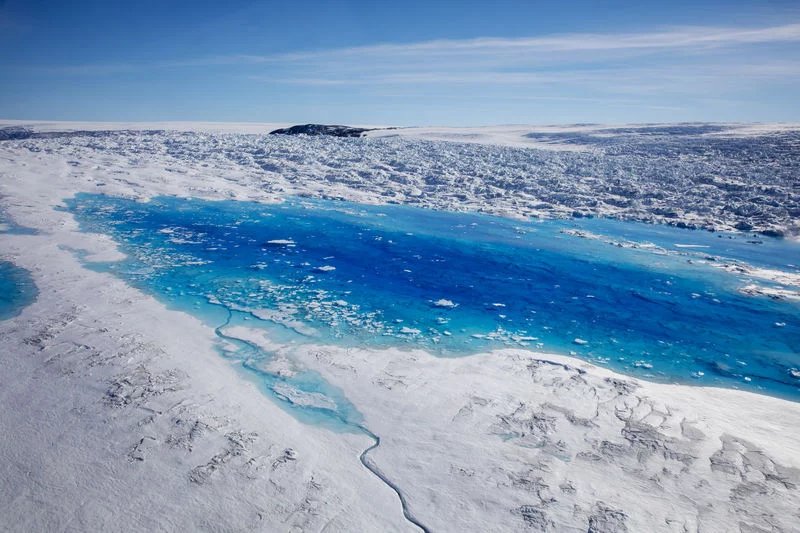
Today, Greenland is home to roughly 56,000 people, the vast majority indigenous Inuit, spread across one of the most sparsely populated regions on Earth. Around 80% of the island is covered by ice, concentrating population along the south-western coast near the capital, Nuuk.
The economy is narrow and heavily dependent on fishing, supplemented by large annual subsidies from Denmark. Despite its immense landmass, Greenland has no road or rail network connecting towns.
Roads exist only within settlements and stop at their edges. Travel between communities relies on aircraft, boats, helicopters, snowmobiles, or dogsleds, with sea transport the most common option.
National security importance
During the Cold War, Greenland’s importance grew as the Soviet threat intensified. Today, the U.S. operates the Pituffik Space Base, formerly Thule Air Force Base, in north-western Greenland. The U.S. established an air base in Greenland in 1943 to counter German threats, using the territory as a forward operating platform for maritime defense.
The installation remains central to early-warning radar and space surveillance systems designed to detect intercontinental ballistic missiles. Strategically, Thule represents the shortest route for U.S. bombers to reach Russian targets and is the closest permanent military outpost to the North Pole.
Bernstein analysts, led by Irene Himona, argue that the core issue is not energy or minerals, but Greenland’s unique strategic location. The world’s largest island sits between North America and Europe, inside the Arctic Circle, a position that has made it a military prize since the Second World War.
Himona describes Greenland as a guardian of the North Atlantic. Its geography provides control over the GIUK gap, the maritime corridor linking Greenland, Iceland, and the United Kingdom. This passage serves as the gateway between the Arctic Ocean and the Atlantic, and U.S. strategists note that Russian submarines and surface ships must pass through it to access Atlantic shipping lanes.
From a defense perspective, Greenland offers a critical vantage point to monitor and deter these movements. However, analysts have increasingly questioned whether the existing defense framework can respond quickly and at scale to accelerating Russian militarization in the Arctic.
Oil and gas reserves
Greenland also features prominently in discussions around critical minerals. The island hosts deposits of rare earth elements, uranium, zinc, iron ore, and other materials essential to modern technologies and military systems.
A 2023 survey found that Greenland contains 25 of the 34 minerals classified as critical raw materials by the European Union. These include inputs for electric vehicles, smartphones, and advanced weapons systems.
Yet Bernstein is skeptical about the near-term relevance of Greenland’s mining potential. Access to resources is limited to ice-free coastal areas, and while the island’s ancient precambrian geology is favorable, development faces legal, environmental, and logistical obstacles.
Many rare earth projects are complicated by the presence of uranium and proximity to UNESCO-protected sites. Timelines for extraction stretch far beyond political cycles, and current output remains minimal.
“We don’t see an obvious amazing near term opportunity from Greenland mining resources,” Himona wrote in a note.
The verdict
Bernstein analysts argue that national security concern, rather than untapped resources, best explains the renewed U.S. focus on the island. Its location underpins U.S. missile defense, Arctic surveillance, and control of North Atlantic access.
Minerals may matter eventually, but strategy, not extraction, is driving Washington’s renewed focus. Himona says that global markets are not currently short of rare earths and that resolving one geopolitical rivalry by creating another would be misguided.
"Reality has so far undermined the oil rush narrative. With c. 15 exploration wells drilled, this has been a story of disappointment," the analyst wrote, adding that large parts of the island are "covered by the Inland Ice with a thickness of several kilometers, local ice caps and glaciers."
“Greenland was probably never really about just buying land or oil. We think it is about control of the Western Hemisphere.”


Similar news