Why Uzbekistan is becoming the strategic heart of Central Asia today


Uzbekistan occupies a central place in the heart of Central Asia, News.Az reports.
For centuries it has been a meeting point of civilizations trade routes and empires. Today the country is again at a crossroads but this time defined by reform, modernization and a renewed effort to integrate with regional and global systems while preserving a distinct national identity. Uzbekistan is steadily reshaping its political economy social fabric and foreign relations in ways that are drawing sustained international attention.
Historical legacy and national identity
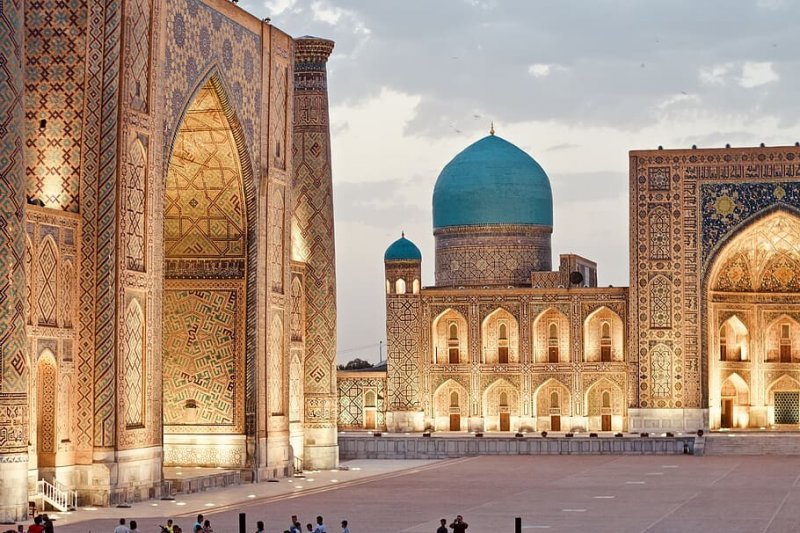
Uzbekistan’s modern statehood is deeply rooted in a rich historical legacy. The territory was once home to powerful khanates and legendary cities such as Samarkand Bukhara and Khiva which flourished as centers of learning commerce and culture along the Silk Road. This heritage continues to shape national consciousness and state narratives. Independence in the early 1990s marked a new chapter but the imprint of history remains visible in governance culture and public life.
In recent years the authorities have increasingly emphasized historical continuity as a source of unity and legitimacy. Cultural restoration projects academic research and tourism promotion have all been used to reinforce a sense of pride while presenting Uzbekistan as a bridge between past and future. This approach has helped frame contemporary reforms as part of a longer national journey rather than a rupture with tradition.
Political reforms and governance changes
Uzbekistan has undergone a notable shift in governance philosophy over the past decade. The leadership has publicly committed to building a more open accountable and responsive state. Legal reforms constitutional amendments and changes in administrative practice have been introduced to strengthen institutions and improve the relationship between the state and citizens.
Public consultation mechanisms have expanded including online platforms for feedback and draft legislation. While challenges remain particularly in implementation and consistency these measures signal a clear intention to move away from rigid centralized control toward more adaptive governance. International observers have noted gradual improvements in areas such as judicial independence media environment and civil society engagement even as they stress the need for continued progress.
Economic transformation and diversification
Economic reform lies at the heart of Uzbekistan’s current transformation. Long reliant on state control and limited export structures the country has embarked on an ambitious program of liberalization. Currency reforms tax simplification and the reduction of trade barriers have improved the business climate and encouraged foreign investment.
A key priority has been diversification. While agriculture and natural resources remain important the government has sought to develop manufacturing energy technology and services. Special economic zones industrial clusters and public private partnerships have been promoted to attract capital and expertise. Infrastructure development including transport corridors logistics hubs and digital networks supports this broader economic vision.
Small and medium sized enterprises have received particular attention. Access to finance regulatory relief and training programs aim to stimulate entrepreneurship and job creation. These efforts are crucial in a country with a young and growing population where employment opportunities are a central social concern.
Social policy and human capital development
Uzbekistan’s reform agenda places strong emphasis on human capital. Education healthcare and social protection are viewed not only as welfare issues but as strategic investments. School curricula are being updated vocational education expanded and higher education institutions encouraged to collaborate internationally.
Healthcare reforms focus on accessibility quality and efficiency. Primary care systems are being strengthened while digital health solutions are gradually introduced. Social programs target poverty reduction regional disparities and support for vulnerable groups. Although resource constraints persist the direction of policy reflects a shift toward inclusive growth and social cohesion.
Women and youth feature prominently in official discourse and policy initiatives. Programs aimed at increasing female employment entrepreneurship and leadership seek to address long standing inequalities. Youth engagement initiatives promote skills development innovation and civic participation recognizing the demographic realities that will shape Uzbekistan’s future.
Foreign policy and regional engagement
Uzbekistan has adopted a more active and pragmatic foreign policy. Relations with neighboring Central Asian states have improved markedly with a focus on dialogue economic cooperation and conflict prevention. Border issues water management and transport connectivity are addressed through multilateral and bilateral mechanisms.
Beyond the region Uzbekistan seeks balanced relations with major global powers and international organizations. Economic diplomacy trade agreements and investment partnerships form the core of this outreach. The country positions itself as a reliable partner committed to stability development and constructive engagement.
This foreign policy approach enhances Uzbekistan’s role as a regional hub. Improved connectivity projects linking Central Asia to South Asia the Caucasus and Europe reinforce this ambition. As global interest in alternative trade routes grows Uzbekistan’s strategic location becomes an increasingly valuable asset.
Energy transition and environmental challenges
Energy policy represents both an opportunity and a challenge for Uzbekistan. The country possesses significant fossil fuel resources yet faces rising demand and environmental pressures. Recognizing these dynamics the government has outlined plans to diversify energy sources and improve efficiency.
Renewable energy projects particularly in solar and wind have attracted international partners. Modernization of existing infrastructure aims to reduce losses and emissions. Water management climate adaptation and environmental protection have also gained prominence in policy debates especially given regional vulnerabilities such as land degradation and water scarcity.
Balancing economic growth with sustainability remains complex. Success will depend on regulatory clarity technological transfer and long term planning. Nevertheless the inclusion of environmental considerations in national strategies marks an important evolution in policy thinking.
Digitalization and innovation
Digital transformation is increasingly viewed as a catalyst for modernization. Uzbekistan has launched initiatives to expand internet access develop e government services and support the information technology sector. Digital platforms simplify administrative procedures increase transparency and reduce opportunities for corruption.
Innovation ecosystems including technology parks startup incubators and research centers are emerging. Partnerships with foreign universities and companies contribute to knowledge exchange. While the digital sector is still developing its growth potential aligns well with the aspirations of a young educated population.
Cultural diplomacy and tourism
Uzbekistan’s cultural heritage underpins an expanding tourism strategy. Visa liberalization infrastructure upgrades and marketing campaigns have significantly increased visitor numbers. Tourism generates revenue employment and international visibility while reinforcing national identity.
Cultural diplomacy extends beyond tourism. Academic exchanges cultural festivals and international media engagement present Uzbekistan as open dynamic and culturally rich. This soft power dimension complements economic and political reforms by shaping perceptions and building trust.
Challenges and future outlook
Despite progress Uzbekistan faces significant challenges. Institutional capacity uneven regional development and the pace of reform implementation require careful management. Balancing openness with stability and reform with social expectations is an ongoing process.
Nevertheless the overall trajectory suggests a country determined to redefine itself. By leveraging history embracing reform and engaging constructively with the world Uzbekistan aims to secure sustainable development and regional leadership. The coming years will test the resilience of reforms and the ability of institutions to adapt but the foundations for a more open and prosperous future are increasingly visible.
Why Uzbekistan matters
Uzbekistan’s evolution matters not only to its citizens but to the wider region and global partners. Its size population and strategic location give it significant influence in Central Asia. As reforms deepen Uzbekistan could become a model for gradual transformation that balances national traditions with global integration.
The story of Uzbekistan today is one of cautious optimism grounded in tangible change. It is a narrative still being written shaped by policy choices social dynamics and international engagement. As the country continues its journey it offers valuable insights into how states can navigate transition in a complex interconnected world.


Similar news