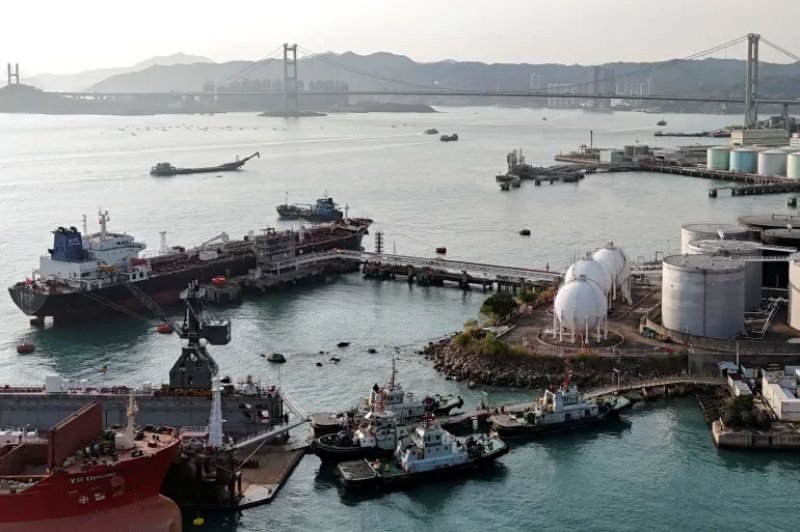
The decision by the United States to allow limited Iranian oil sales for 30 days is expected to introduce additional barrels into the market, potentially increasing competition for discounted crude that China has long relied on, News.Az reports, citing CNN.
China, the world’s biggest crude importer, currently purchases more than 80% of Iran’s seaborne oil exports, according to data from analytics firm Kpler. Last year, imports averaged about 1.38 million barrels per day, accounting for roughly 13% of China’s total seaborne oil intake.
A key factor behind this strong demand has been price. Iranian Light crude has consistently traded at a discount of around $8 to $10 per barrel compared with global benchmarks, allowing Chinese refiners to secure cheaper supply than alternatives such as Oman crude. In some cases, the discount has widened further, exceeding $10 per barrel.
This pricing advantage has provided Chinese refiners with significant cost savings, reinforcing Beijing’s role as Tehran’s primary oil customer despite international sanctions.
However, recent developments linked to the US–Israel conflict with Iran have disrupted trading activity. Since late February, deals involving Iranian oil have become scarce, reflecting heightened geopolitical risk and uncertainty in shipping routes.
The sanctions waiver could alter this balance by allowing more buyers to enter the market, potentially reducing China’s dominance and narrowing the discount that has made Iranian crude so attractive.
Another layer of complexity lies in how the oil is traded. Iranian shipments to China are often routed through intermediary hubs such as Malaysia or Indonesia and relabelled to obscure their origin. Official Chinese customs data has not recorded direct Iranian oil imports since 2022, despite continued flows.
Analysts say the coming weeks will be critical in determining whether China can maintain its advantageous position or whether increased competition and shifting geopolitical dynamics will erode its leverage in the market.
While China’s demand remains strong, the evolving policy environment and ongoing conflict risk reshaping established trade patterns in global energy markets.