Qatar Airways moves A380 and A350 Fleet to long-term storage amid war


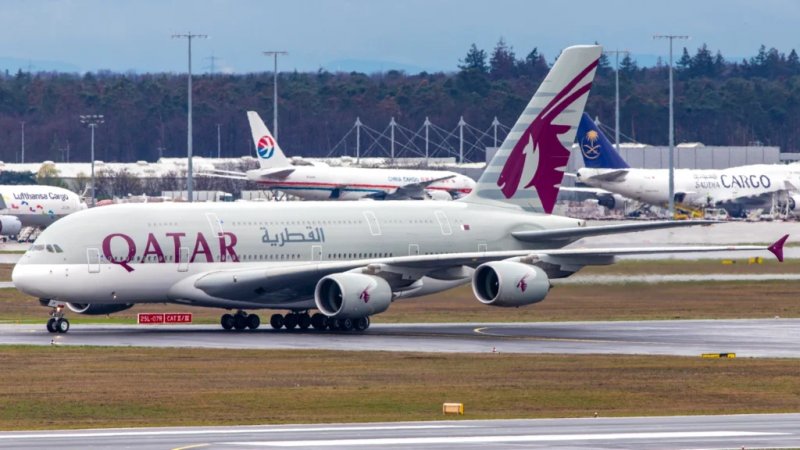
Qatar Airways has begun relocating a significant portion of its widebody fleet into long-term storage as regional instability continues to disrupt aviation operations and delay recovery across the Middle East.
The move signals a cautious shift in strategy as the airline adapts to volatile demand, security concerns, and operational uncertainty, News.Az reports, citing CNN.
Widebody aircraft sent to long-term storage in Spain
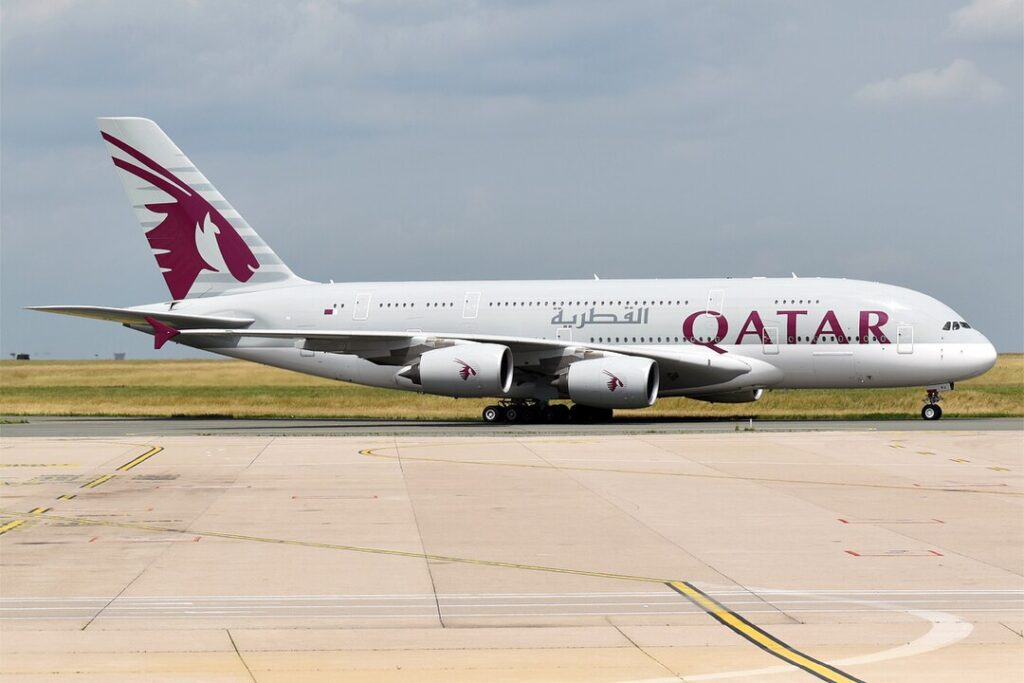
Qatar Airways is transferring several high-capacity aircraft, including Airbus A380 and Airbus A350 jets, to Teruel Airport in Spain. The facility, operated by Tarmac Aerosave, is widely known for its aircraft storage, maintenance, and recycling capabilities, with capacity to accommodate up to 120 aircraft.
According to aviation sources, five aircraft were relocated to Teruel in a single day. These included one Airbus A380 previously grounded at London Heathrow Airport, alongside multiple widebody aircraft stranded at various international airports since late February.
Source: CNN
The aircraft being repositioned include Airbus A350-900 jets from Cape Town, Durban, and Nairobi, as well as a Boeing 787-9 Dreamliner that had been stationed in Johannesburg. The coordinated movement highlights the airline’s effort to consolidate idle assets in a secure and cost-efficient location.
Earlier, four Airbus A330 aircraft also departed Hamad International Airport on non-commercial ferry flights to Teruel. These transfers underscore a broader strategy to reduce aircraft exposure at Doha while optimizing fleet utilization during uncertain market conditions.
Cost control and risk mitigation drive decision
Parking widebody aircraft at major international hubs such as London Heathrow comes with significant operational costs. By relocating aircraft to long-term storage facilities like Teruel, Qatar Airways is able to reduce expenses while preserving its fleet for future deployment.
Beyond cost considerations, security concerns are playing a major role in the airline’s decisions. Continued risks linked to missile and drone activity in the region have heightened fears over aircraft safety, particularly at key hubs like Doha.
Relocating aircraft to Spain provides a safer environment for high-value assets while allowing the airline to maintain flexibility in its long-term operational planning.
Flight operations scaled back after initial restart
Source: CNN
Qatar Airways resumed scheduled flights on March 18, including transit services through Doha, with initial plans to restore capacity following earlier disruptions. The airline briefly ramped up operations to approximately 135 daily flights.
However, within days, operations were significantly reduced to just 43 daily flights, reflecting weaker-than-expected demand and ongoing instability in the region.
The sharp decline suggests that passenger confidence and transit traffic have not fully recovered, forcing the airline to scale back capacity and delay a full operational rebound.
The decision to store large aircraft such as the Airbus A380 further indicates that Qatar Airways anticipates a prolonged recovery period, with demand unlikely to return to pre-crisis levels in the near term.
Regional recovery remains uneven
Source: CNN
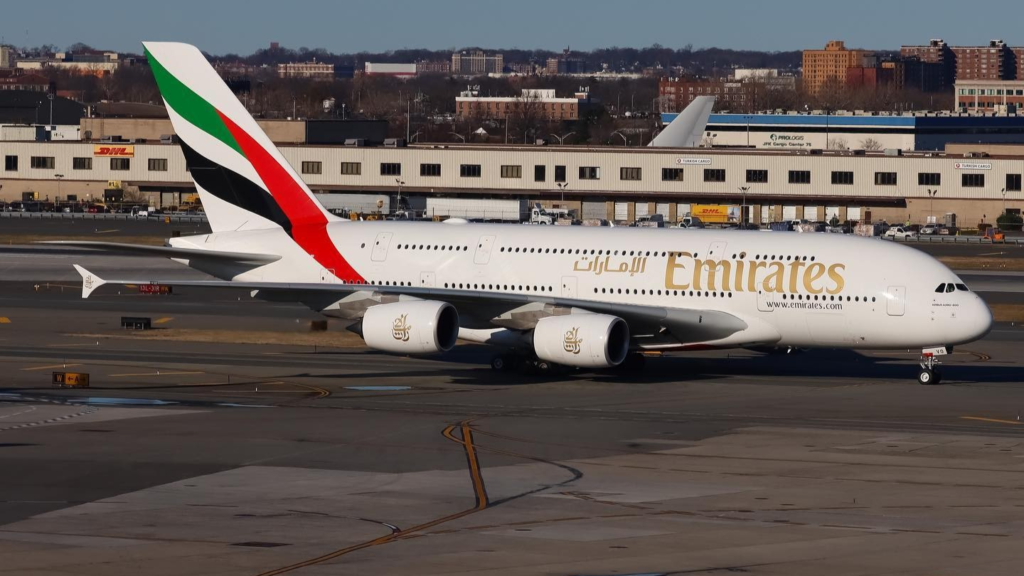
While Qatar Airways is adopting a conservative approach, other regional carriers are taking different paths. Emirates, for example, continues to rebuild its network more aggressively, operating more than 350 daily flights through Dubai.
This contrast highlights the uneven pace of recovery across Middle Eastern aviation markets, where airlines are responding differently based on risk exposure, demand patterns, and strategic priorities.
Industry analysts note that while some carriers are pushing forward with expansion, others are prioritizing asset protection and cost efficiency amid ongoing geopolitical tensions.
Outlook remains uncertain
The relocation of Qatar Airways’ A380 and A350 fleet to long-term storage underscores the broader challenges facing global aviation in times of conflict. With security risks persisting and demand fluctuating, airlines are being forced to remain flexible and cautious.
As the situation evolves, further adjustments to fleet deployment and flight schedules are expected. Qatar Airways’ latest move reflects a strategic balancing act between maintaining operational readiness and protecting valuable assets during a period of prolonged uncertainty.
The coming weeks will be critical in determining whether regional stability improves and whether airlines can resume growth, or if further disruptions will continue to shape the aviation landscape.
By Faig Mahmudov


Similar news