World’s largest iceberg A23a is rapidly disappearing


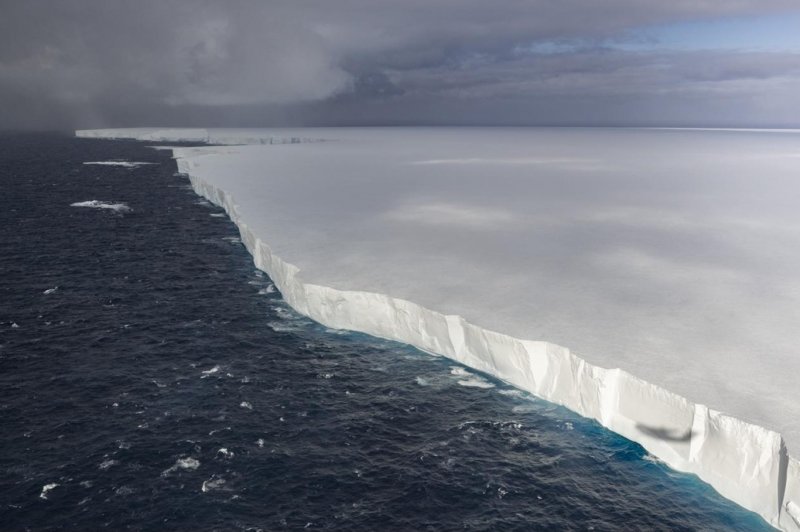
The world’s largest recorded iceberg, A23a, is breaking apart at an extraordinary pace after drifting through the Southern Ocean for decades.
According to Russia’s Arctic and Antarctic Research Institute, the massive iceberg has shrunk dramatically in recent months—from about 1,300 square kilometres in January to less than 50 square kilometres today. That means it has lost around 99% of its original size, News.Az reports, citing the press service of the Arctic and Antarctic Research Institute (AARI).
Scientists say A23a is no longer a stable ice mass. Instead, it is rapidly fragmenting as it moves through warmer, open waters. Over just the past three months, the iceberg has travelled roughly 1,000 kilometres while steadily breaking into smaller pieces.
RECOMMENDED STORIES
A23a has an unusual history. It first broke away from Antarctica’s Filchner Ice Shelf in 1986, originally covering about 4,170 square kilometres—making it one of the largest icebergs ever recorded.
For decades, it remained grounded in the Weddell Sea with little movement. But in 2023, it finally began drifting, entering stronger currents and warmer ocean conditions that accelerated its decay.
Experts explain that this kind of rapid disintegration is expected when giant icebergs leave cold, stable waters. Exposure to higher temperatures, waves, and ocean currents causes large ice sheets to weaken and fragment quickly.
While iceberg melting does not directly raise sea levels, researchers closely track events like A23a’s collapse as important signals of changes in Antarctica’s ice stability and surrounding ocean systems.
The breakup of A23a effectively marks the end of a decades-long journey for one of Antarctica’s most iconic ice formations.
By Aysel Mammadzada


Similar news