Xiaomi to become the next BYD: massive battery investment


Xiaomi may be preparing to take one of its biggest steps yet in the electric vehicle industry by moving into battery manufacturing, a strategy that could reduce its dependence on major suppliers like CATL and BYD.
According to Chinese business registration records, Xiaomi recently established a new company called Xiaomi Jingxu Technology Co., Ltd., whose business scope includes battery manufacturing and battery sales. The move has fueled speculation that the tech giant is preparing to develop its own power batteries for future electric vehicles, News.Az reports, citing European Central Station.
The decision would mark a major shift for Xiaomi’s automotive strategy. Since entering the EV market, the company has relied on external suppliers, including BYD’s Fudi batteries and CATL’s Shenxing batteries, to power its vehicles.
RECOMMENDED STORIES
While this approach helped Xiaomi quickly launch and scale production of its EV lineup, it also leaves the company vulnerable to supply-chain risks, pricing pressure and limited control over technological development.
Power batteries account for roughly 35% to 45% of the total cost of an electric vehicle, making them one of the most critical and expensive components in the industry. Analysts say carmakers that depend entirely on external suppliers often struggle to maintain profit margins and face difficulties differentiating their vehicles from competitors using similar battery technology.
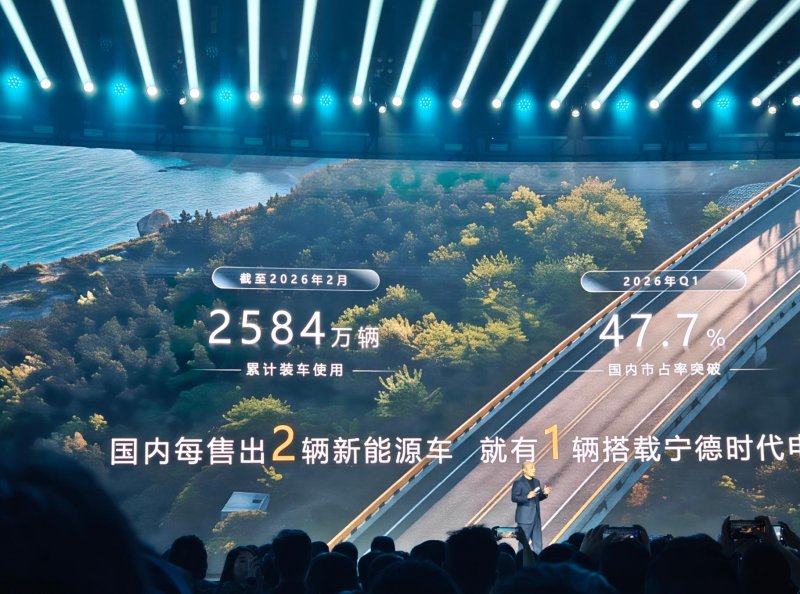
The global battery market is currently dominated by CATL and BYD. According to data from South Korean research firm SNE Research, the two companies controlled a combined 54.4% of the global power battery market in the first quarter of 2026, with CATL alone holding more than 40%.
For Xiaomi, developing batteries internally could provide several advantages. The company would gain greater control over supply, costs and technological integration while tailoring battery systems specifically for its own vehicle platforms and software ecosystem.
The strategy mirrors moves already made by leading EV manufacturers such as Tesla
, which has invested heavily in its in-house 4680 battery technology to reduce costs and improve performance. Tesla recently expanded mass production of the batteries at its Texas factory, helping improve efficiency and lower manufacturing expenses.
Xiaomi’s ambitions in the EV market have grown rapidly since the launch of the Xiaomi SU7. The company has reported strong demand, with locked orders for the latest SU7 generation reportedly surpassing 80,000 units within weeks of launch. Deliveries also climbed sharply in early 2026, reinforcing Xiaomi’s position as one of China’s fastest-growing EV brands.
Still, entering the battery manufacturing sector would present enormous challenges. Developing advanced battery technology requires years of expertise in electrochemistry, thermal management and safety systems. Building production facilities is also extremely expensive, with new battery plants often requiring billions of yuan in investment.
Industry competition adds another obstacle. Even established battery makers face pressure from aggressive pricing, raw material volatility and the need for constant technological upgrades.
Despite the risks, analysts believe Xiaomi may see battery production as essential to its long-term ambitions of becoming one of the world’s leading automakers. By controlling one of the most important parts of the EV supply chain, Xiaomi could strengthen its competitiveness in an increasingly crowded market while building a stronger technological identity for its future vehicles.
By Aysel Mammadzada


Similar news