China-Russia alliance: A significant threat to American economic dominance



Editor's note: Einar Tangen, Founding Partner at the Centre for China & the World, Senior Fellow at Taihe Institute, Founder of Asia Narratives. The article reflects the author's opinions and not necessarily the views of News.Az.
As President Biden imposes tariffs and threatens India over its Iran deal while continuing to supply the munitions causing casualties in Gaza, Washington's momentum is diminishing. Meanwhile, Russia and China are creating a significant counterbalance to the United States.The policy approach of the United States has evolved - economics and military power have become tactical and strategic tools for instigating political change. The era when politics and armed force were employed to protect and promote American corporate interests is over. However, Washington lacks an endgame. Policies such as sanctions and tariffs are mere tactics and strategies, and real solutions lie in competition, not in subsidizing unsustainable industries. The United States must acknowledge the reality that wages have risen dramatically over the past 15 years while productivity has remained stagnant.
The European Union and the United States face a critical decision - to prop up unsustainable industries or to progress through competitiveness. In contrast, Russia and China are cooperating in numerous sectors, including energy, aerospace, chemical engineering, education, transportation, infrastructure construction, agriculture, and media.
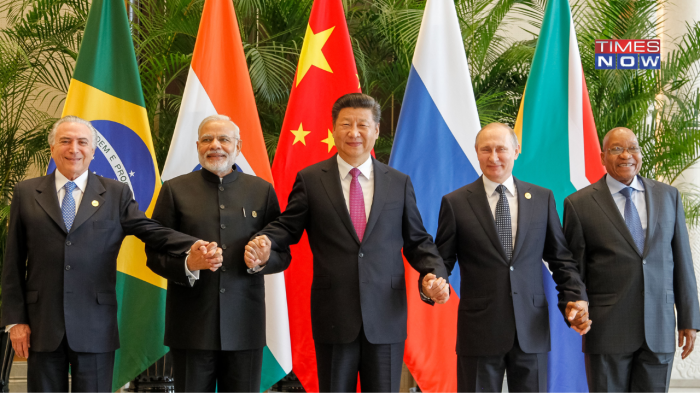
The 2024 BRICS Summit will be held in Russia from 22 to 24 October.
The IMF's World Economic Outlook for 2024 shows that China's real GDP growth is expected to account for 4.6%, Russia - 3.2%, the United States - 2.7%, the United Kingdom - 0.5%, Germany - 0.2% and France - 0.7%.
The resilience of Russia's economy is attributed to "fiscal discipline" developed over many years, according to IMF Managing Director Kristalina Georgieva. China's foreign policy is based on the principles of the Shanghai Cooperation Organization (SCO), which include mutual trust, mutual benefit, equal rights, consultations, respect for cultural diversity, aspirations for common development, non-alignment, non-aggression, openness, and joint intra-regional efforts to curb terrorism, separatism, and extremism.
Regarding Ukraine, there are competing issues: separatism within Ukraine versus Russia's right to security. Beijing has consistently advocated for peace through negotiation rather than conflict. The main obstacle is a lack of trust, particularly after the failed Minsk I and II negotiations, where the leaders of France and Germany admitted that they never intended to honour the agreements but were merely buying time to rearm Ukraine.
"The 2014 Minsk agreement was an attempt to give Ukraine time," Angela Merkel admitted in an interview with Die Zeit. Given this context, initiating a peace process is challenging, yet all parties recognize that peace can only be achieved through negotiations. The ongoing conflict and resulting casualties only serve to deepen animosities.
China understands that the United States will do everything in its power to disrupt the Sino-Russian relationship, as the combination of Chinese manufacturing and Russian resources poses a significant threat to American economic dominance.
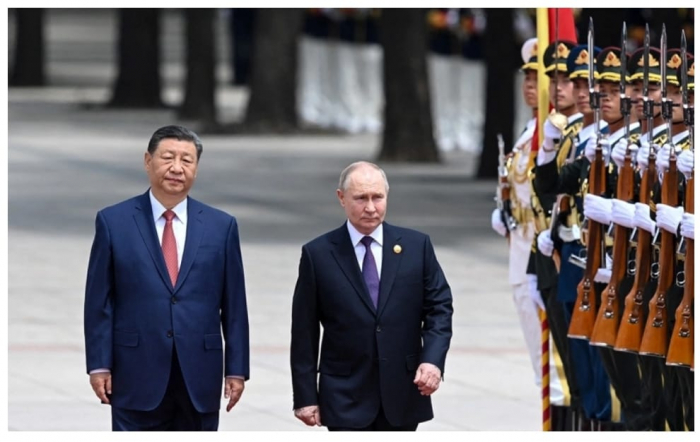
The world must discard the assumption that China will act like the United States. While the US remains in its imperial phase, China has been a civilization for millennia. Xi Jinping is striving to foster peace talks following his trip to Europe, with a long-anticipated meeting with Vladimir Putin.
"A review of history shows that conflicts, in the end, have to be settled through dialogue and negotiation," Xi noted in his 2023 meeting with Putin.
Assuming China and Russia continue to strengthen their trade relationship, the combination of direct borders and the synergy of resources and manufacturing suggests a long-term shift in geopolitical economics. This indicates that neither Russia nor China have reached their peak potential.
(If you possess specialized knowledge and wish to contribute, please reach out to us at opinions@news.az).


Similar news