Anti-China alliance between the U.S. and Russia – Is it possible and What would it lead to?


By Tural Heybatov
According to Bloomberg, the United States and Russia are engaged in discussions about potential cooperation in the Arctic. Washington views this dialogue as a tool to weaken Russian-Chinese relations. The talks, which are still in their early stages, reportedly focus on the exploration of natural resources, the development of trade routes, and energy cooperation.
Many experts believe the likelihood of these plans being realized is low. However, Donald Trump’s maneuvers suggest that such attempts will be made. As ice melts in the Arctic, the region is becoming increasingly attractive due to its vast, previously inaccessible resources. The U.S. may try to capitalize on this by proposing an "Arctic alliance" with Moscow—especially since Russia is also wary of China’s growing influence in the region.
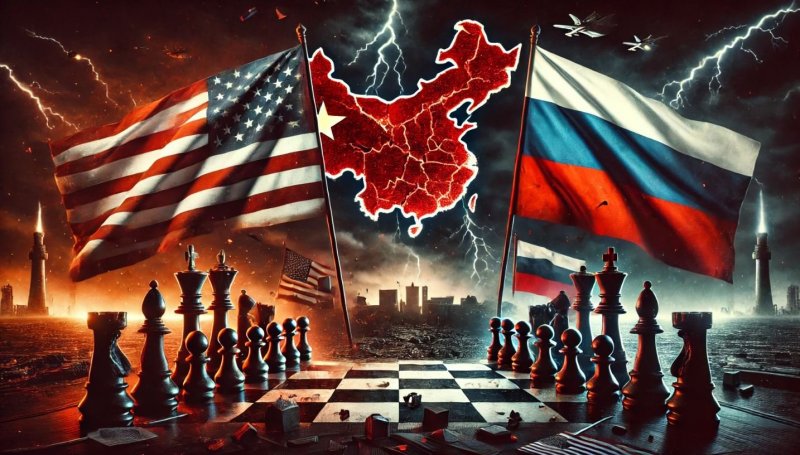
Could the U.S. and Russia ally against China? In theory, this is possible. The question is how pragmatic Moscow is willing to be and how far Washington is prepared to go in making concessions. Trump has been making overtures to the Kremlin, promising partial sanctions relief and the restoration of economic ties. This is undoubtedly beneficial for Russia: years of war and severe sanctions have not destroyed its economy, but they have significantly weakened it. If the conflict drags on, the country could find itself in a critical situation. The White House understands this and will likely attempt to use the opportunity—not necessarily to overthrow Moscow, but at least to ensure it does not actively support China.
Source: TRENDS Research & Advisory
China remains the United States’ main strategic competitor. If Washington cannot curb Beijing’s rise on its own, why not try to enlist the support of a weakened Moscow? This would not be the first time such a geopolitical move has been made. Decades ago, President Richard Nixon secured an alliance with Mao Zedong against the Soviet Union. At the time, Western sanctions on China, imposed after the establishment of the communist regime, were lifted, allowing Beijing to jumpstart its economic growth, join international organizations, and eventually become a serious competitor to the U.S.
Of course, today’s situation is entirely different. The China of the late twentieth century and modern Russia are vastly different entities. Back then, Beijing had no choice—continued sanctions would have led to economic collapse. Russia, despite facing significant economic pressure, still retains a degree of resilience. However, Moscow also has reasons to distrust Beijing. China’s growing influence in the Russian Far East is a source of concern, yet Russia can do little to counteract it, largely due to its economic dependence on Chinese investment in the region.
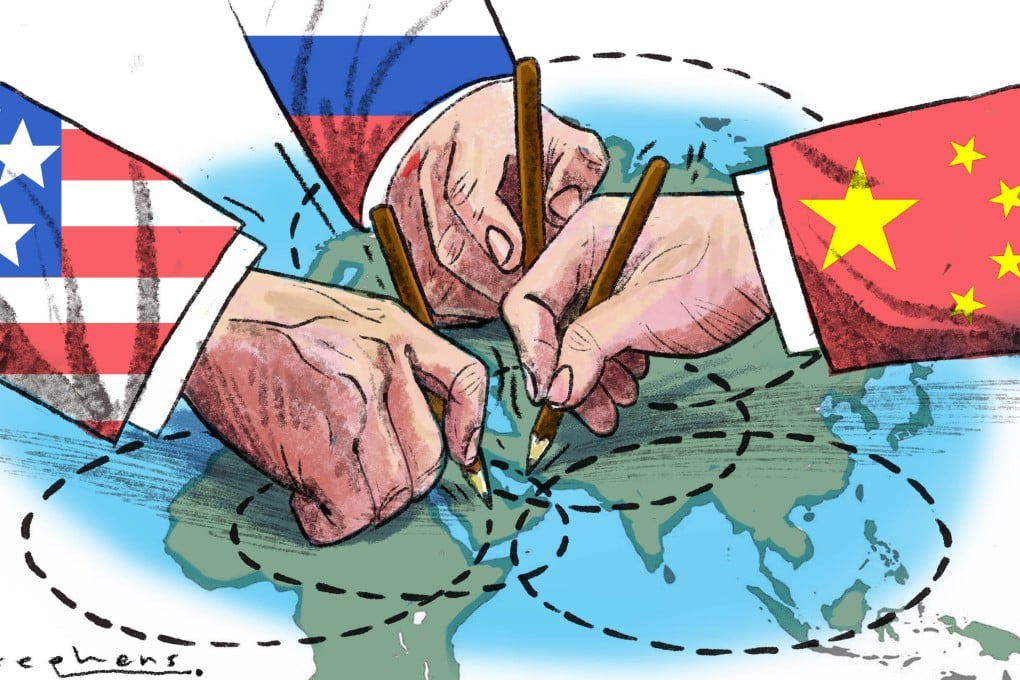
Washington has a long history of employing the "divide and rule" strategy to pit allies against one another. Although an anti-China alliance between the U.S. and Russia seems unlikely for now, history suggests that such deals are not impossible.
Source: South China Morning Post
For Moscow, the key question is how pragmatic and forward-thinking its leadership is. Russia is not China of the past, and no "economic miracle" will follow a deal with the U.S. What guarantees are there that Washington won’t shift its stance once it achieves its goals? Even under Trump, this risk is high, and if there is a change in U.S. leadership, the chances of a policy reversal increase dramatically.
Few anticipated the dramatic shifts in global politics in recent months. Future developments could similarly take an unexpected turn—potentially to Russia’s detriment.
The most critical factor the Kremlin must consider is that if Moscow aligns itself with Washington against Beijing, restoring relations with China will be impossible. And that could come at an extremely high cost.
Abandoning a strategic partnership with Beijing for short-term benefits could leave Russia in a geopolitical vacuum in the long run. Given its increasing isolation from the West, China remains one of the few powerful allies capable of providing economic and technological support. Losing this partner would inevitably push Moscow into greater dependence on Washington, which could impose even harsher terms in the future.
Moreover, if Russia turns away from China in favor of the U.S., it would trigger a fundamental shift in the global balance of power. Beijing, finding itself without a key partner, would seek alternative alliances, potentially strengthening ties with countries such as India, Türkiye or Iran. This would not only leave Russia without an economic partner but could also create a situation in which its geopolitical standing becomes even more vulnerable.
Thus, in the long term, Russian leadership must weigh not only immediate gains but also potential risks. History has shown that close alignment with Washington has rarely brought stability or prosperity to Moscow. A strategy aimed at weakening China with U.S. support could ultimately lead to Russia losing its autonomy, while any alliance with America may prove to be nothing more than a fleeting illusion of power.


Similar news