Around Gaza: The future of the enclave



Editor's note: Moses Becker is a special commentator on political issues for News.Az, a PhD in political science and an expert on interethnic and interreligious relations. The article expresses the personal opinion of the author and may not coincide with the view of News.Az.
October 7 will mark one year since the tragic attack at the “Nova” music festival, when Hamas militants launched an unprovoked assault on Israel. About 3,000 militants (some reports suggest up to 6,000) breached the security barrier and began hunting down people, many of whom struggled to grasp what was happening.The festival was dedicated to the ideals of peace, friendship, and brotherhood, but its participants, along with the residents of nearby kibbutzim—women, children, and the elderly—became victims of the attack. The massacre claimed the lives of 1,200 people, and 240 were taken hostage, intended to be exchanged for terrorists imprisoned in Israeli jails. Hamas leaders in Qatar held a “thanksgiving” prayer, celebrating the “successful” bloodshed. These events are reminiscent of the Holocaust, when Nazis would hold large celebrations after murdering unarmed Jews.
Hamas, supported and armed by Iran, aimed to provoke a new “intifada” in Judea and Samaria, incite a general uprising among Israeli Arabs, and draw Hezbollah and other pro-Iranian groups into the conflict. They also hoped to ignite a broader war between Iran, Sunni countries, and Israel. One factor that pushed Hamas to act was the protests in Israel against judicial reform. Iran, seeing these events as a “divine sign,” predicted the end of the Zionist state. Additionally, the “axis of evil” counted on the strained relations between Israeli Prime Minister Benjamin Netanyahu and U.S. President Joe Biden.
However, Hamas’s plans failed. The mass killings and hostage-taking united Israeli society, which recognized the dangers of internal division. Perhaps the people recalled the tragic past: the collapse of the Kingdoms of David and Solomon, which led to the Roman conquest in 63 B.C., and the power struggles of the Hasmonean Kingdom that allowed the Romans to take control. Yet, the actions of today’s opposition cast doubt on their understanding of history. For instance, Benny Gantz, leader of the “Israel Resilience Party,” left the government, deepening the national split. Unlike the opposition during Churchill’s time or during the 1967 war, when political parties came together for national interests, today’s politicians seem driven by personal ambition.
The key issue of the current war is Israel’s control over the Philadelphi Corridor (the border between Gaza and Egypt), the release of hostages, and the elimination of Hamas’s rule. However, reaching an agreement with terrorists is nearly impossible. Hamas leader Sinwar ordered the execution of hostages if Israeli forces advanced. In late August, six innocent citizens of Israel, the U.S., and Russia were killed. According to Israeli authorities, 101 hostages remain in Hamas captivity. The likelihood of their release is slim, as no deal that strips Hamas of power would satisfy them.
Israeli Prime Minister Benjamin Netanyahu finds himself trapped. The release of the hostages is his top priority, but if he allows Hamas to retain power, the Israeli people will not forgive him. Meanwhile, the White House is trying to push its own diplomatic solution: a ceasefire in exchange for all hostages and the release of Palestinian prisoners convicted of terrorism against Israel. Afterward, Hezbollah would stop its attacks, and negotiations between Lebanon and Israel over border demarcation would begin. This could be a valuable achievement for the U.S. administration ahead of the presidential elections, as it would prevent an escalating regional war in the Middle East.
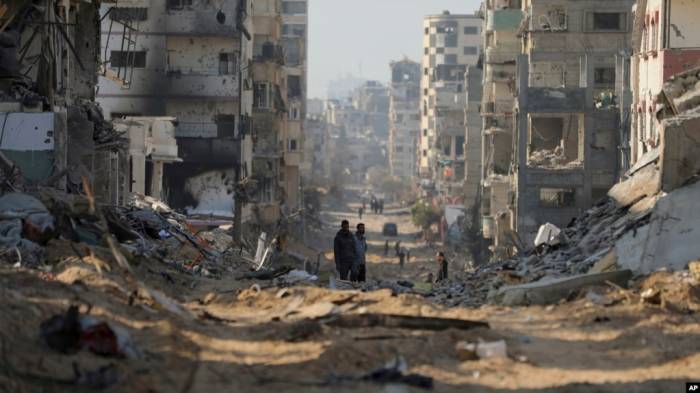
However, Israel is in no hurry to agree, waiting for the outcome of the U.S. presidential elections. If Donald Trump wins, the Middle East may take on new contours, with Gaza possibly coming under the joint control of Israel, the UAE, Egypt, and the U.S. Time will tell how this will unfold. In any case, Israel is already clearing rubble, building roads, and creating infrastructure for its military contingent to stay in Gaza for the long term. A significant portion of the enclave’s population will likely leave, possibly moving to the Sinai Peninsula or the island of Socotra in the Indian Ocean.
If war breaks out, Hezbollah as a military force will cease to exist, and its militants will disarm under pressure from the Lebanese people. As for Iran, losing its loyal friends and allies will deprive it of the ability to dictate to the region how and to whom to pray.
(If you possess specialized knowledge and wish to contribute, please reach out to us at opinions@news.az).


Similar news