Azerbaijan–Italy partnership enters new phase ahead of Meloni’s visit


Editor’s note: Zaur Nurmamedov is a journalist and a graduate of the Faculty of Political Science at the Academy of Public Administration under the President of the Republic of Azerbaijan (1993–1999). He previously served as first deputy editor-in-chief of the Vesti.Az news portal (2009–2023). The views expressed in this article are his own and do not necessarily reflect the position of News.Az.
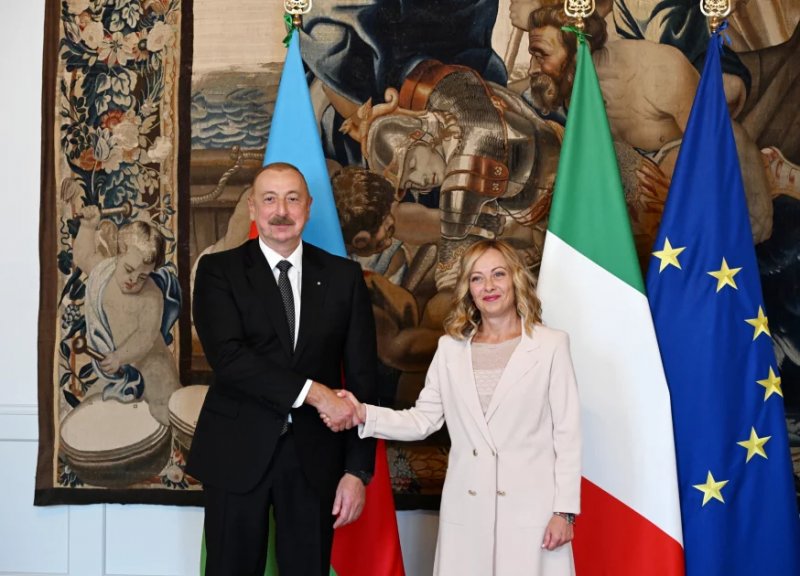
Italian Prime Minister Giorgia Meloni is scheduled to visit Azerbaijan on 5 May. In recent years, Azerbaijan and Italy have developed a dynamic and constructive dialogue at the highest level. In an increasingly fast-changing global environment, both countries continue to act as important strategic partners, ready to jointly address contemporary challenges and identify new opportunities for growth and prosperity.
Against this backdrop, Italian–Azerbaijani relations are of strategic importance, and both sides are actively working to further expand this partnership. Meloni’s upcoming visit to Baku clearly reflects this ongoing trend.
Italy is the main buyer of Azerbaijani oil. For the past two decades, it has served as a key energy hub for Azerbaijani exports. A substantial share of Azerbaijani oil transported to the Turkish Mediterranean port of Ceyhan is subsequently shipped and sold through terminals in the Italian ports of Trieste and Augusta.
Today, the Italian market remains the largest destination for Azerbaijani oil. In January–March 2026 alone, 3.27 million tonnes of Azerbaijani oil were exported to Italy, accounting for a significant share of the country’s energy imports. In 2025, Italy purchased 56% of Azerbaijan’s total oil exports.
RECOMMENDED STORIES
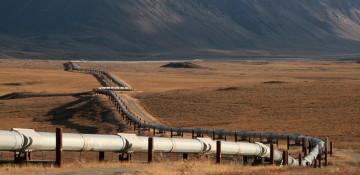
Italy is also among the largest importers of Azerbaijani natural gas supplied through the Trans Adriatic Pipeline (TAP). In January this year, Azerbaijan exported 801.4 million cubic metres of gas to Italy, valued at $312.3 million. In 2025, Azerbaijan further strengthened its position as a key supplier, delivering approximately 9.5–9.6 billion cubic metres of gas, accounting for up to 38% of Italy’s total imports.
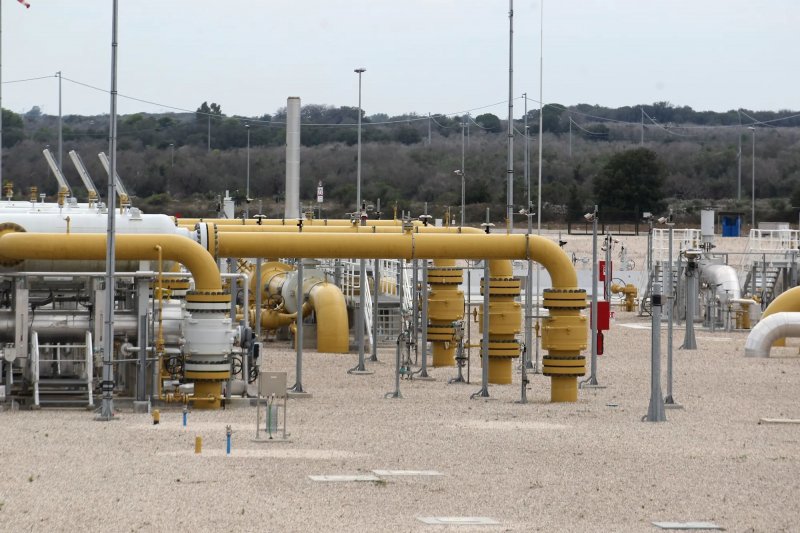
To date, a total of 54.3 billion cubic metres of gas have been transported to Europe via TAP, including 45.4 billion cubic metres delivered to Italy. As a result, Italy has become Azerbaijan’s largest trading partner, accounting for approximately 25–46% of its foreign trade turnover. In 2025, bilateral trade reached around $11.86 billion, marking a 4.1% increase compared to 2024.
This cooperation extends beyond the energy sector. Italian companies are actively investing in Azerbaijan and participating in projects of international significance. More than 100 commercial entities with Italian capital are currently operating across sectors such as industry, agriculture, transport, construction, trade and services.
To date, Azerbaijani investments in Italy have amounted to $342 million, while Italian investments in Azerbaijan total $805 million. In addition, the current market value of the State Oil Fund’s investment portfolio in Italy stands at $2.8 billion.
The Italian company CESI SpA serves as Azerbaijan’s consulting partner in preparing feasibility studies for the Caspian Sea–Black Sea–Europe and Central Asia–Azerbaijan green energy corridor projects. The Caspian Sea–Black Sea–Europe corridor, planned to be implemented in stages from 2032, will enable Italy to access electricity supplied to the European energy market.
The successful development of Azerbaijani–Italian relations is also reflected in defence cooperation. Several of the 31 planned military activities for 2024–2025 have already been completed, including the acquisition of a C-27J Spartan military transport aircraft produced by the Italian company Leonardo. Italy is also among the few European countries actively supporting Azerbaijan in demining operations in liberated territories.
This indicates that Italy’s interests in the South Caucasus are primarily focused on energy security, economic partnership — particularly with Azerbaijan — and strengthening its geopolitical influence. Rome views the region as a key transport and energy hub and is expanding cooperation in gas supply, infrastructure development and cultural exchange.
Notably, among the South Caucasus countries, Italy has developed its closest economic ties with Azerbaijan. By comparison, in 2025, trade turnover between Italy and Armenia stood at approximately $453.8 million, while trade with Georgia amounted to $442.7 million. These figures suggest that Italy regards Azerbaijan as a reliable priority partner in the region and seeks to further deepen bilateral relations.
Another aspect of the growing Azerbaijan–Italy rapprochement is that Rome, like Baku, has experienced tensions in its relations with France in recent years. Italy and France compete for influence in the Mediterranean, a key foreign policy priority for both countries, where Italy has recently been losing ground. This is particularly evident in Libya, where, during Muammar Gaddafi’s rule, Italy was the largest buyer of Libyan oil and its principal trading partner. Today, however, France actively supports the government of Khalifa Haftar, often to the detriment of Italian interests.
In addition, Italy and France are competing for broader European leadership. Following the United Kingdom’s exit from the European Union, Italy has sought to fill the resulting political space. Under Prime Minister Meloni, Italy is working to restore its position as a leading force within the EU. At the same time, tensions between US President Donald Trump and the French political establishment, German Chancellor Friedrich Merz’s limited ability to counterbalance US influence, and ongoing Franco-German competition have created additional opportunities for Rome.
Against the backdrop of the breakdown in energy relations between Russia and the West, Italy is seeking to reshape EU energy policy, positioning itself as a potential energy hub and aiming to establish an informal alliance of Southern European countries. In doing so, Italy aspires to subregional leadership — a development not welcomed by France. This strategic direction aligns with the deepening Azerbaijan–Italy partnership, which is also evolving amid tensions between Paris and Baku.
As a result, Italy has become a close partner of Azerbaijan in advancing both foreign policy and economic objectives. At the same time, Azerbaijan, in the spirit of mutually beneficial cooperation, is supporting the strengthening of Italy’s presence in the South Caucasus.
Furthermore, in May 2025, the first “Italy + Central Asia” summit was held, marking the launch of Rome’s strategic engagement with the region. Italy’s foreign policy priorities in Central Asia are driven by specific economic interests, particularly in Kazakhstan, Turkmenistan and Uzbekistan.
Italy is seeking to expand its influence in Central Asia, viewing the region as strategically important not only for energy security but also for broader economic cooperation. In 2023, Italy withdrew from China’s Belt and Road Initiative (BRI) under pressure from Brussels. By strengthening ties with Central Asian countries, Rome aims to recover lost commercial opportunities indirectly.
(If you possess specialized knowledge and wish to contribute, please reach out to us at opinions@news.az).


Similar news