Europe’s moral authority cracks over Azerbaijan


Editor’s note: Abulfaz Babazadeh is a scientist, a scholar of Japanese studies, a political observer, and a member of the Union of Journalists of Azerbaijan. The views expressed in this article are the author’s own and do not necessarily reflect the position of News.Az.
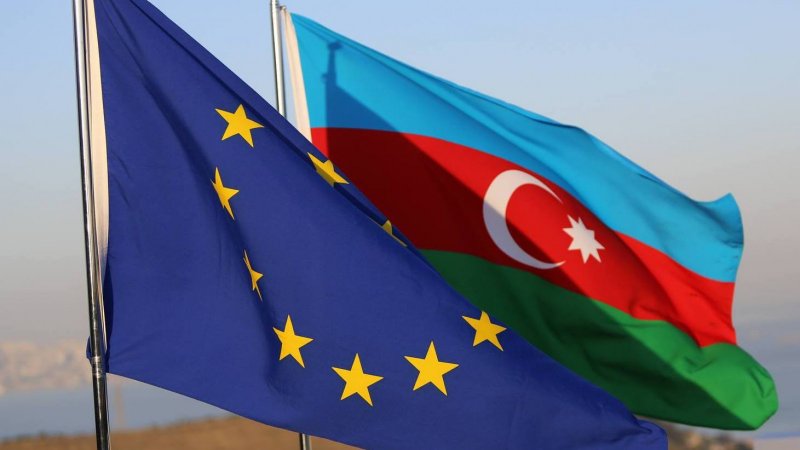
In world politics, a single document can sometimes reveal more than dozens of diplomatic statements. The European Parliament’s resolution on Azerbaijan is precisely such a document. Formally, it is yet another declaration about alleged human rights concerns, the “return” of the Armenian population, detained individuals and “cultural” heritage.
In essence, however, it is a symptom of a deeper illness within the European political system, where universal values are increasingly being transformed into a selective instrument of pressure.
RECOMMENDED STORIES
The main problem with this resolution is not even that it creates no legal obligations for Azerbaijan. That much is obvious: such documents of the European Parliament may carry a certain political weight, but they do not constitute a legal verdict against a sovereign state. The problem lies deeper. The European Parliament is once again trying to speak in the language of a moral arbiter, even though Europe itself has long been standing before the mirror of its own crises — corruption-related, institutional, value-based and geopolitical.
And in that mirror, the image Europe sees is far from ceremonial.
In its resolution, the European Parliament demands that Azerbaijan take steps that effectively touch on issues of sovereignty, the judicial system, security, post-war reconstruction, and domestic law and order. The document refers to support for the rights of Armenians from Karabakh, including return, protection of property, identity and cultural heritage, and also demands the immediate release of individuals of Armenian origin described as “prisoners of war” and “hostages.”
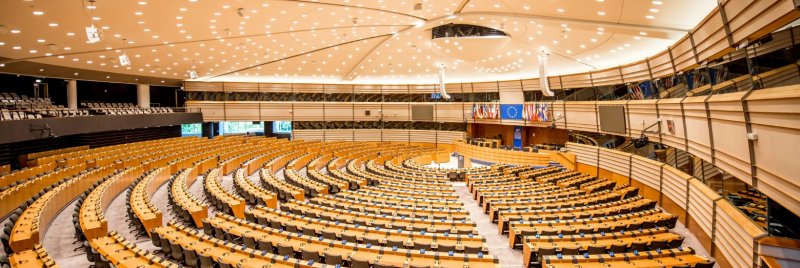
Yet there is a fundamental asymmetry in this approach. The European Parliament demands absolute transparency from Azerbaijan, absolute humanitarian sensitivity and absolute compliance with Europe’s political interpretation of events. At the same time, for decades it showed remarkable restraint when it came to the occupation of Azerbaijani territories, the fate of more than one million refugees and internally displaced persons, and the destruction of cities, villages, cemeteries, mosques and cultural monuments, as well as the erasure of historical memory in the occupied lands.
This is where the moral crack begins. When some suffering becomes the subject of resolutions, while other suffering is reduced to a diplomatic footnote, law loses its universality. It becomes a political filter: some are shown in close-up, while others are left outside the frame.
Azerbaijan today is in a very different historical position from the one it was in during the 1990s. It is no longer a state forced to wait for external power centres to recognise its right to territorial integrity. Baku has restored its sovereignty, changed the balance of power in the South Caucasus and begun shaping a new regional architecture — through the reconstruction of liberated territories, the return of former internally displaced persons, demining, infrastructure projects and peace talks with Armenia.
That is why the European Parliament’s resolution looks like an attempt to drag the conflict back into its old framework. In that framework, Azerbaijan is expected to return to the role of the accused, Armenia to the role of the eternal victim, and Europe to the role of judge — even though European institutions themselves failed for years to offer a fair and effective mechanism for resolving the conflict.
This is why Hikmet Hajiyev, Assistant to the President of Azerbaijan and Head of the Foreign Policy Affairs Department of the Presidential Administration, was right to state clearly: “The document adopted by the European Parliament does not create legal obligations for Azerbaijan. Azerbaijan is taking steps to ensure peace and security in the region and to advance the normalisation process with Armenia.”
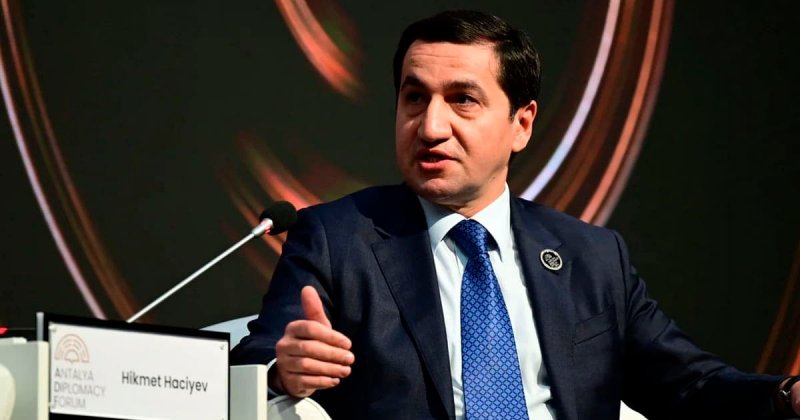
The paradox is that, in practice, the peace process has advanced not because of the European Parliament, but despite its political inertia. The Washington Declaration of 8 August 2025, signed with the participation of Azerbaijani President Ilham Aliyev, Armenian Prime Minister Nikol Pashinyan and US President Donald Trump, set out the most important principles: advancing a peace agreement, opening communications, respecting the sovereignty, territorial integrity and jurisdiction of states, and rejecting revanchism.
This is the real peace track — not a loud moral declaration from Strasbourg, but a concrete political framework capable of transforming the South Caucasus from a zone of post-Soviet conflict into a transport and energy hub of Eurasia.
If the European Parliament truly wishes to speak about the humanitarian consequences of the conflict, it must begin with the mine threat. Since November 2020, 421 people in Azerbaijan have fallen victim to landmines. Of these, 72 have been killed and 349 injured. Among the dead were 57 civilians — farmers, construction workers, demining personnel and residents returning to land they had waited decades to see again. These are people dying after the end of the war — in peacetime, on territory where homes, schools, roads, hospitals and a new life should be built.
And here a difficult question arises: why is European humanitarian sensitivity so selective? Why is the return of the Armenian population presented as a central issue, while the return of Azerbaijani internally displaced persons, who were deprived of their homes for decades, receives no comparable political weight? Why does the cultural heritage of one side become a matter of European concern, while destroyed Azerbaijani cities, cemeteries and religious sites remained almost invisible to the same institutions for many years?
The answer is uncomfortable but очевидно. Europe chooses whose pain to turn into an international issue and whose pain to leave as a regional detail.
The European Parliament likes to speak in the name of values. But values require moral integrity, and that is becoming increasingly difficult for the European political system. Qatargate struck a blow to the image of Europe as a space of transparency, legal ethics and democratic accountability. Transparency International EU has stated that, three years after the largest corruption scandal in the history of the European Parliament, too little has been done, while loopholes for foreign influence and internal administrative arbitrariness remain.
Moreover, in 2025, Belgian prosecutors charged eight individuals in a case involving alleged corruption, money laundering and participation in a criminal organisation as part of an investigation into possible bribery in the European Parliament linked to lobbying activities in the interests of Huawei.
This does not mean that Europe has lost all of its institutions. But it does mean that European institutions can no longer credibly claim the role of the world’s flawless moral prosecutor. When a body that has lived through corruption scandals and accusations of vulnerability to lobbying networks lectures other states about law and justice, the result is a sense of political awkwardness, to put it mildly.
Europe’s degradation is not reflected in the fact that it criticises Azerbaijan. Criticism is normal in international relations. The problem is that criticism has ceased to be universal. It has become selective, convenient, driven by lobbying interests and often detached from the real balance of facts.
The European Parliament speaks about human rights, yet for years it did not demonstrate comparable persistence regarding the rights of Azerbaijani refugees and internally displaced persons.
The European Parliament speaks about cultural heritage, yet the destruction of Azerbaijani cultural heritage during the occupation never became a major European concern.
The European Parliament speaks about peace, yet its resolutions often fuel revanchist sentiment instead of strengthening direct dialogue between Baku and Yerevan.
The European Parliament speaks about law, yet in effect it seeks to politically contest the consequences of Azerbaijan’s restoration of sovereignty over territory internationally recognised as part of Azerbaijan.
This is how a new European norm is emerging: universal values are applied according to the timetable of political convenience. If a state is needed by Europe as an energy partner, it is approached pragmatically. If the same state becomes a convenient target for parliamentary rhetoric, it is turned into the object of a moral attack.
The most interesting part of this story is the contradiction within the European system itself. The European Commission fully understands Azerbaijan’s importance for Europe’s energy security. In March 2026, the European Commission stated directly that Azerbaijan plays an important role in the EU’s efforts to diversify supplies away from Russian fossil fuels, and that the Southern Gas Corridor contributes to a more reliable and secure gas supply for Europe.
In other words, one part of the European system speaks to Azerbaijan in the language of energy necessity, infrastructure and strategic interdependence. Another part — the European Parliament — speaks in the language of accusations, ultimatum-style wording and political posturing.
This is not Europe’s strength. It is a symptom of institutional fragmentation. Europe wants Azerbaijani gas, Azerbaijan’s transit role and Azerbaijan’s stability in the South Caucasus, while at the same time seeking to preserve its habit of moral instruction. But the world has changed. States are no longer obliged to accept European rhetoric as the ultimate truth simply because it is pronounced in Strasbourg.
Another missing piece of the puzzle is Armenia’s internal politics. Nikol Pashinyan, however controversial he may be domestically and within the diaspora, has effectively acknowledged the need to move beyond the logic of an endless Karabakh conflict. The Washington Declaration set out the rejection of revanchism and a course towards peace.
That is precisely why some external forces linked to diaspora, lobbying and revanchist circles perceive the peace process as a threat. For them, conflict is political capital. Peace, by contrast, dismantles established systems of mobilisation, financial influence and ideological control.
In this sense, pressure on Azerbaijan through the European Parliament may also serve a secondary function: pressure on Pashinyan himself. The stronger the external rhetoric around Karabakh, the harder it becomes for the Armenian leadership to maintain a line aimed at the final closure of the conflict. In such a scenario, the European Parliament risks becoming a source of political oxygen for those seeking to drag the region back into confrontation.
Europe is experiencing not a geographical decline, but a decline in values. The continent remains wealthy, influential, technologically advanced and institutionally complex. But its main capital — moral leadership — is rapidly eroding.
When human rights are used as an instrument of pressure, they lose their universality.
When international law is invoked only in convenient cases, it becomes a political prop.
When corruption scandals within European structures do not prevent those same structures from acting as global judges, a crisis of trust emerges.
When parliamentary rhetoric begins to hinder a real peace process, humanism turns into a geopolitical posture.
Today, the South Caucasus is becoming a litmus test for Europe. The question is no longer only how Europe treats Azerbaijan. The question is whether Europe is capable of applying international law consistently and addressing human suffering without ethnic, religious or political selectivity.
So far, the answer looks troubling.
The decision of Azerbaijan’s Milli Majlis to suspend cooperation with the European Parliament in all areas is a political signal that relations are impossible where dialogue is replaced by diktat and partnership by pressure. The Azerbaijani side has also ended its participation in the EU–Azerbaijan Parliamentary Cooperation Committee and launched procedures to withdraw from the Euronest Parliamentary Assembly.
In international politics, respect cannot be demanded only from others; it must also be demonstrated. Towards Azerbaijan, the European Parliament has too often chosen lecturing, accusation and the language of moral hierarchy.
But the new reality of the South Caucasus no longer fits into old European templates. Azerbaijan has restored its sovereignty, Armenia is seeking a way out of a historical deadlock, the United States is advancing a new peace and infrastructure track, Russia is losing its former monopoly of influence, Iran is closely watching changes to the region’s transport map, and Europe is trying to be an arbiter, partner, critic and beneficiary all at once. That cannot work.
If Europe wants to be part of the future of the South Caucasus, it will have to abandon the language of double standards. It is not Baku that must prove to Europe its right to sovereignty. It is Europe that must demonstrate that its values have not yet become a political currency — spent where convenient and withheld where inconvenient.
For now, the European Parliament’s resolution looks like a document from a fading era, in which Europe believed it could judge others without accounting for its own blind spots.
(If you possess specialized knowledge and wish to contribute, please reach out to us at opinions@news.az).


Similar news