Trump’s high-stakes China visit: Can he strike a deal with Xi before the next global shock?


Editor’s note: Seymur Mammadov is a special commentator for News.Az and the director of the international expert club EurAsiaAz. The article reflects the author’s personal opinion and does not necessarily represent the views of News.Az.
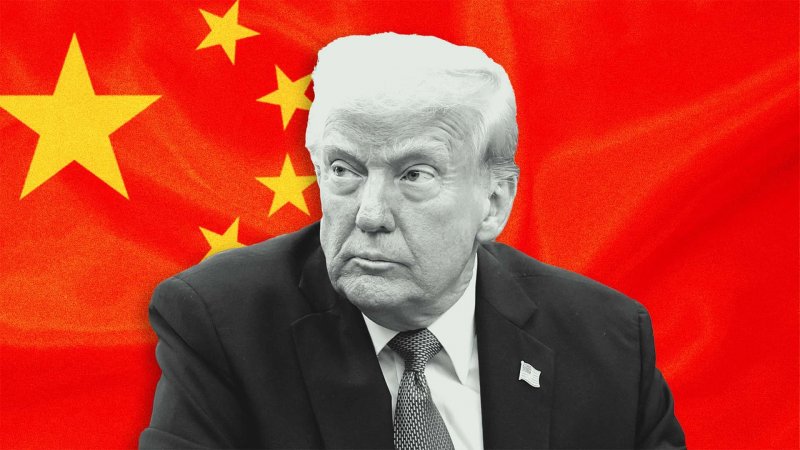
U.S. President Donald Trump’s planned visit to China on May 14–15 could become not merely another meeting between two leaders, but one of the defining diplomatic moments of 2026. The agenda will extend far beyond trade and tariffs. At stake are Taiwan, technological competition, rare earths, artificial intelligence, global supply chains, Iran, security in the Asia-Pacific region, and the broader question of whether Washington and Beijing can prevent their rivalry from sliding into open confrontation.
The main feature of the upcoming summit is that it will take place against the backdrop of both deep interdependence and profound strategic distrust. The United States and China remain the world’s two largest economies. Their trade and production links are still enormous. Yet the logic of the relationship has long moved beyond an ordinary commercial dispute.
What is unfolding is a struggle over technological leadership, control of critical resources, influence in Asia, and the ability to shape the rules of the global economy. That is why the upcoming talks between Trump and Xi Jinping will be seen not simply as a bilateral meeting, but as a test of the entire architecture of U.S.-China relations.
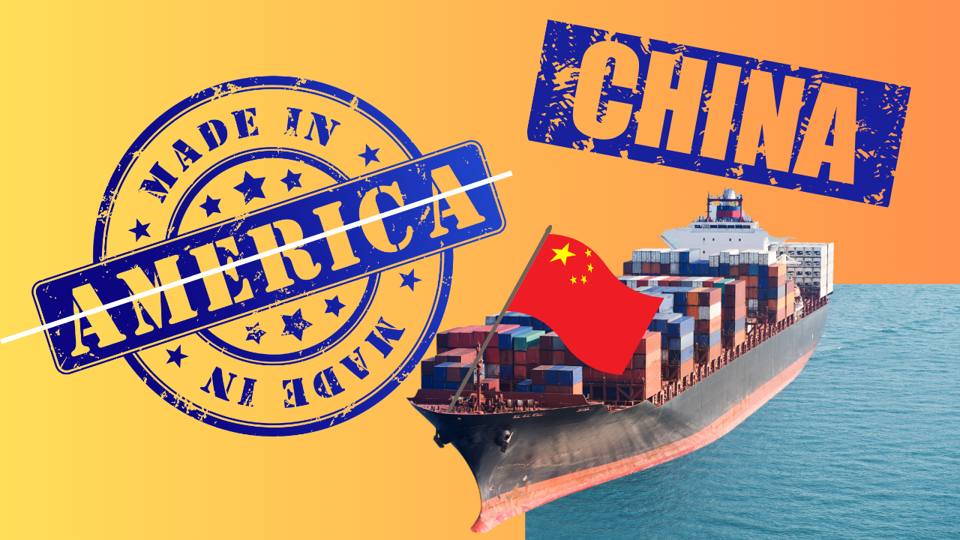
The economic agenda will be the first and most obvious part of the negotiations. Despite years of tariffs, political tensions, and attempts to diversify supply chains, China remains one of the most important directions for the American economy.
For Trump, trade with China is not only an economic issue, but also part of his political identity. He has traditionally viewed the trade deficit as proof that the United States has been placed at a disadvantage and has tried to turn negotiations into a hard bargaining process.
For Xi Jinping, the trade agenda has a different meaning: Beijing wants to show that China will not yield under pressure, while at the same time remaining interested in a managed stabilization of relations in order to preserve access to markets, technologies, and investment.

Source: Forbes
This is why the two sides are likely to discuss not only tariffs, but the broader framework of economic coexistence.
Washington wants more favorable terms, greater market access, and stronger guarantees that Beijing will not use trade and industrial policy to undermine American interests. Beijing, meanwhile, wants predictability, fewer restrictions, and recognition of China as an equal economic power. The question is whether Trump and Xi can find even a limited compromise — or whether both sides will leave the summit with their positions hardened.
Yet trade is only the surface layer of the conflict. Beneath it lies a much deeper technological rivalry. The United States continues to restrict China’s access to advanced semiconductors, chipmaking equipment, and technologies linked to artificial intelligence. Washington sees this as a matter of national security. It does not want China to acquire capabilities that could strengthen its military potential, intelligence systems, supercomputers, and AI infrastructure. Beijing views these restrictions as an attempt to contain China’s development and preserve American dominance over the technologies of the future.
This issue may become one of the most difficult parts of the talks. Trump may seek stronger Chinese commitments on trade while maintaining pressure on sensitive technologies. Xi, in turn, may demand a relaxation of export controls or at least clearer rules that prevent the relationship from becoming a permanent technological blockade. But the strategic contradiction will remain: the United States wants to slow China’s technological rise, while China wants to prove that it can overcome restrictions through domestic innovation, import substitution, and state-led industrial mobilization.
Rare earths and critical materials will be another crucial issue. China holds powerful positions in the processing of rare earth elements used in defense production, aviation, electronics, electric vehicles, turbines, chips, and other high-tech industries.
This gives Beijing a major lever in any confrontation with the United States. If China can accelerate, delay, or restrict access to certain critical materials, rare earths become not just an industrial resource, but a geopolitical instrument.
For Trump, this is an extremely sensitive matter. His administration has been pushing partners to reduce dependence on China in rare earth supply chains, but such chains cannot be built overnight. Mining, processing, environmental standards, logistics, and investment require years. That means the United States may seek supply guarantees from China, while Beijing may use the issue as leverage in return for concessions on tariffs, technology restrictions, or sanctions. In this sense, rare earths could become one of the hidden but decisive topics of the summit.

Source: Xinhua
The most dangerous political issue, however, will likely be Taiwan. For Beijing, Taiwan is not simply a diplomatic question. It is a matter of sovereignty, national identity, regime legitimacy, and historical legacy. China wants the United States to more clearly oppose Taiwanese independence and avoid steps that Beijing interprets as encouraging separatism. Washington, meanwhile, maintains its “One China” policy but continues to preserve unofficial ties with Taipei, supply defensive weapons, and support Taiwan’s ability to resist coercion.
For the United States, Taiwan is also a strategic and technological node. It is a democratic partner, a key element of the regional balance, and one of the central pillars of the global semiconductor industry. Any careless wording by Trump could be interpreted in Taipei, Beijing, Tokyo, Seoul, and Manila as a signal of a shift in U.S. policy. That is why America’s allies in Asia will watch not only the final statement, but also the tone, language, and public framing of the talks.
The situation is further complicated by growing Chinese pressure around Taiwan and by concerns in Taipei that a major U.S.-China bargain could be made over its head. Trump is known for his transactional approach to diplomacy, and that creates anxiety among partners who depend on long-term American commitments. If the summit creates even the perception that Taiwan’s interests are being treated as part of a broader trade bargain, the political consequences in Asia could be serious.
Another major block will be global security. Trump’s visit to China comes amid continuing tensions around Iran and the broader Middle East. For China, stability in energy supplies is essential. The Chinese economy depends heavily on imported oil and secure maritime routes. For the United States, the Middle East remains a region of military, energy, and alliance interests. If Washington seeks greater Chinese restraint toward Iran or asks Beijing to limit economic ties with Tehran, China may demand something in return on trade, technology, or sanctions.
This shows how regional crises are increasingly becoming part of the global bargaining process between the two powers. The Middle East, Taiwan, the South China Sea, Ukraine, and global energy routes are no longer separate issues. They are interconnected elements of the same strategic competition. Every concession in one area can be interpreted as weakness in another. Every escalation in one region can affect trade, technology, markets, and alliances elsewhere.
The United States and China are also competing through third regions. China has strengthened its position in Africa, Southeast Asia, Latin America, the Middle East, and Central Asia. Even when pressure from the U.S. market increases, Beijing tries to compensate by expanding exports and investment ties elsewhere. This matters for Washington because it means that pressure on China cannot be limited to American tariffs alone. To be effective, the United States needs coordination with allies, a stronger industrial policy, and credible alternatives for countries in the Global South.
Source: Forbes
At the same time, China has vulnerabilities of its own. Its economy faces weak domestic demand, debt pressures, problems in the property sector, demographic challenges, and continued dependence on exports. This is why Xi does not need a symbolic confrontation with Washington for its own sake. He needs a managed pause that allows China to strengthen internal resilience, continue technological self-sufficiency, and avoid a sudden external shock.
The United States also cannot afford an uncontrolled rupture. American companies depend on Chinese suppliers. Consumers depend on Chinese goods. Industries depend on specific components. Financial markets react sharply to any escalation between the world’s two largest economies. That is why the real goal of the summit may not be a grand breakthrough, but conflict management: setting boundaries for competition, reducing the risk of accidental escalation, and identifying areas where limited agreements remain possible.
Those possible areas of compromise could include agriculture, purchases of American goods, limited tariff relief, export licenses, military communication channels, climate-related projects, financial stability, anti-narcotics cooperation, and the security of maritime routes. But even if such agreements emerge, they will not change the broader reality: the United States and China have entered a long period of structural rivalry. This is no longer a dispute over a few tariff lines. It is a contest between two models of power — the American alliance-based technological system and China’s state-driven industrial model.
For countries beyond the two superpowers, the summit also matters deeply. Azerbaijan, the South Caucasus, Central Asia, the Gulf states, and many countries across the Global South are watching the U.S.-China relationship not as distant observers, but as states whose economic future is directly affected by the outcome. If Washington and Beijing stabilize relations, global markets may receive a period of relief, and Eurasian countries may find more room to develop transport, energy, and investment projects. If the talks fail, pressure on supply chains, commodity prices, technology markets, and Asia-Europe routes could intensify.
This is especially important for countries that build their foreign policy around balance. Many middle powers do not want to choose between Washington and Beijing. They want access to Chinese investment, American technology, European markets, Gulf capital, and regional connectivity. A major escalation between the United States and China would narrow their room for maneuver. A managed rivalry, however, would allow them to continue diversifying partnerships.
That is why Trump’s visit to China on May 14–15 is not simply a bilateral diplomatic event. It is an attempt by the two powers to define the next stage of their rivalry: whether it will remain harsh but controlled, or become chaotic, with the risk of trade, technological, and even military escalation. Trump is heading to Beijing with a desire to secure a deal and project strength. Xi will receive him with the intention of affirming China’s status as an equal center of global power and resisting pressure on Beijing’s core interests.
The summit will therefore test not only U.S.-China relations, but the resilience of the international system itself. Its outcome will influence markets, alliances, Taiwan’s calculations, Europe’s strategy, technology companies’ planning, and the confidence of Global South states that the world’s largest powers are still capable of negotiating. If Trump and Xi can at least define the rules of competition, that alone would be a meaningful result. But if the meeting turns into an exchange of ultimatums, the May summit in Beijing could mark the beginning of a new and much harsher stage in the U.S.-China confrontation.
(If you possess specialized knowledge and wish to contribute, please reach out to us at opinions@news.az).


Similar news