Why Putin-Tokayev talks come at a complex moment for Moscow and Astana


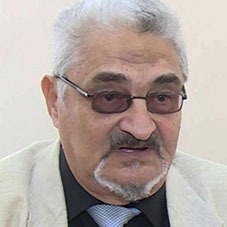
Editor’s note: Moses Becker is a special political commentator for News.Az. He holds a PhD in political science and specialises in inter-ethnic and inter-religious relations. The views expressed in this article are those of the author and do not necessarily reflect the position of News.Az.
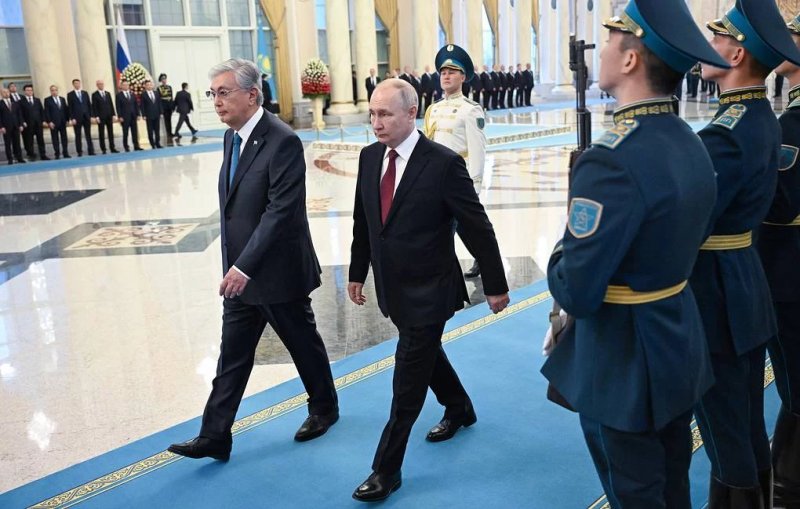
Russian President Vladimir Putin’s upcoming visit to Kazakhstan at the end of May could become one of the key events of 2026 in relations between Moscow and Astana. Formally, the trip is linked to his participation in a meeting of the Supreme Eurasian Economic Council in Astana. However, in political and economic terms, the visit will be much broader, involving a reassessment of the strategic interests of the two neighbouring states, as well as the deepening of trade and economic ties, transport corridors, energy cooperation, investment, the Eurasian Economic Union, and the wider regional agenda.
Preparations for the visit were among the main topics discussed on 30 April in Astana during Russian Foreign Minister Sergey Lavrov’s trip to Kazakhstan. President Kassym-Jomart Tokayev received Lavrov at the Akorda residence and stated that Putin’s forthcoming state visit would be the central event of the bilateral agenda this year. The Kazakh side emphasised that relations between the two countries continue to develop in the spirit of strategic partnership and alliance, with particular attention now focused on implementing agreements reached at the highest level.
RECOMMENDED STORIES
The fact that Putin’s visit is being prepared through the foreign ministries, governments and presidential administrations indicates that Moscow and Astana do not intend to limit it to protocol. The visit is expected to serve as a platform for coordinating specific areas of cooperation. On 16 February, Putin confirmed in a phone call with Tokayev that he would participate in the meeting of the Supreme Eurasian Economic Council, due to take place in Astana at the end of May. This suggests that the bilateral meeting will be integrated into a broader Eurasian agenda.
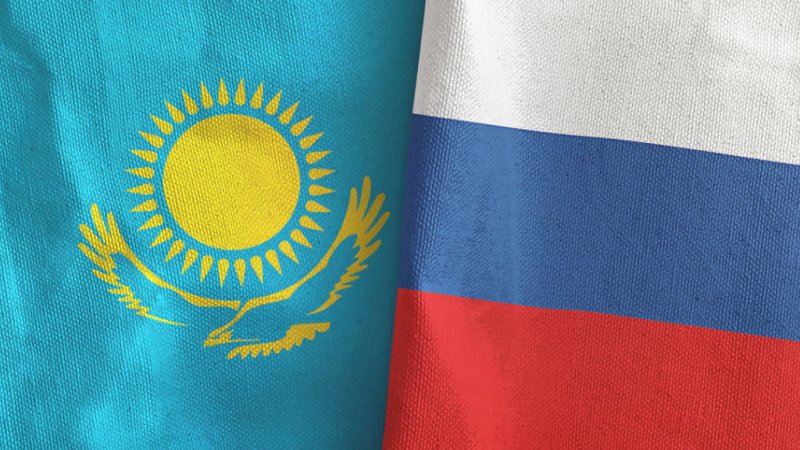
The main focus of the talks will clearly be economic. Russia remains one of Kazakhstan’s principal trade and economic partners. According to figures cited during talks between the two countries’ foreign ministers, bilateral trade exceeded $27 billion in 2025. Some Russian reports place the figure at over $28 billion, but the key point remains that both sides see room for further growth and aim to raise these figures to a new level.
For Kazakhstan, Russia remains a vital market, a source of investment, an industrial partner, and an important transit route. For Russia, Kazakhstan is a key Central Asian state, an important member of the Eurasian Economic Union, a neighbour with the world’s longest continuous land border with Russia, and a partner through which Moscow maintains its economic, logistical and political presence in the region.
As such, Putin’s visit will matter not only for bilateral statistics, but also for the broader configuration of Russian influence in Central Asia.
Investment will be another major topic. During Lavrov’s visit, the Kazakh side noted that over the past 20 years, Russian investment in Kazakhstan has totalled around $29 billion, while Kazakh investment in Russia has reached approximately $9 billion. This goes beyond trade in raw materials or consumer goods, encompassing major projects in industry, energy, transport, infrastructure, processing and technological cooperation.
In this context, Putin’s visit may be used to advance new projects. Kazakhstan is interested in attracting investment, modernising industry, developing transport infrastructure and pursuing technological renewal. Russia, in turn, seeks to preserve an economic space in which its companies remain significant players. For Moscow, it is particularly important that Kazakhstan — despite its multi-vector foreign policy and active engagement with China, the EU, Türkiye, the Gulf states and the United States — continues to view Russia as one of its main economic partners.
Energy will occupy a prominent place on the agenda. In recent months, discussions in both countries have increasingly focused on Russia’s potential participation in the construction of Kazakhstan’s first nuclear power plant. Russian media have described the project as a possible flagship of bilateral cooperation, with Rosatom seen as a key participant in the consortium. For Kazakhstan, nuclear energy is a matter of long-term energy security. For Russia, it represents an opportunity to consolidate its technological presence in one of Central Asia’s largest economies.
Transport and logistics will also be central issues. Kazakhstan’s geographical position — between China, Russia, Central Asia, the Caspian region and Europe — gives it particular importance, especially amid the restructuring of trade routes and ongoing sanctions pressure. Russian–Kazakh transport links may prove crucial for the North–South corridor, as well as routes to China, the Caspian region, Iran and South Asia.
During talks between Lavrov and Kazakhstan’s Foreign Minister Yermek Kosherbayev, the sides discussed transport corridors, border infrastructure and expanded cooperation — issues that are likely to be addressed further at the presidential level.
The Eurasian Economic Union will form an important political and economic backdrop. Putin’s participation in the Supreme Eurasian Economic Council meeting makes his visit not only bilateral, but also integration-related. For Russia, the EAEU remains a key instrument for maintaining economic connectivity across the post-Soviet space. For Kazakhstan, it serves as a market, a trade mechanism and a platform through which Astana seeks to promote a pragmatic approach: integration should bring economic benefits without limiting sovereignty or foreign policy flexibility.
That is why the talks between Putin and Tokayev will take place in a complex but pragmatic context. Kazakhstan is not abandoning its allied relations with Russia, but continues to pursue a multi-vector foreign policy. In recent weeks, Astana has hosted Israeli President Isaac Herzog, strengthened ties with European and Asian partners, and prepared for major international events within the Eurasian framework. This reflects Kazakhstan’s intention to avoid dependence on any single centre of power.
Moscow understands this. For Russia, Putin’s visit will therefore serve as a demonstration that relations with Astana remain stable despite the changing international environment. Since the start of the war in Ukraine, Kazakhstan has been in a delicate position: it maintains close economic ties with Russia while seeking to avoid secondary sanctions, expand relations with the West, China, Türkiye and Arab states, and emphasise respect for territorial integrity. In this context, each meeting between Putin and Tokayev carries not only bilateral, but also symbolic significance.
For Tokayev, Putin’s visit offers an opportunity to reaffirm stable relations with Russia without compromising Kazakhstan’s independent course. Kazakhstan aims to demonstrate that it can maintain constructive, allied and economically beneficial relations with Moscow while remaining an autonomous actor. This is particularly important amid intensifying competition for influence in Central Asia among Russia, China, the EU, the United States, Türkiye and the Gulf states.
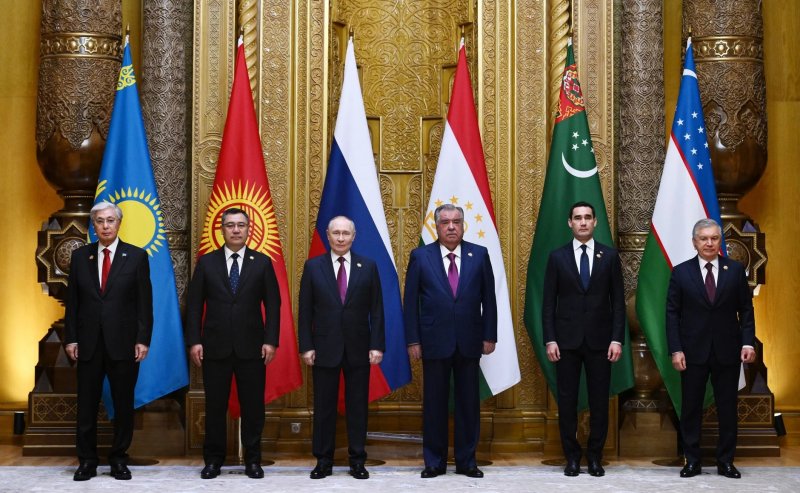
The humanitarian agenda will also feature. Russia traditionally places great emphasis on education, the Russian language, cultural ties, joint academic projects and historical memory. During Lavrov’s visit, Russian media highlighted the shared memory of victory in World War II. For Moscow, this forms part of its soft power and a means of maintaining cultural and historical links with Kazakhstan. For Astana, humanitarian cooperation is important, but must align with its own model of national identity and domestic balance.
The two sides may also address broader international issues, including Ukraine, the Middle East, security in Central Asia, Afghanistan, and cooperation within the CIS, the SCO, the CSTO and other frameworks. Kazakhstan traditionally positions itself as a supporter of diplomacy, balance and peaceful settlement. Russia, by contrast, will seek to demonstrate political support — or at least understanding — from its allies. It is here that differences in approach may become apparent, as Astana will aim to avoid strong language while preserving room for manoeuvre.
Overall, the end of May could mark an important moment for Moscow and Astana. Putin’s visit will not be merely diplomatic, but an attempt to update and consolidate the Russian–Kazakh agenda against the backdrop of a new regional reality. Trade, investment, energy, transport corridors, the EAEU, industrial cooperation, humanitarian ties and international politics will all be central to the discussions.
For Moscow, the visit serves as confirmation that Kazakhstan remains one of its key partners in Central Asia. For Astana, it presents an opportunity to secure economic and political gains without undermining its multi-vector balance. This is why the meeting between Putin and Tokayev will be closely watched not only in Russia and Kazakhstan, but also in China, Europe, the United States, Türkiye and the South Caucasus.
(If you possess specialized knowledge and wish to contribute, please reach out to us at opinions@news.az).


Similar news