The News.Az analytical portal discussed this sensitive issue with Iran’s former ambassador to Azerbaijan, Afshar Soleymani, to shed light on the current state of US–Iran relations, the risks of escalation, and the prospects for diplomacy amid heightened regional tensions.
– Mr. Soleymani, at what stage are the US–Iran talks currently, and do recent diplomatic contacts promise real progress, or has the process once again reached an impasse?
– At the current stage, it can be said that the parties have reached a preliminary understanding and that another meeting is planned in the near future. It is not yet clear whether the meeting will take place in Oman or at another venue. Iran’s Foreign Minister Abbas Araghchi has stated that the location may be changed.
During the first meeting, the parties outlined their positions, exchanged views, and agreed to return to their capitals for consultations. If the next meeting takes place, a more detailed and substantive discussion of the issues is expected.
At this stage, the process cannot be considered deadlocked. Both the US side and the Iranian leadership have declared their readiness to continue the talks. After the first meeting, a general understanding was formed regarding the launch of the mechanism and how the process would proceed.
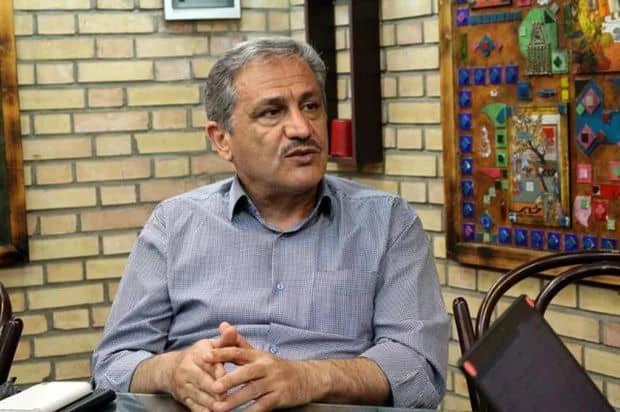
Photo: Iran’s former ambassador to Azerbaijan, Afshar Soleymani
The main issue now is clarifying the timing and format of the next meeting. Once this becomes clear, it will be easier to assess the positions the parties will take and the direction in which the process will develop.
– What are the main areas of disagreement in the talks, and how realistic is it to overcome these differences?
– The main disagreements are concentrated primarily around the position of the US side. This position is openly supported by Israel, which in some areas advances even tougher demands. The core issue concerns Iran’s nuclear program.
For a long time, the United States has demanded that Iran completely halt uranium enrichment. In particular, the removal from the country of approximately 400 kilograms of uranium enriched to 60 percent is on the agenda. In addition, the United States seeks to include Iran’s regional activities, its ballistic missile program, and missile range issues in the negotiating package.
Recently, the US side has also attempted to add the issue of social protests and Iran’s domestic situation to the talks. Iran considers this unfounded and views it as a form of political manipulation. In this context, Tehran also emphasizes that Donald Trump has taken a selective approach to human rights and international law.
Despite this, Iran has articulated its position clearly: Tehran is ready to discuss only the nuclear program and uranium enrichment. The missile program, relations with regional allies, and security issues are not considered subjects for negotiation, as Iran presents them as part of its right to self-defense.
During the latest contacts held in Muscat, the US side was effectively compelled to accept this reality, and an initial understanding was formed to focus exclusively on resolving the nuclear issue at the first stage.
Nevertheless, Iran clearly understands that these topics may be raised again at later stages.
Iran’s main demand is that any agreement on the nuclear program be accompanied by real sanctions relief. Tehran states that it may make certain concessions regarding enrichment levels, but the complete elimination of enrichment is absolutely not open for discussion.

Source: stimson
Among possible compromise options, informal proposals are being discussed, such as significantly reducing the enrichment level, for example to around one percent, or suspending enrichment for a fixed period of two or three years. This is often compared with the 3.67 percent limit stipulated in the 2015 agreement, from which the United States withdrew during the Trump administration.
At the same time, the consortium model previously discussed could return to the agenda. Under this approach, other countries would participate in the enrichment process, international oversight would be strengthened, and transparency increased. Iran states that it is open to such mechanisms to help build trust.
Tehran also firmly emphasizes that its nuclear program is a legitimate right under the NPT and that, given Israel’s possession of nuclear weapons, it is unacceptable for Iran to fully renounce this right. The missile program, meanwhile, is consistently presented as a matter of national defense.
In sum, the main contradictions remain, but limited and phased compromise options on the nuclear issue are not entirely ruled out. More concrete exchanges of views in this direction are expected in upcoming meetings.
– How do you assess the possibility that the military option could return to Washington’s rhetoric on Iran? Is a direct US military strike a realistic scenario?
– The United States has extensive military capabilities in the region, including air defense systems, radar and navigation infrastructure, and systems such as Patriot and THAAD. Some of these capabilities are not publicly demonstrated, but their existence is well known. Nevertheless, military readiness does not automatically imply a decision to attack.
In my assessment, the Donald Trump administration is not interested in a direct military confrontation with Iran and never had such an intention from the outset. Trump’s main strategy is to pressure Iran into concessions through threats, political pressure, and demonstrations of strength. The objective is to achieve outcomes desired by Washington on the nuclear program and other issues, not to initiate a large-scale war.

Source: specialeurasia
Israel’s position, however, is different. Israel is more interested in US military action against Iran and consistently encourages Washington in this direction. In reality, normalization of Iran–US relations could seriously undermine Israel’s regional narrative, as ongoing tension with Iran allows Israel to amplify the perception of threat internationally and secure additional political and military support.
I have repeatedly emphasized that resolving Iran’s problems with the United States could reduce Israel’s ability to exploit this issue. The longer the Iran–Israel confrontation continues, the more actively Israel keeps it on the international agenda and uses it to advance its own interests.
A direct US attack is not a priority for Trump. If the military option were to enter the agenda, it would be considered only as a last resort. Even then, a large-scale US military operation does not appear realistic. At present, even the likelihood of limited, symbolic strikes remains low.
There are clear reasons for this. First, the financial and political costs of military intervention would be extremely high. Second, there would be a serious risk of regional destabilization. Third, US regional and global economic interests, particularly in energy markets, could be severely affected.
There is also a paradox here. At the same time, the Trump administration is seeking to attract trillions of dollars in investments and contracts from Middle Eastern countries such as Saudi Arabia, the UAE, and Qatar. Under such conditions, dragging the region into war would undermine these economic objectives.
At the same time, the South Caucasus has gained importance for the United States during the Trump period. Azerbaijan–Armenia normalization, transport and energy projects, and regional connectivity are of strategic interest to Washington. A major war in the Middle East would jeopardize all of these plans.
Iran understands these realities well. Tehran openly states that if it is attacked, it will respond, triggering serious regional tensions. This could create global disruptions related to the Strait of Hormuz, energy shipments, and oil prices. Such a scenario would not benefit either the US economy or Trump’s domestic political agenda.
For these reasons, despite Washington’s harsh rhetoric, a direct US military attack on Iran does not appear realistic in the near term. Instead, the United States will attempt to achieve its objectives through negotiations, pressure mechanisms, and phased agreements.
– If military escalation were to occur, how could it affect the regional security architecture and the balance of power in the Middle East?
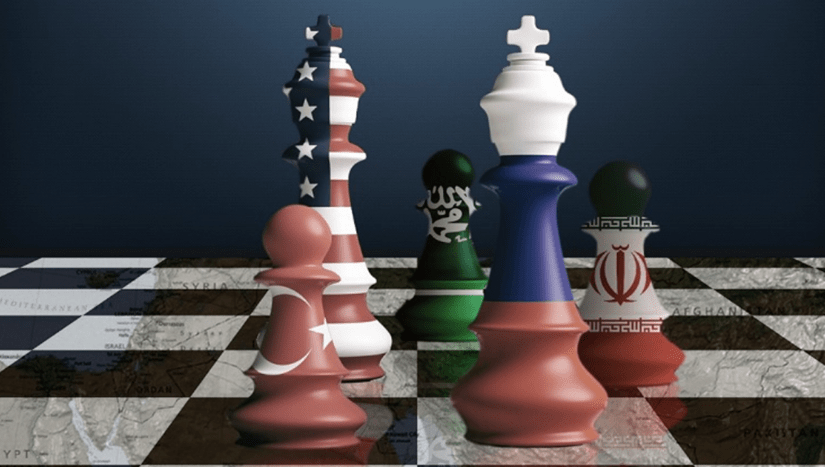
– Military escalation could fundamentally shake the region’s security architecture. It would disrupt the already fragile balance in the Middle East and could spiral out of control. In particular, the activation of Iran’s allied or affiliated forces, or proxy actors, could lead to new confrontations across the region, creating instability both between states and within individual countries.
Source: globalvillagespace
Most regional states are not interested in a US military intervention against Iran. Recent diplomatic contacts have taken place largely due to active mediation by regional leaders seeking to prevent war. Both in the United States and across the region, it is openly acknowledged that a new war is undesirable. Iran also unequivocally declares that it will not allow its territory or airspace to be used for military operations.
If the parties were forced into a military clash, the consequences would extend beyond the region to global security and the international economic system. The United States is well aware of these risks, particularly in light of its experiences in Afghanistan, Iraq, and Syria. The interventions in Iraq and Afghanistan were especially instructive, while in Syria Washington opted for a more limited and indirect approach to avoid a large-scale war.
For this reason, the likelihood of a direct and large-scale US military operation against Iran remains low. Regional states are also actively working to prevent such a scenario, as escalation could lead to refugee flows, disruptions to energy routes, and sharp volatility in oil and gas markets.
In this context, the most realistic and relatively low-risk option is to prevent war and keep tensions manageable. Donald Trump has repeatedly stated that he is not eager for war, indicating that the military option is viewed only as a last resort.
At present, the parties appear to be maintaining what could be described as a “neither peace nor war” model, involving neither full normalization nor open confrontation. Within this framework, major risks are managed, but relations remain frozen.
Under this approach, Iran could accept certain limitations and transparency measures related to its nuclear program and provide assurances that it will not pursue nuclear weapons. In return, military escalation would be avoided and the situation kept at the level of a frozen confrontation. While this model is neither ideal nor sustainable in the long term, it currently appears to be the least damaging option.
Otherwise, if no agreement is reached, war could become inevitable. Unlike previous localized clashes, such a conflict could escalate into a regional war with far more destructive consequences.
Economic considerations also play an important role. Iran states openly that it remains open to economic cooperation and investment. Sanctions relief, the restoration of oil exports, and the return of foreign companies to the Iranian market could offer benefits for both Tehran and Washington. Over time, this economic interdependence could also support political dialogue.
In conclusion, the parties are currently trying to avoid war, reduce risks, and gradually address the underlying causes of tension. There are also behind-the-scenes negotiations, the details of which are not publicly disclosed. Existing trends indicate that neither the United States nor Iran is presently interested in open military escalation.
– How prepared is Iran politically, militarily, and economically for possible military pressure or attack scenarios, and which response mechanisms does Tehran prioritize?
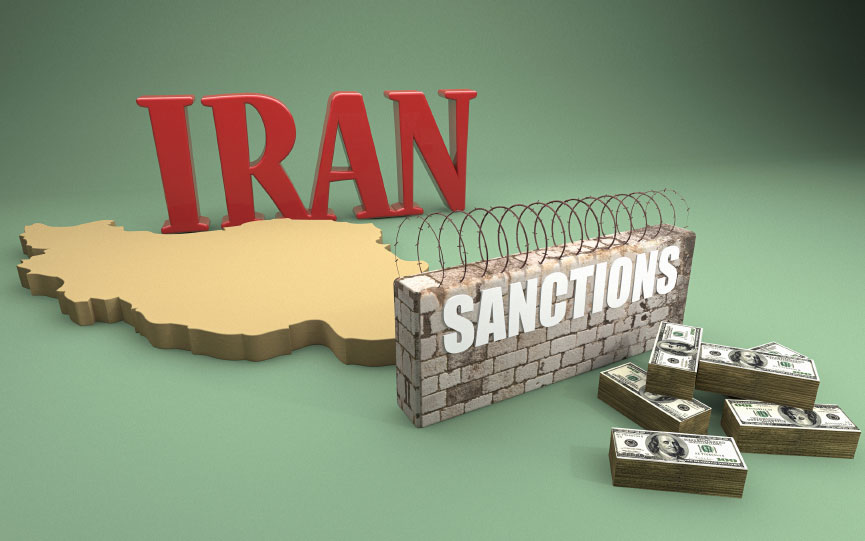
– Iran has lived under sanctions for many years, so renewed pressure is not unexpected. The economic situation is difficult, inflation is high, the national currency has depreciated, and unemployment and social challenges have generated widespread dissatisfaction, particularly among young people. In this sense, the primary burden of sanctions has fallen on the population rather than on state institutions.
However, in strategic and military terms, Iran has not retreated in areas targeted by sanctions, such as the nuclear program, missile technology, military industry, and defense capabilities. On the contrary, development in these fields has continued. Tehran emphasizes that despite economic damage, it has preserved its core security and defense capacities.
Source: irna
Within Iran’s leadership, there is a prevailing belief that the United States will not resort to a direct military attack. This assessment is based on statements by US officials and Washington’s past regional experiences. US officials have openly stated that they do not want a repeat of the Iraq or Afghanistan scenarios and prefer diplomatic solutions.
As a result, Tehran views the likelihood of military escalation as limited. At the same time, Iran sends a clear message: if attacked, it will respond. The scale of the response is secondary; the primary objective is deterrence by signaling that the risks are high.
Despite these challenges, Iran’s main policy line remains continued engagement in negotiations. The authorities are attempting to keep diplomatic channels open and prevent tensions from escalating uncontrollably.
– Which international actors could play a decisive role in preserving a diplomatic solution under current conditions, and what does Iran expect from them?
– Experience shows that the role of international organizations, particularly the United Nations, is extremely limited in this process. In practice, the UN has not served as an effective mediator on this issue. Especially during the Trump era, trust in international institutions declined, and Washington has preferred bilateral or regional mechanisms.
Effective mediation has been carried out primarily by regional actors. Countries such as Qatar, Saudi Arabia, Oman, and to some extent Egypt have played active roles in facilitating talks. It was through their efforts that the parties reached an understanding and held meetings in Muscat.

Source: ispionline
These states have openly declared that they do not want their territory or airspace used for military operations against Iran. Their main objective is to prevent the region from sliding into war. Iran views this stance positively and continues diplomatic engagement with them.
As for Western countries, France, Germany, and the United Kingdom largely align with the US position. Although they occasionally call for diplomacy, their overall strategy remains coordinated with Washington. France has recently attempted to play a more active role, but this has not significantly altered the broader dynamics.
Iran remains extremely cautious in its approach to trust toward the United States. Past negotiation periods, during which Israeli attacks and US strikes occurred, served as serious lessons for Tehran. As a result, Iran is pursuing a dual strategy: engaging in negotiations while maintaining a high level of military readiness.
The current situation can be summarized as follows: although the parties do not fully trust one another, they are unwilling to leave the negotiating table. Both sides have their “fingers on the trigger,” yet dialogue continues. Iran openly states that if the United States does not attack, Tehran will not escalate either. At this stage, the primary objective is to avoid war and minimize risks.
In conclusion, while the diplomatic process remains fragile, it is ongoing. Both Iran and the United States understand that the cost of military confrontation would be extremely high. Therefore, despite deep disagreements, maintaining dialogue appears to be the more rational choice for both sides.



.png)