Beijing prepares for an Arctic breakthrough with a new powerful icebreaker


By Asif Aydinli
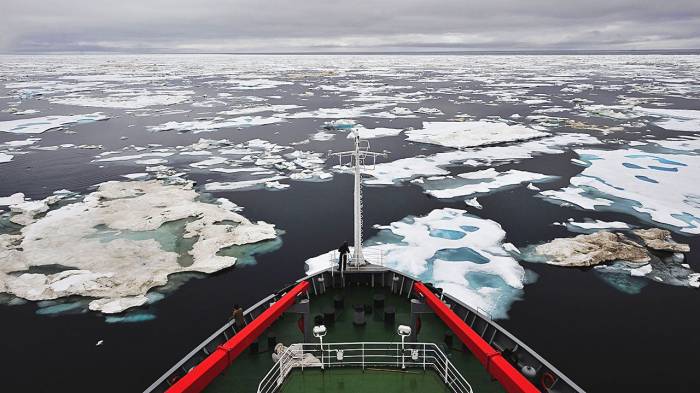
China is rapidly expanding its presence in the polar regions, focusing on Arctic research and shipping. Every year, Beijing is more assertively positioning itself as a future leader in this strategically crucial area. Recent comments from the China Marine Design & Research Institute make it clear that China is far from resting on its laurels and is pushing ahead with its scientific and technological advancements. The spotlight is on boosting its fleet of icebreakers and enhancing its research capabilities in both the Arctic and Antarctic.On August 24, 2024, Wu Gang, the chief designer at the China Marine Design & Research Institute, shared with China Daily that the construction of a next-generation, super-powerful icebreaker is reaching a critical phase. This project, which is now in the final stages of research and development, underscores China's commitment to solidifying its footprint in the polar regions. The new icebreaker will be a significant addition to China's existing fleet, enabling the country to conduct more complex operations in the harshest environments.
China has dedicated substantial resources to designing and building an icebreaker that can cut through ice more than 2 meters thick. This new vessel will use eco-friendly fuel to minimize its environmental impact. Wu Gang highlighted that key components of the icebreaker, including the engines, will be produced by Chinese companies, showcasing China's drive for technological self-sufficiency. This also reflects the country's broader effort to enhance domestic manufacturing and reduce dependence on foreign technologies.
The main aim of developing this new icebreaker is to support long-term missions in the most challenging polar conditions, allowing China to significantly increase its capacity for year-round scientific research in the Arctic and Antarctic. Wu Gang, who also designed the Xue Long 2 icebreaker, mentioned that this new icebreaker falls into the "heavy" category, capable of breaking through ice up to 2 meters thick. While China has already made great strides in building light and medium icebreakers, there remains a shortage of heavy-class research vessels.
This project is strategically vital for China as it enhances the country's ability to explore and develop new territories rich in natural resources. The Arctic, with its vast untapped reserves of oil, gas, and minerals, is becoming a battleground for global powers. By expanding its icebreaking capabilities, China is clearly signaling its ambitions in the region.
In the summer of 2024, China deployed three icebreakers to the Arctic: the Xue Long 2, which undertook a lengthy expedition in the Arctic Ocean; the Zhongshan Daxue Jidi, operated by Sun Yat-sen University, working north of Alaska; and the newly commissioned icebreaker Jidi. These missions aimed to conduct scientific research, including studies on climate change, ecosystems, and polar ice. The pace of building new icebreakers has been impressive; for instance, the construction of the Jidi icebreaker and the soon-to-be-commissioned Tansuo San Hao was completed in just two years. The Tansuo San Hao icebreaker, set to launch in 2025, can accommodate up to 80 crew members and scientists.

China is also developing its Arctic capabilities in partnership with Russia. A joint communiqué following the 29th meeting of the Chinese and Russian heads of government announced plans to expand cooperation in the Arctic, focusing on shipping, maritime safety, and environmental protection. This partnership allows both countries to pool their resources and technologies for more effective development of Arctic waters. Their joint efforts aim to develop the Northern Sea Route as an alternative global trade route, potentially reducing the time and cost of shipping between Europe and Asia.
Meanwhile, the United States and Canada are trying to speed up their icebreaker production. After acquiring the Arctech Helsinki Shipyard, the Americans, Canadians, and Finns agreed to collaborate in this field. However, despite these efforts, the US still trails behind China in both the speed and volume of icebreaker construction. This gap threatens the positions of the US and its allies in the Arctic, where control over key routes and access to resources is becoming increasingly crucial.
China's advances in icebreaker development show its intent not just to support scientific research in the Arctic but also to prepare for new trade routes like the Northern Sea Route. By enhancing their icebreaker fleets, China and Russia are emerging as key players in the Arctic, signaling potential geopolitical and economic shifts in the future.
With each new icebreaker, Beijing is taking another step toward solidifying its influence in the polar regions, preparing for potential climate changes and the opening of new sea routes. China's ambitions in the Arctic are clearly not limited to research; they also encompass economic and strategic goals aimed at bolstering its position on the global stage.


Similar news