Armenia rethinks past narratives as Pashinyan signals policy shift – expert opinions


.png)
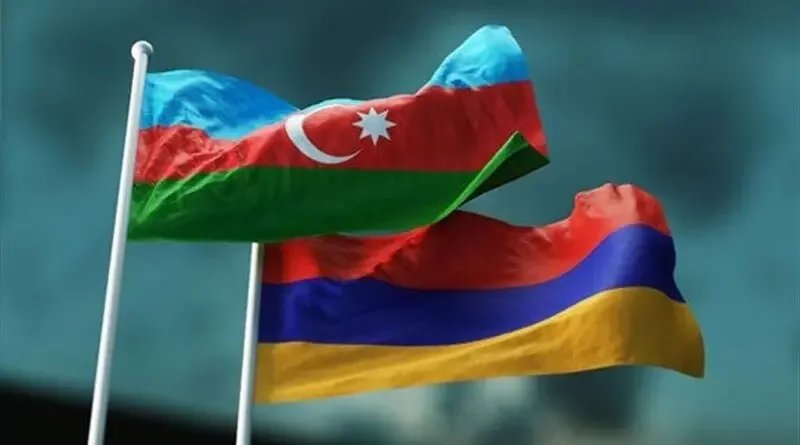
At a time when a post-conflict phase is taking shape in the South Caucasus, recent statements by Armenian Prime Minister Nikol Pashinyan are drawing particular attention regarding the region’s future political trajectory. In particular, his remarks on “abandoning genocide rhetoric” and “revisiting the agenda of historical justice” are being interpreted as signals of emerging realities both within Armenia and across the region. Although this approach is presented as an attempt to revise a long-established ideological line, the extent of its real political consequences remains uncertain.
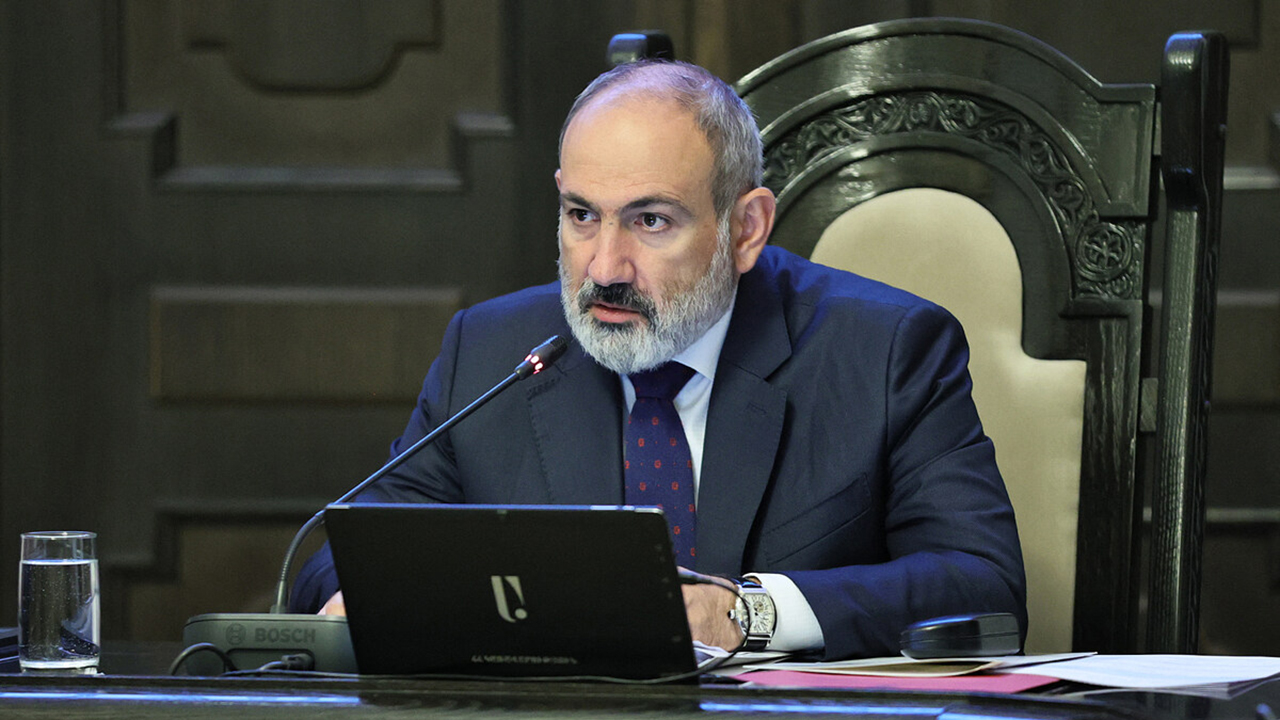
A key element in Pashinyan’s statements is the call to move from rhetoric to practical politics. Emphasizing that claims rooted in the past and emotionally charged narratives have led Armenian society into a deadlock, he underscores the importance of focusing on a “just present.” This, in turn, is interpreted as an attempt to prioritize a normalization and peace agenda in the region.
However, questions remain about how sustainable this transformation will be in the face of domestic political resistance and public sentiment. To examine the issue in greater depth, News.Az gathered the views of Azerbaijani analysts.
Fuad Abdullayev, leading advisor at the Center of Analysis of International Relations (AIR Center), told News.Az that against the backdrop of new geopolitical realities emerging in the South Caucasus, statements and actions by Armenia’s leadership should be carefully analyzed through the prism of Azerbaijan’s national interests.

Photo: Fuad Abdullayev, leading advisor at the Center of Analysis of International Relations (AIR Center)
According to him, Pashinyan’s recent statements, particularly calls to abandon genocide rhetoric and prioritize real state interests, may be difficult for Armenian society to accept, but can be seen as the beginning of an inevitable transformation process.
“For decades, Armenia’s state policy and national identity have been shaped by territorial claims against neighboring countries, especially Azerbaijan and Türkiye, as well as narratives of historical hostility,” Abdullayev noted, adding that Pashinyan’s attempt to change this narrative stems from Armenia’s instinct for state survival.
“After the 44-day war, it became clear that the ‘Greater Armenia’ ideology and a foreign policy built on historical grievances had left the country isolated and economically weakened. Naturally, such an ideological shift is causing serious polarization within Armenia’s domestic political landscape,” he said.
According to the expert, radical opposition forces, the Armenian diaspora, and the Church are portraying this approach as “national betrayal” and actively promoting that narrative in an effort to influence upcoming political processes. At the same time, more pragmatic actors understand that permanent confrontation with neighbors leads the country into a dead end. “Moving away from a ‘victimhood mentality’ toward normal neighborly relations could help reduce tensions in the region,” he said.
Abdullayev stressed that time will determine how sincere and sustainable this process is. Regarding the Prague agreements, he noted that Pashinyan’s statements recognizing Azerbaijan’s territorial integrity contribute to the peace process. However, for these statements to yield tangible results, they must be accompanied by practical steps.
He added that Azerbaijan has consistently upheld its position based on principles of international law and expects the same approach from Armenia. “Within the framework of the Prague agreements, Armenia’s official recognition of Karabakh as part of Azerbaijan marked an important turning point. However, it is not enough for this position to remain at the level of declarations,” he said, adding that it must also be reflected in practical politics and Armenia’s Constitution.
“If territorial claims against Azerbaijan are not removed from Armenia’s Constitution, such statements may be seen as merely tactical moves aimed at gaining international sympathy. From Azerbaijan’s perspective, peace will only become realistic if the other side fully abandons revanchist claims,” he added.
The expert noted that for Azerbaijan, the main priority is not statements but the signing of a peace agreement, as well as the completion of border delimitation and demarcation. “Ending the information war in the region and softening political rhetoric are also of great importance. While not decisive on their own, these factors could significantly contribute to normalization,” he said.
Abdullayev pointed out that decades of conflict have left deep scars not only on the military level, but also in societal consciousness, the media space, and political rhetoric. “For a long time, Armenian society was shaped around Azerbaijanophobia and Turkophobia. The information war has been one of the main factors deepening mistrust between the sides and continues to some extent today,” he said.
In his view, Pashinyan’s more balanced and realistic rhetoric in recent times is, albeit belatedly, an acknowledgment of this reality. At the same time, he said these statements send an important signal to the international community that certain external actors have long used hate rhetoric in the region for geopolitical purposes. “A shift in discourse within Armenia could weaken these influences,” the expert said.
Source: consultancy.eu
The expert added that Azerbaijan does not interfere in the internal affairs of any country. However, developments in neighboring states directly affect Azerbaijan’s national security. “The choice Armenian society is making today between a ‘real Armenia’ and a ‘historical Armenia’ is, in fact, a fundamental test for the country’s future,” Abdullayev said, adding that building a state on myths leads only to new disasters.
Nevertheless, he stressed that radical forces within Armenia, as well as the role of the Church, remain serious obstacles to this transformation process. “This means Azerbaijan must remain vigilant and continue its security policy with determination,” he said.
At the same time, Abdullayev emphasized that reducing information warfare should not come at the expense of forgetting historical facts. The Khojaly genocide, the 30-year occupation of Azerbaijani territories, and the destruction of cultural heritage cannot be forgotten. “However, it is essential to draw the right conclusions from the past in order to move forward,” he stressed.
He believes Armenia must also accept realities and openly acknowledge that a policy of hostility toward Azerbaijan is one of the biggest obstacles to its development. “If Pashinyan’s government can take consistent and courageous steps in this direction, the South Caucasus could become a stable and developing region in the future,” he said.
In conclusion, the expert stated that Armenian society faces a choice: either become an instrument of external influence or live in peace with its neighbors. “The second path is the only rational option for Armenia’s sustainable existence as a state. The future of the region should be built on principles of peace, cooperation, and mutual respect,” he concluded.
Sultan Zahidov, also a leading advisor at the Center of Analysis of International Relations (AIR Center), told News.Az that Pashinyan’s recent statements are not accidental and should be seen as part of a broader strategic approach.

Photo: Sultan Zahidov, also a leading advisor at the Center of Analysis of International Relations (AIR Center)
According to him, calls to abandon genocide rhetoric and shift toward the concept of a “real Armenia” reflect the country’s need to adapt to existing geopolitical and geoeconomic realities. “This approach primarily requires Armenia to move away from unfounded claims in order to normalize relations with its neighbors — Azerbaijan and Türkiye,” he said.
Zahidov emphasized that claims related to the “Armenian genocide” and slogans such as “Greater Armenia from sea to sea” are not merely political rhetoric, but also factors that have led to Armenia’s exclusion from regional projects, weakened its investment climate, and limited its economic opportunities. “The closed border with Türkiye and the lack of open communication routes are consequences of this ideological approach,” he added.
The expert believes abandoning these narratives is essential for Armenia’s economic development and prosperity. In his view, Pashinyan’s approach represents an attempt to form a new model of political communication and adapt the country to changing regional realities.
At the same time, Zahidov noted significant resistance within Armenian society to these changes. “Ideological constructs developed over decades — claims of a ‘historical Armenia’ and narratives built on hostility — have left deep marks on public consciousness. These ideas have been systematically cultivated through the education system, media, and political discourse,” he stressed.
According to the expert, one of the key elements of this ideological base is Tseghakronism, which promotes notions of Armenian exceptionalism and superiority. “In such an environment, achieving a rapid shift in mindset is extremely difficult,” he noted.
Zahidov also stated that while Pashinyan’s steps can be positively assessed as an initial phase, expecting rapid transformation in public thinking is unrealistic. This is why his statements have not been uniformly received within Armenia and have been sharply criticized by radical opposition forces.
He added that opposition groups, the Church, and diaspora structures are attempting to exploit this process politically to weaken Pashinyan’s position. Moreover, the influence of external actors, particularly those linked to Russia, cannot be ruled out.
Source: News.Am
Touching on the Prague agreements, Zahidov noted that Pashinyan’s recognition of Azerbaijan’s territorial integrity during the 2022 European Political Community summit was an important turning point. However, he added that the possibility of tactical considerations behind this step cannot be excluded.
According to the expert, subsequent negotiations, including those held in Washington, indicate that Pashinyan is attempting to take concrete steps toward peace, and a period of relative stability has now emerged in the region.
Nevertheless, Zahidov stressed that statements alone are insufficient to ensure sustainable peace. “The key issue is the legal confirmation of this position, particularly at the constitutional level. Otherwise, the persistence of territorial claims could pose a serious obstacle to the peace process,” he said.
Addressing “mirror rhetoric,” he noted that political discourse based on reciprocal accusations and an “eye for an eye” approach does not contribute to long-term stability. “At this stage, a more pragmatic and constructive approach is required,” he said.
Regarding Karabakh, Zahidov stated that the departure of a large portion of the Armenian population from the region was largely influenced by the separatist regime, while Azerbaijan has put forward various reintegration initiatives.
He believes there are real opportunities for normalization of Armenia–Azerbaijan relations. “The success of this process will depend directly on Armenia’s internal political will and legal reforms, particularly constitutional changes,” he said.
“Azerbaijan, meanwhile, is fulfilling its role responsibly, and there is hope that a period of stability and prosperity will begin in the South Caucasus in the near future,” he concluded.


Similar news