Breaking the deadlock: What the Istanbul negotiations revealed


Editor's note: Russian military-political analyst, expert in the field of strategic security, specialist in the Middle East and Africa Vladimir Bekish. The article expresses the personal opinion of the author and may not coincide with the view of News.Az.
Some events may seem routine—just another round of meetings, statements, and protocols. But sometimes, beneath the surface, history takes a turn. This is exactly what happened during the Russia–Ukraine negotiations that concluded in Istanbul.
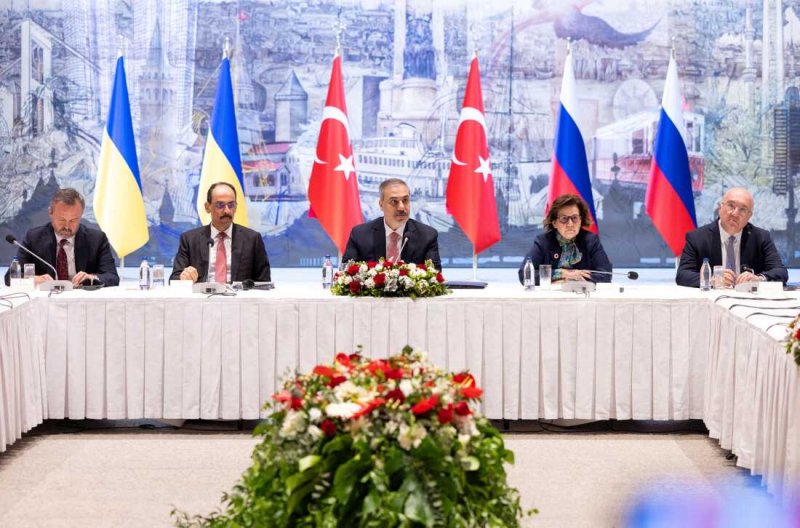
Held in the historic Dolmabahçe Palace, the talks lasted just two hours. Türkiye’s Foreign Minister Hakan Fidan also attended. These negotiations almost didn’t happen—their start had been postponed several times, and only on May 16 did both delegations finally sit down at the table. This prolonged anticipation only fueled public and media interest. And while the discussions took place behind closed doors, their significance is already clear.
Many were quick to criticize the absence of grand press statements. However, real diplomacy is not performed in front of cameras. Russia demonstrated once again that it prioritizes results over spectacle. This was not a media performance aimed at global headlines—it was serious, methodical work. Monotonous, perhaps, to an outside observer, but it is precisely such work that produces real outcomes.
Source: TASS
Of particular note was the absence of Russian President Vladimir Putin. Many had expected him to participate in these talks, believing his presence would signify Russia’s full commitment to negotiations. The absence of President Putin was a disappointment to many, including international politicians and officials who had anticipated a historic face-to-face meeting between the leaders of Russia and Ukraine.
American President Joe Biden had even stated he was ready to travel to Istanbul if Putin confirmed his participation. But when it became clear that the Russian president would not attend, the American president canceled his plans to visit.
Preliminary consultations had also taken place between Ukrainian and Turkish officials, followed by similar discussions between Russia and Türkiye. Despite all the uncertainties, the negotiations finally happened, lasting two full hours. Both sides had the opportunity to exchange information directly—something that, given the scale of the conflict, is in itself an achievement.
Importantly, the talks yielded at least one positive outcome: an agreement on a large-scale prisoner exchange. According to available information, each side agreed to release 1,000 prisoners. This humanitarian step is undoubtedly a small but meaningful sign that dialogue, however fragile, is possible.
Yet no breakthrough on a ceasefire was reached. Neither side appeared ready to make that commitment. Observers now look to the possibility of direct talks between the Russian and American presidents, believing that only such high-level engagement can unlock the path to peace.

Source: newscentral
However, the prospect of a direct meeting between Putin and Ukrainian President Volodymyr Zelensky appears more unlikely than ever. Such a meeting would imply Russia’s recognition of Zelensky’s legitimacy—a step Moscow is not prepared to take. Russia views Zelensky’s term as expired, believing that any agreement signed with him could be dismissed later by his successor.
This leaves only one realistic path forward: a potential agreement between Russia and the United States. Should such an agreement be reached, the U.S. would bear responsibility for ensuring its implementation by Ukraine. This would align with the way major powers have historically negotiated settlements on behalf of their allies or partners.
Former U.S. President Donald Trump is already positioning himself as the only leader capable of resolving this conflict. He claims to have successfully pressured China, India, and numerous other countries into trade concessions during his previous term. Trump presents himself as a dealmaker who can achieve results where others have failed.
In short, Trump sees himself as the world’s most powerful leader. He is likely to apply the same approach to the Ukraine crisis, portraying himself as the only figure capable of forcing the parties to compromise.
Whether this is true remains to be seen. But one thing is clear: the Istanbul talks have shown that, even amid deep hostilities, dialogue remains possible. And that, in itself, is a glimmer of hope.
(If you possess specialized knowledge and wish to contribute, please reach out to us at opinions@news.az).


Similar news