The Kurdish card: How Iran’s crisis could ignite a new Middle East front


Editor’s note: Moses Becker is a special political commentator for News.Az. He holds a PhD in political science and specialises in inter-ethnic and inter-religious relations. The views expressed in this article are those of the author and do not necessarily reflect the position of News.Az.
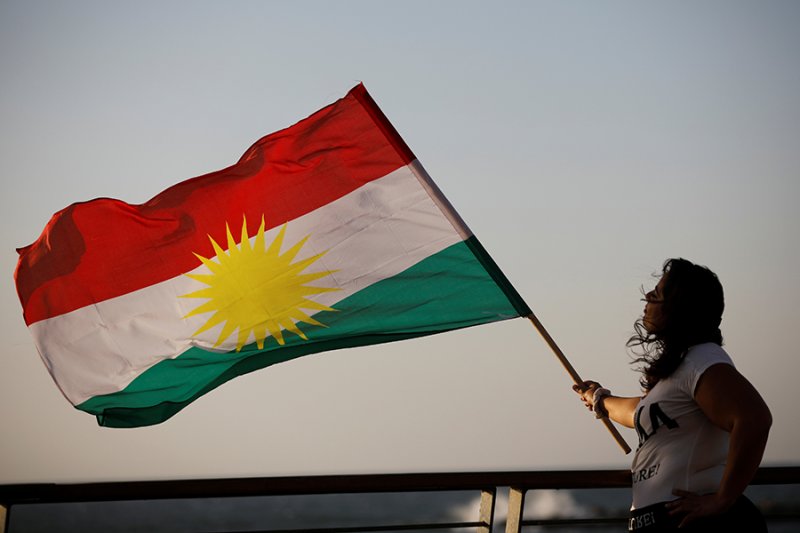
For historical reasons, the Kurds became a people who, despite their large population, never succeeded in attaining full statehood. Even their unity has remained largely relative. Possessing a rich history and extraordinary courage, the Kurdish people remain divided among several states to this day.
At the heart of this tragedy lies the Anglo-French Sykes–Picot Agreement, concluded in May 1916, which envisaged the partition of the Ottoman Empire. In return for their participation in the armed struggle against Türkiye, the British promised the Arabs the creation of a unified national state. The Kurds were also promised a state of their own, but they never received one.
RECOMMENDED STORIES
As a result, the region's borders were drawn without the consent of the peoples living there. Through a series of political arrangements and manoeuvres, a nation of approximately 40 million people was divided among four states. Under these circumstances, the Kurds were repeatedly drawn into struggles against various forces with promises of support for their independence. They fought successfully against ISIS in the hope of achieving autonomy in Syria. However, those hopes never materialised.
Nevertheless, the Kurdish factor remains one of the key elements shaping geopolitical competition in the Middle East.
The Kurdish issue is of greatest concern to Türkiye, where between 15 and 17 million Kurds live, primarily in the country's southeast and east. Large Kurdish communities also reside in Istanbul and Ankara. For this reason, the Turkish leadership has made considerable efforts to prevent Kurdish unity, which it views as a threat to the territorial integrity not only of Türkiye itself but also of Syria, Iraq and Iran.
The most significant challenge in this regard comes from separatist tendencies in Iraqi Kurdistan, where the Kurds enjoy broad autonomy, complete with their own government and military formations. In many respects, this already resembles a prototype of a future state, particularly given the weakness of the central government in Baghdad, which has been exacerbated by external interference.
Should Iraqi Kurdistan eventually separate from Iraq, Türkiye fears this would encourage its own Kurdish population to intensify demands for self-determination.
A particularly sensitive situation is developing in Iran, where the Kurdish minority numbers between 8 and 12 million people. In the past, Iranian Kurds primarily sought broad autonomy within a unified state. Today, however, the situation has changed significantly.
Against the backdrop of military tensions involving the Islamic Republic, the United States, Israel and several Arab states, the Kurdish issue could become a trigger for destabilising the entire power structure of the Iranian regime, which many observers believe is already under considerable strain.
According to various sources, contacts between Israeli intelligence services and Kurdish leaders have intensified. In the past, Israel reportedly sent military advisers to the headquarters of Mullah Mustafa Barzani, where they trained Kurdish units and supplied them with firearms and anti-aircraft artillery. Jewish organisations worldwide also lobbied for assistance to Iraqi Kurds during Operation Desert Storm.
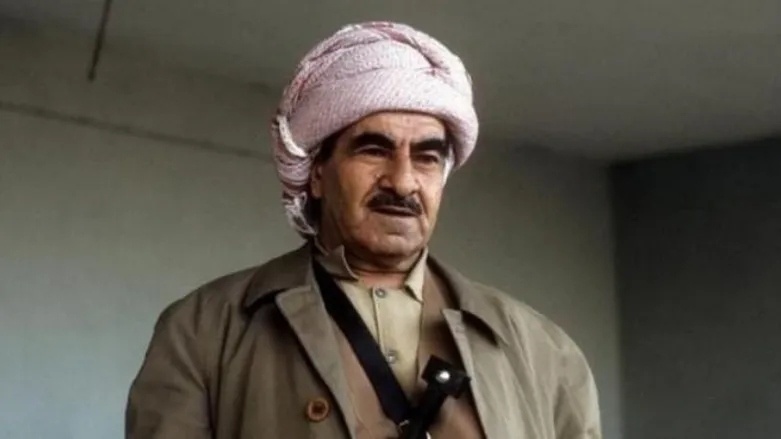
In 2004, Israeli media reported meetings between Israeli officials and Kurdish political leaders, including Masoud Barzani and Jalal Talabani. During a visit to Kuwait in May 2006, Kurdistan Regional Government President Masoud Barzani responded to a question about Kurdish-Israeli relations by saying:
"Having relations with Israel is not a crime. If Baghdad establishes diplomatic relations with Israel, we could open a consulate in Erbil."
On 18 October 2015, the Kurdistan Regional Government appointed Kurdish Jew Sherzad Omar Mamsani as the Jewish representative to the Ministry of Religious Affairs and Endowments.
In September 2021, Erbil hosted a conference supporting Iraq's accession to the Abraham Accords and the normalisation of relations with Israel. Approximately 300 local Shiite and Sunni leaders from different parts of Iraq participated in the event.
More recently, amid tensions between Iran and the United States, the Islamic Revolutionary Guard Corps (IRGC), fearing a potential unification of Iranian and Iraqi Kurds, launched missile strikes against Kurdish paramilitary bases in northern Iraq. Iranian media reported that the targets included the headquarters of Kurdish groups in the Sulaymaniyah region.
According to the IRNA news agency and Press TV, the operation was carried out as part of Tehran's intensified campaign against Kurdish forces. The strikes were linked to reports alleging attempts by the United States and Israel to arm and mobilise Kurdish militias against the Islamic regime.
Despite a ceasefire announced in April, Iran has continued attacks on Kurdish bases, some of which have reportedly been relocated to other parts of Kurdistan.
According to the Israel Defense Forces (IDF), Israel conducted airstrikes against military targets in western and central Iran on 8 June. Iranian state broadcaster Press TV reported explosions in Tehran, Tabriz and Isfahan. The IRGC claimed that the attack involved air-launched ballistic missiles and struck approximately 15 targets.
Al Jazeera reported that one of the targets was a drone storage facility in Tehran.
In recent months, tensions surrounding the Islamic Republic have escalated once again, largely due to the confrontation between Israel and Hezbollah. In support of its regional allies, Iran launched ballistic missiles at Israel. According to the IDF, all of them were intercepted by Israeli air-defence systems.
The IRGC stated that the target of the missile attack was Ramat David Airbase in northern Israel, which it described as a "source of aggression" against Lebanon.
Israeli media have reported that, in an effort to accelerate the downfall of the Iranian regime, Mossad, together with the CIA, carried out an operation to supply Kurdish militias with weapons captured during conflicts with Hamas and Hezbollah.
Under the reported plan, Kurdish groups allegedly received financial assistance and transportation assets. They were also supplied with small arms, anti-tank grenade launchers, grenades and mortar shells.
In March, reports emerged alleging a US-Israeli plan to infiltrate Kurdish militias into Iran in the hope of provoking an uprising that could lead to the collapse of the Islamic Republic.
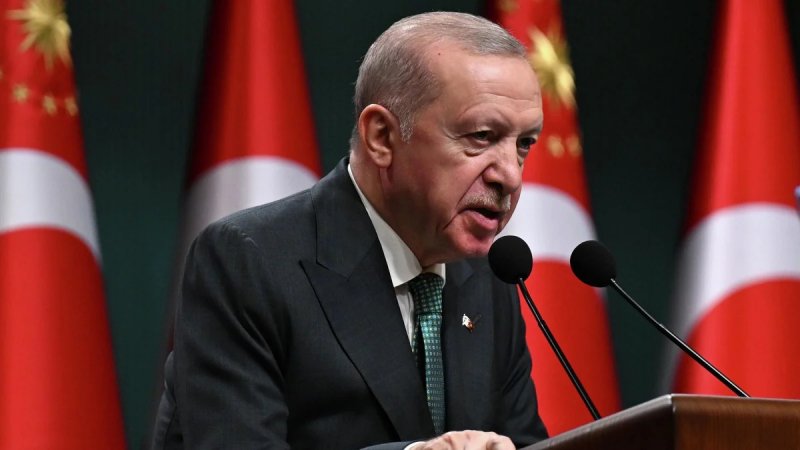
However, media reports claim that information leaks, lobbying efforts by international actors, including Turkish President Recep Tayyip Erdoğan, and the caution of the Kurds themselves, who have often felt abandoned by external powers, ultimately persuaded US President Donald Trump to abandon the idea.
Trump himself reportedly stated that the United States had attempted to transfer weapons to anti-regime protesters in Iran through Kurdish channels, but that Kurdish separatists may have kept the weapons for themselves. Whether this is accurate remains unclear.
Most likely, the Kurds are waiting for a further deterioration of the situation, which could provide them with an opportunity to strike a decisive blow against the Islamic regime. Weapons, after all, rarely remain unused.
Recent developments suggest that the conflict surrounding Iran has not yet reached its climax. During the night of 11 June, the US armed forces reportedly launched another series of strikes against targets in Iran.
"These strikes are a response to Iran's unjustified and ongoing aggression," US Central Command stated.
Four hours after the operation began, the US military announced its completion. According to official statements, American forces targeted intelligence and surveillance facilities, communications systems and air-defence positions. The operation involved the US Marine Corps, Air Force and Navy.
According to journalist Barak Ravid of Axios, the strikes targeted military facilities in southern Iran. Iranian news agencies IRNA, Mehr, Tasnim and Fars reported explosions and air-defence activity on Kish Island, east of Isfahan, in Mohr, and across Hormozgan Province, including Sirik, Minab, Qeshm, Hengam, and areas near Bandar Abbas Airport and military installations.
(If you possess specialized knowledge and wish to contribute, please reach out to us at opinions@news.az).


Similar news