Can the Middle East achieve lasting peace amid turmoil? – INTERVIEW


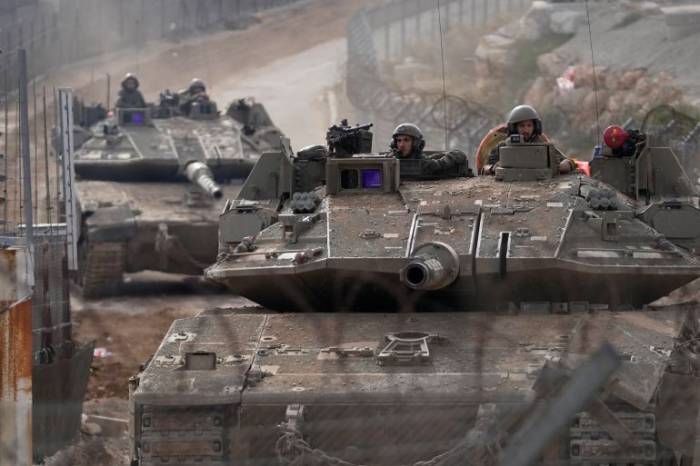
Israeli army tanks near the 'Alpha Line' that separates the Israeli-occupied Golan Heights from Syria, in the town of Majdal Shams,on December 11, 2024 [Matias Delacroix/AP Photo]
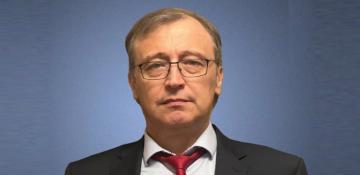
News.Az presents an interview with Tatiana Tyukaeva, Ph.D. in Political Science and a distinguished expert on Middle Eastern affairs. Dr. Tyukaeva is a Research Fellow at the Center for Middle East Studies at the Primakov National Research Institute of World Economy and International Relations (IMEMO) and a Senior Tutor in the Department of Middle East Languages at the Moscow State Institute of International Relations (MGIMO).

- The world is witnessing significant developments, especially in the Middle East. Let’s start with Palestine. How would you evaluate the current situation in light of recent events, such as the targeted elimination of key Hamas leaders? Given the deep ties between Hamas, Hezbollah, and Iran—which plays a pivotal role in their operations—what do you consider the most realistic path toward achieving lasting peace in the region?
- Hamas and Hezbollah have indeed been weakened militarily, particularly following recent Israeli retaliatory strikes and targeted assassinations of their leaders. This has also impacted Iran's regional position, given that both groups form a crucial part of the so-called "Axis of Resistance" led by Iran.
However, the situation in Palestine has its own dynamics, separate from the activities of Hezbollah or Iran. Both Hamas and Hezbollah have distinct agendas, with Hamas focused primarily on domestic Palestinian politics. While Iran supports Hamas, its influence is limited in dictating Hamas’s actions.
The Palestinian political landscape is deeply fractured. There is an ongoing leadership crisis marked by a lack of legitimacy and effective governance. The two dominant factions, Hamas and Fatah, have failed to present a coherent strategy to address the Palestinian issue. This failure exacerbates the dire living conditions in Gaza and the West Bank, as seen in regular public opinion polls.
For instance, prior to the October 7th Hamas attack, support for Hamas hovered around 20-30%, primarily among West Bank residents disillusioned with Mahmoud Abbas’s leadership. However, this doesn't indicate outright support for Hamas; rather, it reflects frustration with Abbas and the Palestinian National Authority (PNA). Many Palestinians feel that Hamas's actions, while controversial, have at least brought international attention to their plight.
In terms of achieving sustainable peace, two primary obstacles stand out. First, there is the Palestinian leadership crisis. Without political reform and the establishment of functioning administrative and legislative bodies, progress is unlikely. Second, Israel’s approach, particularly under increasingly radical right-wing governments, has focused on oppressive measures rather than viable solutions. Addressing these obstacles will require significant shifts on both sides.
- Let’s turn to the United Arab Emirates (UAE), which has adopted an increasingly assertive stance in its foreign policy, particularly in Yemen and Libya. How would you assess the UAE’s interventions and their broader implications for regional stability?
- Over the past decade, the UAE has significantly expanded its regional military and political activities. This has been evident in its involvement in Libya, Yemen, and even the Sahel region through counterterrorism operations. The UAE’s approach has shifted in recent years from direct military interventions to promoting regional cooperation and stability.
The UAE’s domestic economic and social development strategies, such as Vision 2021 and the Centennial Plan 2071, underline its realization that regional stability is essential for achieving its ambitious goals. This shift has also influenced broader normalization efforts in the Middle East, including reconciliation within the Gulf Cooperation Council and improved relations with countries like Israel and Iran.
The UAE’s hallmark lies in its connectivity projects, spanning logistics, energy security, and trade. It is working towards building a regional security architecture where major regional players define their interests while external powers like the US, China, and Russia act as facilitators. Overall, the UAE has positioned itself as a positive force for regional stability and prosperity.
- Qatar has been notably active in the region, frequently positioning itself as a mediator in various conflicts. How would you describe Qatar’s foreign policy approach, and what role do you envision it playing in shaping Middle Eastern geopolitics in the years ahead?
- Qatar’s foreign policy is a fascinating case study. Despite its small size, it has established itself as a global brand under the leadership of Sheikh Hamad and, more recently, Sheikh Tamim. Qatar has positioned itself as a progressive, modern state with significant global influence, particularly as a mediator.
Qatar’s independent approach to foreign policy has allowed it to engage with major powers like the US, China, and Russia while maintaining its own distinct role in the region. Its mediation efforts have been instrumental in various conflicts, including the ongoing Israel-Hamas negotiations. While Qatar may not resolve the Palestinian issue, its role as a mediator will remain crucial in future peace processes.
- Saudi Arabia, under Crown Prince Mohammed bin Salman, has embarked on ambitious domestic reforms, particularly through its Vision 2030 initiative. What key challenges does the Kingdom face in implementing these reforms, and how have they influenced its domestic political landscape?
- Saudi Arabia’s Vision 2030 aims to transform its economy into a modern, innovation-driven model. However, the path is not without challenges. First, the pace of reforms has been slow due to the scale of change required. Second, some of the ambitious projects, like the Neom city initiative, face feasibility issues due to high costs and uncertain returns.
While social reforms, such as the increased role of women, have been notable, political reforms remain absent. The monarchy continues to centralize power, with decision-making confined to a small elite circle. Over time, this lack of political transformation may create tensions as societal expectations evolve.
- Finally, let’s turn to the Gulf Cooperation Council (GCC) and the recent thaw in relations between Qatar, Saudi Arabia, and the UAE. Do you believe the GCC can fully restore its cohesion, and what role do you see these nations playing in shaping the region’s future, particularly in their engagement with Iran?
- The GCC remains a vital pillar of regional security despite past tensions. The 2017 blockade against Qatar was a significant episode, but it ultimately failed to achieve its objectives, as Qatar made no major concessions. Reconciliation efforts in 2021 marked a turning point, driven by a broader regional realization that conflicts and blockades hinder economic progress.
Moving forward, Qatar, Saudi Arabia, and the UAE will play pivotal roles in shaping the region's future. While each country has its unique strategies, they share a common goal of fostering regional cooperation and stability. Integrating Iran into this framework will be challenging but essential for creating a sustainable regional order.


Similar news