Can Trump break the Tehran–Moscow axis?


Editor's note: Prof. Zeev Khanin teaches at the Department of Political Studies and heads Post-Soviet Conflicts Research Program at the BESA Center for Strategic Studies, Bar-Ilan University. The article expresses the personal opinion of the author and may not coincide with the view of News.Az.
It appears that we are witnessing the emergence of a triangular configuration of relations between Washington, Moscow, and Tehran. For the current U.S. administration, it is critically important to close the chapter on those military conflicts which, in its view, no longer align with America's strategic interests. The objective is clear: to redirect attention and resources toward confronting China.
This is precisely why Trump’s team is eager to end the conflict in the Middle East—especially in Gaza—and, as soon as possible, to bring the war in Eastern Europe, namely in Ukraine, to a close. Within this broader strategic puzzle, it is vital for Trump to engineer a cooling of relations between Russia and China. The aim is to drive a wedge between Moscow and Beijing and weaken their strategic alignment.
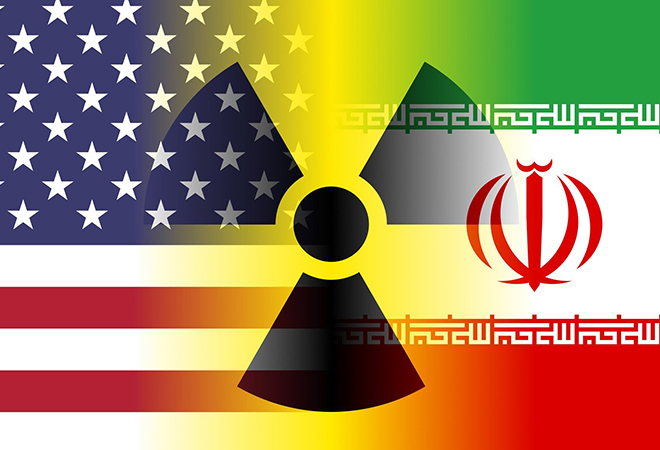
Efforts to this end are already underway, including through peace initiatives on Ukraine and the gradual initiation of a negotiating process. Yet, these attempts have thus far failed to produce tangible results. At the same time, Washington’s attempts to negotiate directly with the ayatollahs in Tehran have also yielded little progress. Even significant concessions—such as a possible return to the key parameters of the 2015 Joint Comprehensive Plan of Action (JCPOA)—have not moved the needle.
Source: Orfonline
Let us recall that the JCPOA was signed under the Obama administration, and Trump withdrew from it in 2018. Now, as he eyes a return to the White House, Trump seems prepared to reengage with a similar agreement, albeit with minimal revisions unlikely to be of major consequence. However, in Tehran, this is seen not as pragmatism but as a sign of American weakness. In response, Iranian officials have launched a familiar diplomatic dance—aimed at extracting better terms or simply buying time to complete what increasingly appears to be a nuclear weapons capability.
In this context, Trump may now seek to sow discord between Tehran and Moscow. But what would that actually look like in practice?
As long as both Iran and Russia remain under heavy sanctions, their cooperation retains a certain logic. For the Kremlin, endless negotiations between Washington and Tehran are useful: a military scenario—namely, airstrikes on Iranian nuclear sites—is highly undesirable. But at the same time, a full-fledged agreement between the U.S. and Iran, one that satisfies both parties, is equally disadvantageous to Russia. It would weaken Tehran’s incentive to maintain its strategic bond with Moscow.
On paper, the partnership may survive. In substance, however, it would be altered. Iran’s military supplies to Russia—both in terms of arms and dual-use materials—would likely be reduced or shifted to a purely commercial basis, provided at full price and devoid of political dividends. Currently, this partnership is arguably a net loss for Tehran but grants it the support of a powerful geopolitical ally.
Source: Istockphoto
Should the nuclear agreement be signed, Iran’s interest in maintaining such relations would wane rapidly. That is why Trump’s strategy likely involves either reassuring Russia or offering it an attractive alternative track of cooperation—something that would discourage the Kremlin from doubling down on support for Tehran. That alternative may well touch on Moscow’s core interests—beyond Ukraine and into other contested spheres.
This brings us to the looming threat of Iran’s nuclear program.
It is real and pressing. According to the IAEA, Iran now possesses enough enriched uranium to produce as many as ten nuclear warheads. The transition from uranium stockpiles to weaponization is, by most accounts, a matter of weeks or a few months. Loading those warheads onto delivery systems—including missiles—would not take much longer. Some experts speak of a months-long timeline, others say a year, but the takeaway is the same: this would mark an irreversible shift in the region’s political reality.
Even if the ayatollahs have no immediate plans to launch a nuclear strike, possession of such a weapon would serve as a powerful deterrent—essentially a nuclear "umbrella" under which Iran could escalate the activities of its regional proxies. Whether Shiite militias, pro-Iranian regimes, or other armed formations, such groups would be emboldened. This is not a theoretical concern but a very real shift in the balance of power.
That is why policymakers in Washington, Jerusalem, European capitals, Arab states—and, one suspects, in Baku as well—fully understand that allowing Iran to become a nuclear power would amount to a catastrophic transformation of the region’s geopolitical architecture.
Source: Trendsresearch
What options remain?
In reality, only one. If Iran’s leadership makes a political decision to push the program to completion, the only viable response would be a powerful sanctions package, coupled with the threat—or actual implementation—of a military strike. But no country can go it alone—not Israel, not Saudi Arabia, and not even the United States.
What is required is the formation of a new alliance—urgent, flexible, and capable of both military and diplomatic coordination. The groundwork for this coalition is already being laid at the diplomatic level, but it is clear that it must be prepared to escalate if needed. Should Iran’s nuclear ambitions become the first true test of this emerging Middle Eastern–South Caucasian partnership—one in which, according to reports, the Republic of Azerbaijan is prepared to participate—it will say much about the region’s geopolitical future.
Let me emphasize: these are hypotheses grounded in open-source data and the logic of unfolding events. What is happening behind closed doors, we will learn only later. But the direction of the process is already beginning to take shape.
(If you possess specialized knowledge and wish to contribute, please reach out to us at opinions@news.az).


Similar news