Can Trump reshape U.S. policy on the Ukraine conflict?


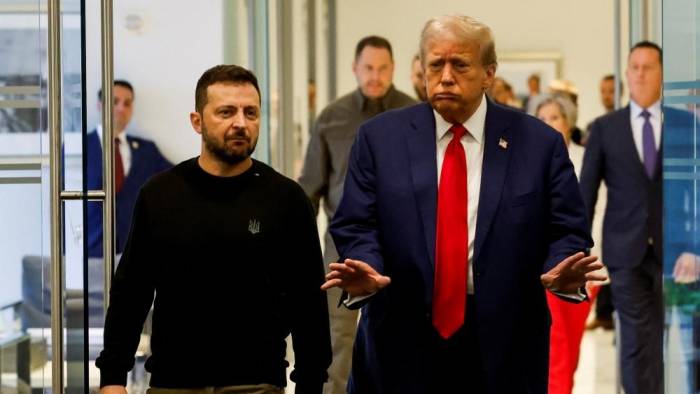
President Zelensky met Donald Trump at the end of a six-day visit to the US. Photo: Reuters
Donald Trump’s potential return to the White House in 2025 raises a critical question: can he change America’s approach to the Ukraine conflict? Russian analysts argue that Trump could significantly influence U.S. policy toward Ukraine, and there are several reasons to believe he would approach the conflict differently than his predecessor, Joe Biden.
Stronger mandate and unified supportIf re-elected, Trump would wield far greater authority during his second term than in his first. Unlike his initial presidency, when he faced resistance from Republican establishment figures and had to appoint individuals who did not share his vision, Trump now commands significant loyalty within the Republican Party. Over the past four years, he has reshaped the party leadership, turning it into a more unified force aligned with his policies.
Additionally, Trump’s potential majority in Congress and his influence over a conservative-leaning Supreme Court would provide a robust foundation to implement his agenda without substantial internal opposition. This newfound unity contrasts sharply with his previous term, where figures like John Bolton and Mike Pence openly opposed him.
Shift in priorities: Ending the “Madness” over Ukraine
Trump’s rhetoric consistently highlights his disdain for America’s deepening involvement in Ukraine. He views the conflict as a dangerous gamble that risks escalating into a nuclear confrontation — a scenario he considers "madness." Unlike Biden, who frames the war as a fight for democracy, Trump believes Ukraine does not represent a core national interest for the United States.
Trump’s pragmatic outlook prioritizes the cessation of hostilities over ideological concerns. He often emphasizes that prolonged wars harm businesses, destabilize economies, and carry immense humanitarian costs. His aversion to war was a defining feature of his first term and remains a cornerstone of his foreign policy philosophy.
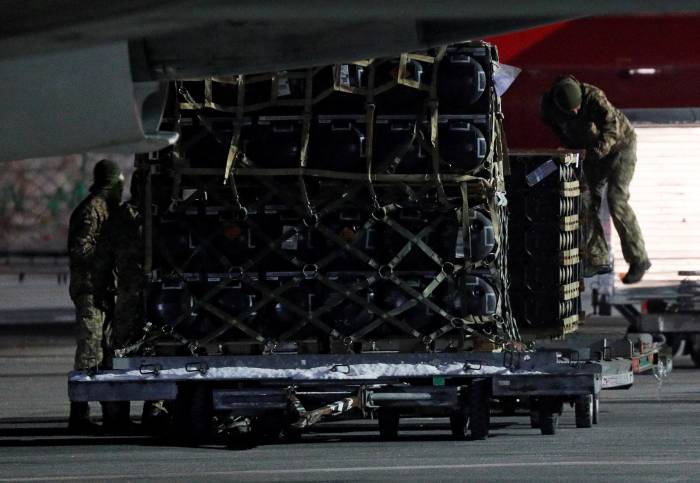
Ukrainian service members unload a shipment of military aid delivered as part of the United States of America's security assistance to Ukraine, at the Boryspil International Airport outside Kyiv, Ukraine January 25, 2022. REUTERS/Gleb Garanich
Losing battle: Futility of continued support
One of Trump’s primary critiques of the Biden administration’s Ukraine policy is its lack of strategic foresight. From Trump’s perspective, the war in Ukraine is unwinnable for the U.S.-backed Kyiv government. He sees continued military aid as a futile investment, destined to end in failure or a negotiated settlement unfavorable to Western interests. Trump’s pragmatic approach dictates that resources should only be allocated to conflicts with clear paths to victory, making Ukraine an increasingly questionable endeavor.
Real rival: China, not Russia
For Trump, the ultimate geopolitical adversary is not Russia but China. He has frequently criticized Biden for policies that inadvertently strengthened the Moscow-Beijing alliance, pushing Russia into deeper economic and strategic ties with China. Trump argues that this alliance is far more detrimental to American interests than any perceived threat from Russia alone. By deprioritizing Ukraine, Trump believes the U.S. could redirect its focus toward countering China’s global ambitions.
Personal disdain for Biden’s Ukraine strategy
Trump’s disdain for Biden’s handling of the Ukraine crisis is deeply personal. He portrays the conflict as an unnecessary escalation driven by Biden’s animosity toward Russian President Vladimir Putin. Trump frames his approach as a corrective to what he sees as Biden’s reckless warmongering, which he believes exacerbated global instability and strained American resources.
Drained resources and military preparedness
Under Biden, U.S. military aid to Ukraine has significantly depleted America’s defense stockpiles. Reports indicate that supplies of critical weapons, including air defense systems and artillery shells, have reached alarmingly low levels. This depletion not only undermines U.S. readiness but also raises concerns about America’s ability to support its NATO allies in future crises. Trump has repeatedly cited these issues as evidence of Biden’s strategic mismanagement.
Trump’s vision for ending the war
Trump has hinted at a willingness to entertain Russian proposals for ending the conflict. These include keeping Ukraine neutral, permanently ceding Crimea to Russia, and recognizing Russian control over territories gained during the war. While these terms are far from universally accepted, they reflect Trump’s broader approach of seeking pragmatic solutions rather than prolonging hostilities.
Russia reportedly hopes Trump would also agree to two additional conditions:
1.No militarization of Ukraine: Guarantees that Ukraine will not host offensive military capabilities threatening Russian security.
2.Demilitarization of Ukraine: Significant reductions in Ukraine’s armed forces and the removal of advanced weaponry from its territory.
Pragmatic strategy for peace?
Trump’s team has signaled that these proposals could form the basis for a peace plan aligned with his vision of rational and pragmatic foreign policy. By framing the resolution of the Ukraine conflict as a matter of strategic necessity rather than moral obligation, Trump seeks to appeal to war-weary voters and recalibrate America’s global priorities.
In conclusion, Trump’s return to the presidency could dramatically reshape U.S. policy toward Ukraine. Armed with a stronger mandate, a loyal party, and a clear vision, he may pivot America’s approach from confrontation to negotiation. Whether this shift would yield lasting peace or merely embolden adversaries remains uncertain, but Trump’s focus on pragmatism and national interest suggests a stark departure from the Biden administration’s strategy.
(If you possess specialized knowledge and wish to contribute, please reach out to us at opinions@news.az).


Similar news