Kazakhstan’s readiness to join Zangezur Corridor signals new era of Eurasian connectivity


Editor’s note: Abulfaz Babazadeh is a scientist, a scholar of Japanese studies, a political observer, and a member of the Union of Journalists of Azerbaijan. The views expressed in this article are the author’s own and do not necessarily reflect those of News.Az.
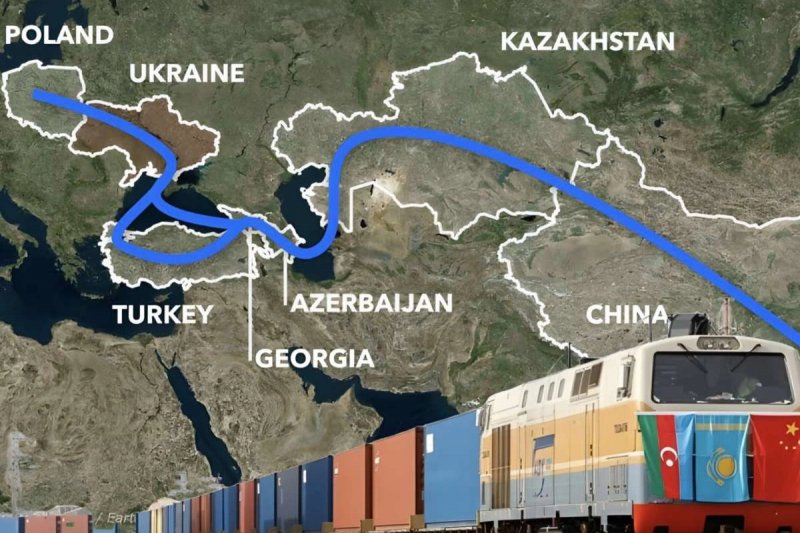
Kazakhstan’s declared readiness to participate in the Zangezur Corridor project has become one of the clearest signals of the changing transport and geopolitical landscape across Eurasia. The statement, made by Prime Minister Olzhas Bektenov in Baku during a meeting of the heads of government and vice-presidents of the Organization of Turkic States, goes far beyond a routine diplomatic remark. It reflects a broader strategic vision in which Kazakhstan sees the future of regional development through stronger connectivity between Central Asia, the Caspian region, the South Caucasus, Türkiye and Europe.
Bektenov also emphasised the importance of strengthening the Middle Corridor and linking its development with the potential opening of the Zangezur route, while noting that Kazakh companies are interested in the construction and modernisation of railway infrastructure.
At a time when global logistics is being reshaped by geopolitical tensions, sanctions, supply chain disruptions and growing competition over transit routes, Kazakhstan is seeking to strengthen its role as one of the key land bridges between East and West. For a country without direct access to open seas, transport corridors are not simply infrastructure projects. They are strategic instruments that determine export opportunities, economic resilience, investment attractiveness and geopolitical flexibility.
RECOMMENDED STORIES
Kazakhstan’s geography gives it enormous potential. It lies between China, Russia, the Caspian Sea, Central Asia, the South Caucasus and European markets. But geography alone is not enough. In the modern global economy, the real value of a transit country depends on the reliability of its infrastructure, the diversity of its routes, the speed of cargo movement, the predictability of customs procedures and its ability to provide businesses with stable access to global markets. This is why Astana’s interest in the Zangezur Corridor appears both logical and timely.
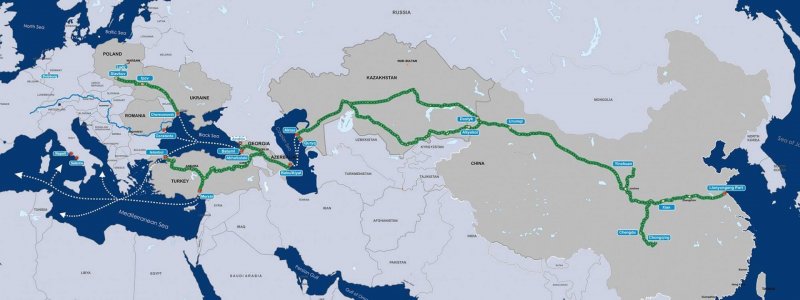
The Zangezur Corridor could become an important additional component of the Trans-Caspian International Transport Route, widely known as the Middle Corridor. This route connects China and Central Asia with the Caspian Sea, Azerbaijan, Georgia, Türkiye and Europe. In practical terms, it is a multimodal system combining rail, maritime and road infrastructure across Kazakhstan, the Caspian ports, Azerbaijan, Georgia and onward to European destinations. Its importance has grown sharply in recent years as countries and companies have sought more diversified routes between Asia and Europe.
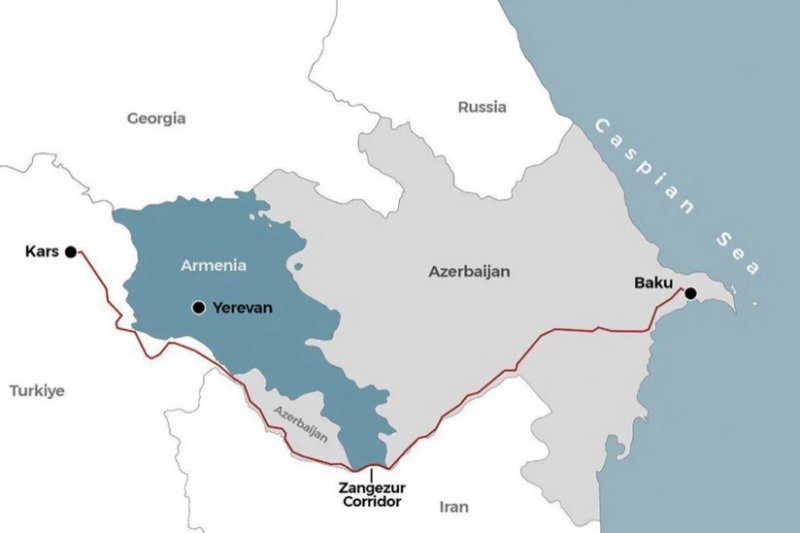
In this context, the Zangezur Corridor should not be viewed as a rival to the Middle Corridor. On the contrary, it could become one of its most important extensions. By creating a more direct connection between mainland Azerbaijan and Nakhchivan, and from there onward to Türkiye, the corridor could strengthen the western segment of the broader Trans-Caspian route.
For Kazakhstan, this would mean a more flexible and efficient route to Türkiye and Europe. For Azerbaijan, it would strengthen the country’s role as a central transit hub between Central Asia and the West. For Türkiye, it would reinforce its position as a gateway between Asia and Europe.
The economic foundation for this deeper connectivity already exists. Trade between Kazakhstan and Azerbaijan has developed steadily in recent years. In 2025, bilateral trade turnover reached $470.7 million, with Kazakh exports to Azerbaijan totalling $402.5 million and imports from Azerbaijan amounting to $68.2 million. These figures demonstrate that the two countries already possess a solid economic basis for expanding transport and logistics cooperation. Transport corridors become successful only when they are supported by real trade flows, not merely political declarations.
At the beginning of 2026, bilateral trade remained substantial despite fluctuations. In January–February 2026, trade turnover between Azerbaijan and Kazakhstan stood at $65.6 million, while Azerbaijan’s imports from Kazakhstan amounted to $41.3 million. These figures are important because they demonstrate genuine demand for cargo transportation between the two countries. With improved infrastructure, faster customs procedures, stronger port coordination and more predictable railway links, this trade could expand even further.
The Middle Corridor itself is already showing clear signs of growth. Cargo volumes along the Trans-Caspian route increased from 2.76 million tonnes in 2023 to 4.48 million tonnes in 2024, before reaching 4.12 million tonnes in 2025. Container traffic is also becoming one of the fastest-growing segments of the route. In 2025, around 77,000 TEU were transported along the corridor, while the target is to increase this figure to 300,000 TEU by 2029.
Kazakhstan plays a central role in this process. In 2025, around 42,000 TEU were transported through Kazakhstan along the Trans-Caspian route, including 356 container trains from China. This represented a 38-fold increase compared with 2023, underlining how rapidly the route is gaining importance. Kazakhstan is also expanding its rail network and strengthening the role of its Caspian ports, including Aktau and Kuryk, which are essential for transporting cargo across the Caspian Sea to Azerbaijan’s Port of Alat and onward to Georgia, Türkiye and Europe.
Kazakhstan’s broader transport strategy is based on balance and diversification. The country continues to maintain major logistics and trade links with Russia, which remains one of its largest economic partners. The northern route through Russia has long been one of Kazakhstan’s main trade arteries. In January–February 2026, Kazakhstan’s trade turnover with the countries of the Eurasian Economic Union reached $4.512 billion, an increase of 15.5% compared with the same period of the previous year. Since Russia is the dominant economy within the EAEU, this figure also reflects the continued importance of the northern logistics direction for Kazakhstan.
This does not mean, however, that Kazakhstan intends to depend on a single route. On the contrary, the current geopolitical environment has made diversification increasingly important. Kazakhstan is not seeking to replace the northern corridor with the Middle Corridor or the Zangezur route. Rather, Astana aims to build a more resilient logistics system in which the northern, Trans-Caspian, southern and western directions complement one another. If one route becomes complicated because of political, technical or border-related issues, another route should remain available.
This is the key strategic value of the Zangezur Corridor for Kazakhstan. It provides the country with another option in its westward transport architecture. For a landlocked country, every additional reliable corridor increases economic security. The more routes Kazakhstan possesses, the less vulnerable it becomes to external shocks, sanctions risks, border delays, infrastructure bottlenecks or geopolitical crises. In the twenty-first century, logistical flexibility is becoming one of the principal forms of national resilience.
The Turkish dimension is equally important. Türkiye is one of Kazakhstan’s key economic and political partners, and both countries are active members of the Organization of Turkic States. Trade between Kazakhstan and Türkiye reached nearly $5 billion in 2024, while in January–May 2025 it totalled $1.9 billion. The two countries have repeatedly stated their ambition to increase bilateral trade to $10 billion. This objective cannot be achieved through political goodwill alone. It requires stronger railway, maritime, road, customs and digital connectivity.
For Kazakhstan, closer access to Türkiye through the Caspian Sea, Azerbaijan and potentially the Zangezur Corridor creates new opportunities for exports, industrial cooperation, investment and access to European markets. For Türkiye, strengthening the Middle Corridor and its possible connection with the Zangezur route enhances its role as a strategic logistics hub between Asia and Europe.
For Azerbaijan, this further strengthens its position as the central bridge linking Central Asia with the Turkish and European direction.
Azerbaijan already occupies a key place in this emerging system. Over the past several years, Baku has consistently strengthened its position as a transport and energy hub connecting Central Asia, the South Caucasus, Türkiye and Europe. The Port of Alat, the Baku–Tbilisi–Kars railway, Azerbaijan’s road infrastructure and its location on the Caspian Sea make the country an indispensable partner for Kazakhstan’s westward connectivity. The possible opening of the Zangezur Corridor would further reinforce Azerbaijan’s importance by creating a more direct connection between mainland Azerbaijan, Nakhchivan and Türkiye.
There is also a broader regional logic. If implemented wisely, the Zangezur Corridor could help transform the South Caucasus from a region historically associated with closed borders and political confrontation into one characterised by transit, trade and economic interdependence. This does not mean that all political problems will disappear automatically. Any transport corridor in the South Caucasus is inevitably linked to issues of sovereignty, security, customs control, border management and trust. Nevertheless, infrastructure can create practical incentives for cooperation, especially when several countries see clear economic benefits.
The success of the Zangezur Corridor will depend on several factors. The first is political will. The second is infrastructure readiness. Railways, roads, ports, border checkpoints, logistics terminals and customs systems must function as part of a coordinated chain rather than as disconnected national segments. The third factor is tariff policy. International cargo operators require predictable costs and transparent rules. The fourth factor is digitalisation. In modern logistics, businesses need to know where their cargo is located, how long it will take to reach the next point, what documents are required and where delays may occur.
This is why Kazakhstan’s interest in digital coordination within the Turkic world is particularly important. A digitally integrated Middle Corridor connected with the Zangezur route would be far more attractive to global cargo operators than a fragmented system dependent on manual procedures and unclear timelines. The future of logistics will belong not only to countries that build railways and ports, but also to those capable of efficiently managing data, customs procedures, tracking systems and cross-border coordination.
Bektenov’s statement should therefore be viewed as part of a much broader Eurasian transformation. Kazakhstan is positioning itself as a country that not only uses existing routes but also actively participates in shaping new ones. Azerbaijan is consolidating its role as a bridge between the Caspian region and the West. Türkiye is strengthening its status as the final gateway from Asia to Europe. Together, these countries are giving practical substance to the idea of Turkic economic integration.
If implemented successfully, the Zangezur Corridor could become not a line of division but a route of connection. It could strengthen trade, increase the strategic importance of the South Caucasus and Central Asia, expand the capacity of the Middle Corridor and create new opportunities for regional development. For Kazakhstan, participation in this project is not simply about joining another transport initiative. It is about securing a place among the principal architects of Eurasia’s future logistics architecture.
That is why Kazakhstan’s readiness to join the Zangezur Corridor carries strategic significance. The future of the region will increasingly be shaped by those capable of connecting East and West faster, more safely and more efficiently. In this new geo-economic reality, the Zangezur Corridor may become one of the key links in a broader network in which Kazakhstan, Azerbaijan and Türkiye act as major centres of connectivity between Asia and Europe.
(If you possess specialized knowledge and wish to contribute, please reach out to us at opinions@news.az).


Similar news