Trump’s visit to China: Political reset without a full breakthrough


Editor’s note: Seymur Mammadov is a special commentator for News.Az and the director of the international expert club EurAsiaAz. The article reflects the author’s personal opinion and does not necessarily represent the views of News.Az.
U.S. President Donald Trump’s visit to China has become one of the most closely watched diplomatic events of the year, not only because of the scale of the U.S.-China rivalry, but also because both sides entered the talks under pressure to show results. The visit, held in Beijing in mid-May, was presented by both Washington and Beijing as an attempt to stabilize relations after years of tensions over tariffs, technology restrictions, Taiwan, supply chains, fentanyl, energy security and the broader balance of power in the Indo-Pacific. Chinese officials described the meeting as an opportunity to deepen dialogue and establish “new common understandings,” while the U.S. side focused on possible economic gains, including trade, energy purchases and aircraft orders.
The main outcome of the visit appears to be political rather than contractual. Both sides tried to demonstrate that, despite strategic competition, the world’s two largest economies are still capable of speaking directly at the highest level. Trump portrayed the talks as productive and suggested that a number of problems had been addressed. Chinese media, meanwhile, emphasized the importance of mutual respect, stability and dialogue. Yet behind the diplomatic language, there is still no evidence of a broad, legally binding agreement that would fundamentally reshape U.S.-China relations. The visit lowered the temperature, but it did not remove the structural rivalry between the two powers. AP assessed the summit as progress toward stabilizing relations, while noting that key differences remain unresolved.
RECOMMENDED STORIES
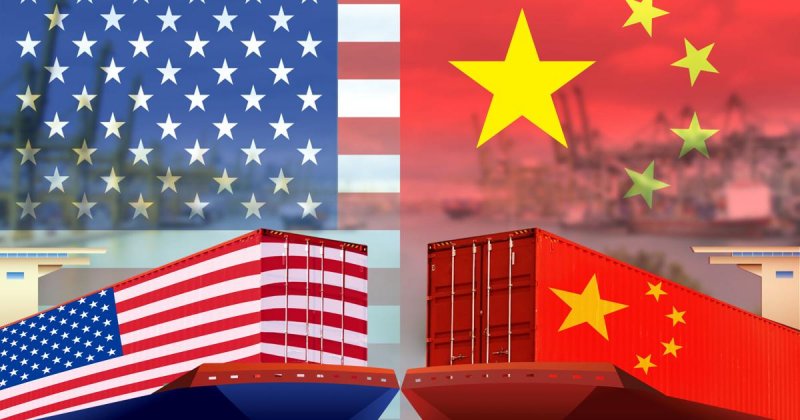
One of the most visible topics was trade. Despite years of tariffs and political confrontation, the United States and China remain deeply interconnected economies. According to the Office of the United States Trade Representative, U.S. goods trade with China totaled an estimated $414.7 billion in 2025. U.S. goods exports to China stood at $106.3 billion, while imports from China reached $308.4 billion. The U.S. goods trade deficit with China fell to $202.1 billion, a decrease of 31.6% from 2024. Chinese statistics present a larger figure: according to China’s customs data, China’s total import and export volume with the United States reached 4.01 trillion yuan in 2025, or roughly $574.7 billion, accounting for 8.8% of China’s total foreign trade. The difference reflects different statistical methodologies, but the broader picture is clear: even under tariff pressure, U.S.-China trade remains one of the most important commercial relationships in the world.
During the visit, the two sides discussed the possibility of expanding Chinese purchases of U.S. goods, particularly agricultural products, energy resources and potentially aircraft, but no public target was announced for a sharp increase in overall trade turnover.
 Source: Shutterstock
The possible Boeing order became one of the most discussed elements of the visit. Trump said China had agreed to buy 200 Boeing aircraft, a statement that immediately attracted attention in the United States because such an order would be politically useful for the White House and commercially important for American industry.
However, the details remain unclear. Reuters reported that the announcement disappointed some investors because markets had expected a much larger package, possibly around 500 aircraft, and because there was no public clarity on delivery timelines, aircraft models or the legal structure of the agreement. Boeing shares fell after the announcement, showing that investors treated the news cautiously rather than as confirmation of a fully finalized mega-deal.
Energy was another important issue. The United States sought to encourage China to buy more American oil, especially at a time of instability around the Middle East and the Strait of Hormuz. According to Reuters, a U.S. summary of the talks highlighted what Washington described as the leaders’ shared interest in keeping the Strait of Hormuz open and noted Xi’s apparent interest in American oil purchases as a way to reduce China’s dependence on the Middle East.
However, analysts also noted that there was no clear Chinese commitment to take specific action on Iran. This is important because China has long maintained strong economic links with Iran and is unlikely to fully align itself with Washington’s pressure strategy.
The Taiwan issue remained the most sensitive political point of the talks. According to reports citing Chinese state media, Xi warned that if the Taiwan question is mishandled, China and the United States could “come into conflict.” Beijing continues to define Taiwan as the most important and sensitive issue in U.S.-China relations. Washington, for its part, has maintained that its policy on Taiwan has not changed. This means that the summit did not produce a compromise on Taiwan. Instead, it confirmed the depth of the disagreement: China reaffirmed its red lines, while the United States continued to emphasize peace and stability in the Taiwan Strait.
The Iran question also played a role in the discussions. For Trump, it was important to show that China could be encouraged to play a more constructive role in limiting escalation around Iran and protecting global energy flows. For Beijing, however, the issue is more complicated. China wants stability in the Gulf because it depends heavily on energy imports, but it also does not want to be seen as following the U.S. line against Tehran. As a result, the talks produced a general message in favor of stability, but no clear public commitment from China to pressure Iran in the way Washington might prefer.
Fentanyl and chemical precursors were also part of the American agenda. For Washington, this remains a major domestic political issue, and the Trump administration has been trying to show that it can force stronger cooperation from China on the supply chains connected to synthetic drugs. Beijing, however, has preferred to frame such issues within the broader logic of mutual respect and law-enforcement cooperation, rather than as unilateral concessions to U.S. demands. This again reflects the central dynamic of the visit: the United States wanted visible deliverables, while China wanted to show that it was engaging from a position of equality.
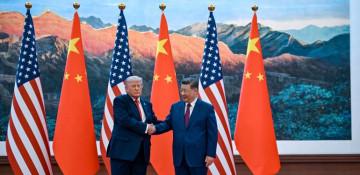
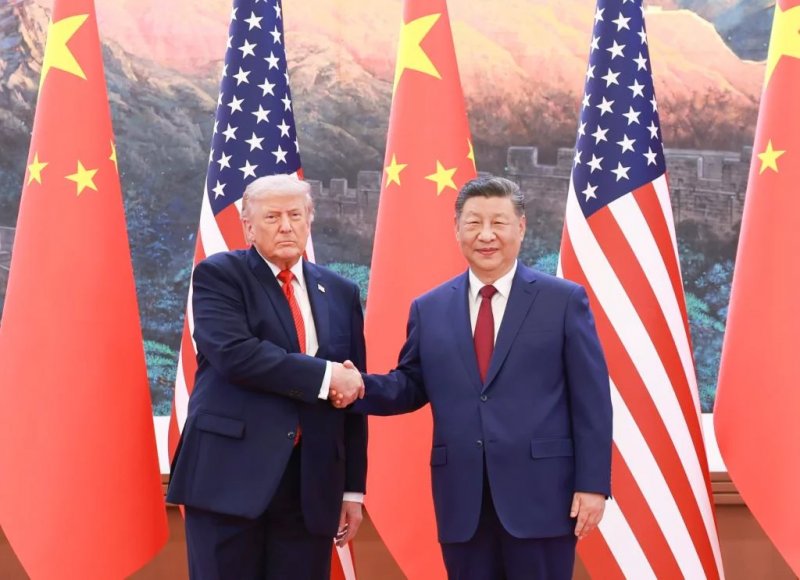
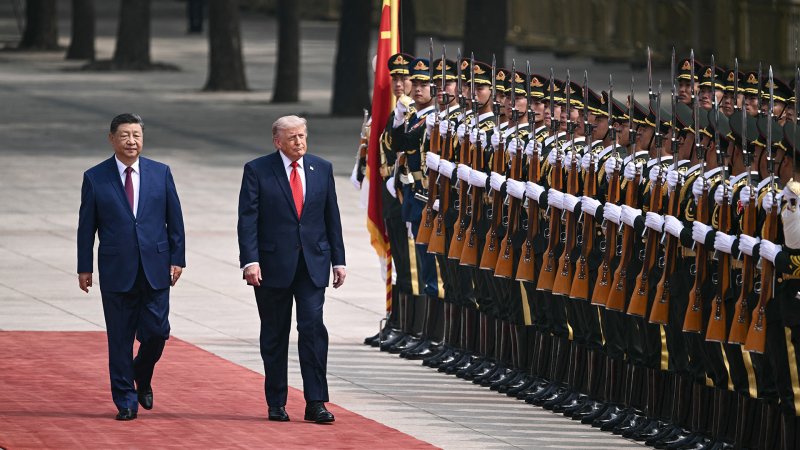
The Chinese side presented the visit as a diplomatic success. The message from Beijing was not that China had made major concessions, but that the United States had recognized the need to talk to China seriously and respectfully. This is why the symbolism of the visit mattered so much. Xi’s reception of Trump, the formal meetings, the carefully staged images and the emphasis on “common understandings” all served a broader political purpose: to show that China remains an indispensable power in global affairs and that any major international issue, from trade to energy security, cannot be solved without Beijing’s participation.
The American interpretation was different. For Trump, the visit was an opportunity to show that his personal diplomacy with Xi could produce economic benefits for the United States. The Boeing announcement, discussion of agricultural purchases and possible energy deals all fit into this narrative. Trump can present the visit domestically as proof that his pressure-based approach brings results. However, the lack of detailed public agreements limits how far this argument can go. Until contracts are formally confirmed, the economic achievements remain more political than practical.
 Source: AFP
Overall, Trump’s visit to China can be described as important, but not transformational. It did not end the trade rivalry, did not resolve the Taiwan issue, did not remove technology tensions and did not produce a clear breakthrough on Iran. What it did achieve was a partial diplomatic reset. The two sides reopened direct high-level communication, signaled that they want to avoid uncontrolled escalation and left space for future negotiations on trade, energy, aviation and security.
For the global economy, this matters. U.S.-China tensions affect supply chains, shipping, energy markets, technology companies, agricultural exporters and financial markets. Even a limited reduction in uncertainty can be useful. But the visit should not be mistaken for reconciliation. The United States and China are still competing for economic influence, technological advantage and geopolitical authority. The summit showed that both sides are ready to bargain, but not ready to retreat from their core strategic positions.
In the end, the main result of the visit is the return of managed dialogue. Trump received a platform to claim progress on trade and industry. Xi received confirmation that China is being treated as an equal power by Washington. The world received a signal that the two largest economies are trying to keep their rivalry under control. But behind the diplomatic smiles, the central reality remains unchanged: U.S.-China relations have entered not an era of partnership, but a new phase of cautious, high-stakes negotiation.
(If you possess specialized knowledge and wish to contribute, please reach out to us at opinions@news.az).


Similar news