Dangerous legacy of hatred in Armenia’s national psyche


By Tural Heybatov
Armenians are a very peculiar people—illogical and inconsistent. Take a simple example: among Armenians, calling someone a “Turk” is considered one of the gravest insults. You can call an Armenian a scoundrel or a villain—they’ll tolerate that. But call them a “Turk,” and you’ll be held accountable. If not before the law, then before a mob of pseudo-patriots—or even before the law itself. “Turk” is among the most serious insults in Armenian society. Yet this doesn’t stop Armenians from traveling to Türkiye, living comfortably there, doing business with Turks, and encouraging Turkish tourists to visit Armenia.

Source: shortpixel
This behavior is far from rational. Armenians understand the value of commerce in Türkiye and the appeal of shopping in Istanbul, yet they remain shackled by a hatred passed down almost from birth. And this is not an exaggeration. Armenian children are indeed raised with hatred toward Turks and contempt for Turkic peoples from infancy. This hostility is embedded in lullabies, children’s stories, and nursery rhymes.
In Armenia, you can curse someone with profanity and suffer no consequences. But if you call someone a “Turk,” you will be held accountable.
Just recently, another brawl broke out in Armenia’s parliament. Arsen Torosyan, an MP from the Civil Contract faction, declared from the podium:
“I officially state, and this applies to all the ‘former ones’ as well as anyone who, tomorrow, dares to insult me, my teammates, or anyone else by calling us ‘Turks’... I’ll deal with his mother, father, all that is holy to him, and his entire family.”
It all started when Deputy Speaker Hakob Arshakyan, addressing Levon Kocharyan—the son of former President Robert Kocharyan—said:
“We’re not the ones saying Robert Kocharyan’s father was a Turk; the people say it.”
Levon took offense at what he saw as a grave insult to his grandfather. Torosyan then escalated the situation with his “street-style” tirade from the podium. What began as a verbal spat turned into a physical altercation.
Let us clarify: in this context, “Turk” is often used to refer to Azerbaijanis. We will address Kocharyan’s origins later, but for now, let’s note that Robert Kocharyan is called many things in Armenia—not just “Turk.” He is also called a thief, a swindler, a fraudster, a scoundrel, a criminal, and a puppet of Russia. None of these accusations—based on his actual record—provoke outrage among the opposition. No one leaps to defend him when he is accused of looting the state budget. But the word “Turk” sparks intense emotion and provokes people to grab each other by the collar.
One particular case comes to mind: during a court hearing related to the ex-president, Kocharyan’s supporters attacked opposition opponents. The reason? An elderly supporter of Nikol Pashinyan had called protester Aram Harutyunyan a “Turk.” Upon his arrest, Harutyunyan declared:
“This woman called me a Turk and cursed my child, so I hit her. I struck a blow against the supporters of Levon Ter-Petrosyan and Nikol Pashinyan. I admit it—and I’ll hit anyone who dares to call me a Turk.”
Lawyer Roman Yeritsyan argued that anyone who dares to call Robert Kocharyan or his family members a “Turk” must face serious public condemnation.
A few years ago, the well-known Turkish YouTuber Ruhi Cenet visited Armenia. From the moment he arrived, he encountered racial discrimination. Interviewing people on the street, he was met with only hatred and aggression. Armenians justified their hostility toward Turks by citing the so-called “Armenian genocide,” but when asked about the Khojaly Genocide, they responded, “That’s different.” Hatred toward Turks and Azerbaijanis is deeply ingrained in the Armenian national psyche. This contempt is reflected in phrases like, “Why are you acting like a Turk?” or “Even a Turk wouldn’t do that.”
Ironically, one of the most fanatical Azerbaijano- and Turcophobes was Robert Kocharyan—an alleged illegitimate child of an Azerbaijani man and an Armenian woman, born in Azerbaijan. Calling Kocharyan a “Turk” is not just meant to insult or humiliate—it’s also a nod to his supposed lineage. And as the saying goes, where there’s smoke, there’s fire. Rumors that the “liberator of Artsakh” is the son of a man named Mamedov—a local education department head—are not entirely implausible. The story goes that Kocharyan was born of a forbidden affair between an Armenian village schoolteacher named Asmik and Mamedov. In the Soviet era, such affairs were frowned upon, so the mother sent the illegitimate child to relatives in Khankendi, and later, he adopted the surname and patronymic of his stepfather, whom Asmik married in a fictitious union.
One can only imagine how this rumored heritage torments Kocharyan—a rabid separatist and nationalist. Call him a maniac or a murderer, and it won’t hit nearly as hard.
Turkophobia and Azerbaijanophobia act as cognitive blocks within Armenian consciousness. This hatred stunts mental growth and prevents rational engagement with reality.
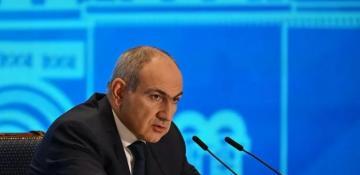
In this context, Prime Minister Nikol Pashinyan’s appeal to stop using another nation’s identity as an insult seems remarkably reasonable. Speaking in parliament, he once said:
“In Armenia, there’s a habit—when people want to insult someone, they say ‘you’re a Turk.’ As someone who has repeatedly been addressed this way, I want to say to those who insult me: you don’t offend me, because I don’t take it as an insult.”
This is a commendable stance, yet the recent outburst and brawl between Pashinyan’s faction and the revanchists over the term “Turk” suggest that even within the Civil Contract party, few support the prime minister’s position.
It should be noted that Armenian phobias aren’t limited to Turks and Azerbaijanis. Among the younger generation, this hatred has taken on broader dimensions.
Famous blogger Albert Isakov once translated and uploaded a video about a so-called Armenian prodigy, Mikael Akopyan. At just five years old, the boy knows world capitals, speaks English, plays chess, is learning Russian, recites Russian classics by heart, has a photographic memory, and is a source of national pride in Armenia. But propaganda has turned this child into a monster. This five-year-old dreams of creating a weapon that will wipe out everyone on Earth except Armenians.
“I’ll turn the whole planet into Armenia. Anyone from another nationality who comes to our land—I’ll shoot on the spot. I won’t let non-Armenians live in Armenia... I’ll only leave Armenians on Earth. To destroy other nations, I’ll build a special unidentified flying object... We’ll shoot immediately, without any negotiations, and wipe everyone out,” the child proudly declared on national television.
This is, quite frankly, terrifying. When a five-year-old child fantasizes about annihilating all other nations and leaving only Armenians on Earth—and when adults not only fail to condemn such sentiments but instead applaud, encourage, and glorify them through television broadcasts—it is a chilling reflection of how deeply entrenched xenophobia has become in certain layers of Armenian society. This is not an isolated outburst of a confused child. It is a direct result of a system where hatred is cultivated, normalized, and even sanctified from a very young age. Rather than being taught tolerance, empathy, or global citizenship, children are exposed to a nationalistic narrative that equates identity with superiority and violence with heroism.
In any other society, such statements would spark outrage, psychological intervention, or at the very least, national introspection. But in this case, the boy is celebrated as a genius, a prodigy, a future leader—despite openly promoting ethnic cleansing. This illustrates not just the dangerous consequences of propaganda but also the collective failure to instill basic human values. When a society praises hate-driven fantasies and turns them into televised spectacles, it signals a cultural pathology—one that, left unchecked, will inevitably produce new generations hardened by prejudice, isolationism, and resentment. The recent parliamentary brawl over the word “Turk” is not just a political incident—it is symptomatic of this much larger, systemic failure to confront and dismantle the ideology of hate.


Similar news