EU faces a dilemma: How to respond to violations in India?


By Samir Muradov
The European Union is facing a tough decision in its relationship with India, a country that's becoming increasingly controversial on the global stage due to a rise in human rights abuses. As the annual EU-India Human Rights Dialogue looms, the situation is more urgent than ever. Major human rights organizations —Human Rights Watch, Amnesty International, Front Line Defenders, the World Organisation Against Torture (OMCT), and Christian Solidarity Worldwide (CSW)—are pushing the EU to take a firmer stance.In recent years, India, led by Prime Minister Narendra Modi and his Bharatiya Janata Party (BJP), has been drifting dangerously toward authoritarianism and religious intolerance. Since Modi took office for his third term, India has been systematically targeting religious minorities, especially Muslims and Christians. This includes passing repressive laws, making arbitrary arrests, and committing widespread human rights abuses. The demolition of Muslim homes and businesses without due process—what’s now being called "bulldozer justice"—is just one glaring example.
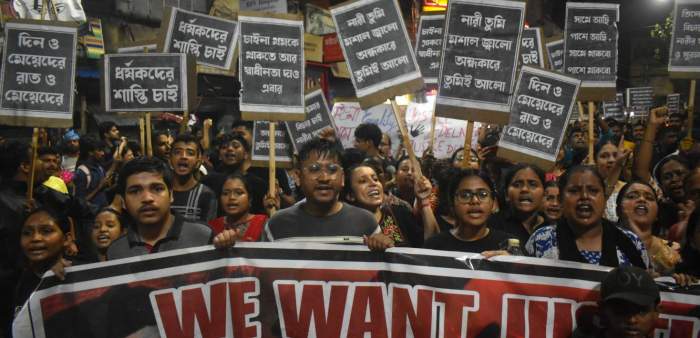
The Citizenship Amendment Act (CAA), which effectively excludes Muslims from a path to Indian citizenship, has drawn sharp criticism. This law undermines the very principles of equality and justice and has sparked widespread protests. The government’s heavy-handed response has only deepened the human rights crisis in the country.
But it’s not just religious minorities under attack. The Indian government is cracking down on civil society, political opponents, and the media. Accusations of financial misconduct and the misuse of anti-terrorism laws have become tools to silence dissent. One of the most troubling moves was the application of the Foreign Contribution Regulation Act (FCRA), which led to the shutdown of over 20,600 NGOs—many of them dedicated to promoting human rights and democratic values.
In July 2024, things took another dark turn with the introduction of three new criminal laws that expand police powers and threaten basic freedoms. The new Criminal Procedure Code (BNSS) now allows police to detain people for up to 15 days at any time during their arrest period, increasing the risk of torture and mistreatment. These laws are a blatant violation of international human rights standards.
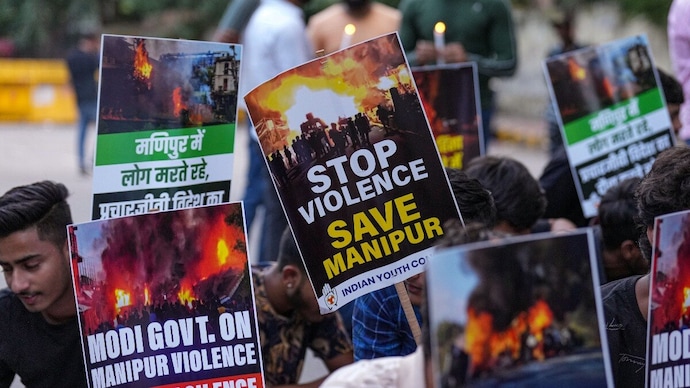
India’s human rights issues aren’t limited to religious minorities and civil society. The country is also dealing with regional conflicts that are spiraling out of control. One of the most alarming situations is in Manipur, where ethnic violence between the Meitei community and Kuki tribal groups has been raging since May 2023. Over 200 people have been killed, and more than 60,000 have been displaced. The Indian government’s failure to prevent this violence and the state’s protection of aggressive Meitei groups is eroding trust in its ability to protect all citizens.
In Jammu and Kashmir, things have gone from bad to worse since the Indian government revoked the region’s special status in 2019. This move led to a harsh crackdown on media and civil society, with journalists and activists being arrested on trumped-up terrorism charges. The repression has stifled free speech and deepened the sense of alienation in the region.
India’s human rights abuses aren’t confined within its borders. The government is also being accused of engaging in transnational repression, targeting individuals and groups outside the country. Several nations, including Canada, the US, and Pakistan, have alleged that Indian intelligence agencies are involved in assassinations of suspected terrorists and separatist leaders abroad. These accusations raise serious questions about India’s adherence to international law and are causing increasing concern about the global reach of its repressive actions.
The European Union has always positioned itself as a defender of human rights and democracy. In recent years, the EU has expressed growing concern over India’s human rights record. In January 2024, the European Parliament passed a resolution calling for stronger human rights dialogue with India, advocating for biannual meetings. This move shows the EU’s recognition of the severity of the situation and its desire to see real progress.
But so far, the EU’s efforts haven’t led to significant changes. Human rights groups are becoming increasingly frustrated, urging the EU to demand the immediate release of all arbitrarily detained activists and journalists and to push for the repeal of repressive laws targeting minorities and dissenters. They’re also calling on the EU to enforce Financial Action Task Force (FATF) recommendations and to ensure transparency when applying laws like the FCRA to NGOs.
The European Union is at a critical crossroads in its relationship with India. As the world’s largest democracy and a key strategic partner, India is crucial to the EU’s geopolitical and economic goals. But the ongoing human rights crisis presents a serious challenge to the EU’s commitment to these values.
If the EU wants to maintain its credibility as a human rights defender, it needs to take a stronger stand with India. This means holding the Indian government accountable and demanding concrete steps to end the violations and protect the rights of all citizens, regardless of religion or ethnicity.
If the EU fails to act, it risks damaging its reputation on the global stage. This could weaken its ability to advocate for human rights elsewhere and reduce its influence in international forums. The question now is whether the EU will confront these challenges head-on or prioritize its economic and political interests over the protection of human rights.
As the EU gears up for the next round of human rights talks with India, the stakes couldn’t be higher. The outcome of these discussions will not only shape the future of EU-India relations but also serve as a test of the EU’s commitment to the principles it stands for. The world is watching to see whether the EU will step up or let this critical moment pass by.


Similar news