Europe drifts toward military escalation with Russia – Alexander Rahr warns in interview with News.Az


By Samir Muradov
In recent weeks, Europe has witnessed an unexpected political rapprochement between France and Poland, marked by the signing of a bilateral friendship treaty. The move surprised many observers, given the strained relations between Paris and Warsaw in recent years. What lies behind this agreement? What are the goals of Paris and Warsaw? And how is Berlin, traditionally a key player in European politics, responding?
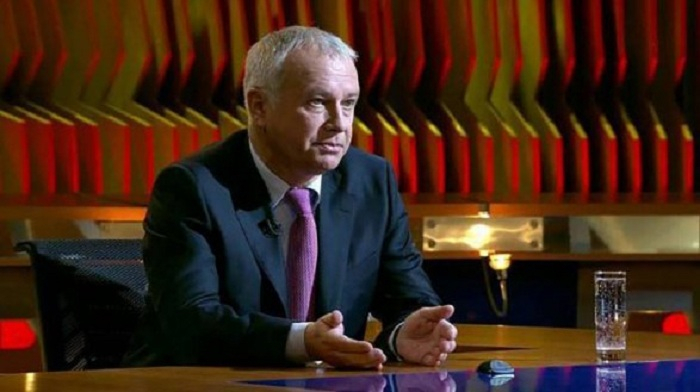
German political analyst Alexander Rahr shared his insights on these developments in an interview with News.Az.
According to Rahr, Europe is dangerously close to being dragged into a direct military conflict with Russia.
“We are primarily talking about countries like the United Kingdom, France, Germany, and Poland. These four key Western powers have been steadily radicalizing their foreign policies, leaving almost no room for diplomacy or dialogue,” Rahr said.
He explained that, historically, Ukraine has been viewed by these nations as a strategic buffer zone to contain Russia.
“This is not a new strategy. It dates back centuries to the time of Ivan the Terrible, when European kingdoms were already seeking to limit the influence of the rising Tsardom of Moscow. Later, the Polish-Lithuanian Commonwealth played the same role, followed by various political regimes on the territory of modern Ukraine. Today, the West sees Ukraine as a ‘wall’ between itself and Russia. That is why a defeat for Ukraine would be seen as a geopolitical loss for the entire West, including London, Paris, Berlin, and Warsaw,” Rahr explained.
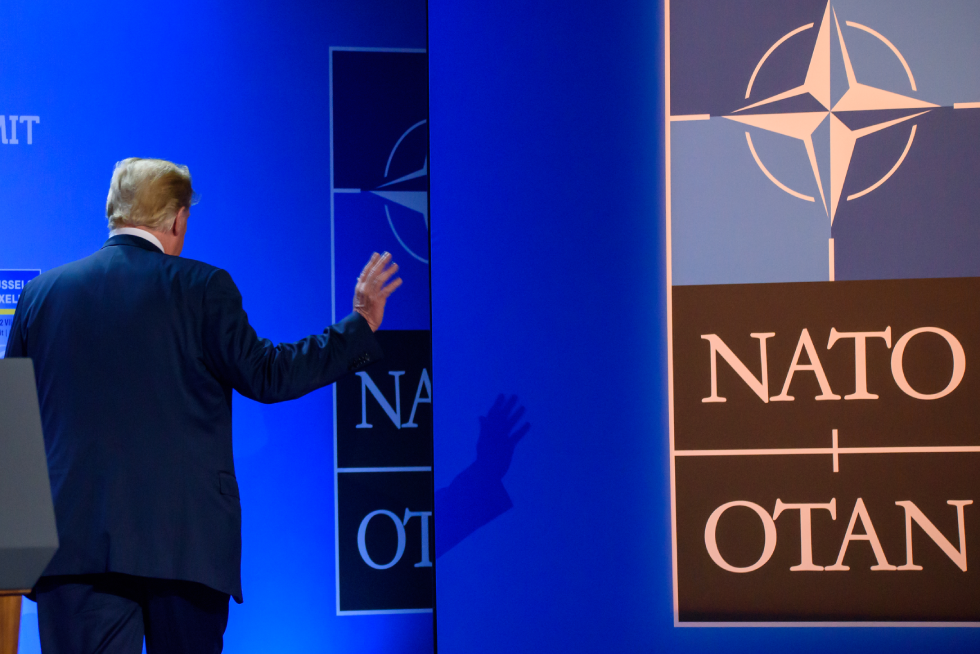
He warned that these countries are now attempting to build a special military-political alliance within NATO, openly aimed at Russia.

Source: mehrnews
“We can already speak of the formation of a so-called ‘Northern Bloc’ or ‘Union of Northern Europe,’ which Poland, Germany, the UK, and France are seeking to establish. This alliance is focused on increasing military budgets, deploying new bases, and creating joint military formations along NATO’s eastern flank, including the Baltic states, Scandinavia, and Eastern Europe,” Rahr noted.
He further pointed out that this alliance is ignoring the more pragmatic approach once proposed by U.S. President Donald Trump.
“Unlike the European leaders, Trump repeatedly stated that the United States could and should build economic relations with Russia if it serves America’s interests. However, the European elites — particularly in Berlin and Warsaw — view this approach as a threat to their long-term interests and continue to fuel anti-Russian rhetoric,” he said.
Special attention, according to Rahr, should be paid to Germany’s role. He highlighted that Friedrich Merz, the leader of the Christian Democratic Union (CDU), has openly expressed readiness to lead the creation of a new defense bloc. “This bloc would formally remain part of NATO, but in practice, it would become an independent tool for exerting pressure on Russia. Such an initiative could fundamentally reshape Europe’s security architecture, further undermining already fragile diplomatic channels between East and West,” Rahr stressed.
Source: fairobserver
Against the backdrop of rising tensions, Europe is rapidly slipping into a major political and military crisis. Rahr warned that growing divisions between the EU and the U.S., internal fractures within NATO, soaring defense budgets, the militarization of Eastern Europe, and deteriorating relations with Moscow are all indicators of a looming global confrontation.
“Whether Europe can pull back and return to dialogue remains uncertain. But the current rhetoric and actions of major European capitals suggest that the continent once again stands on the brink of a large-scale war,” Alexander Rahr concluded in his interview with News.Az.


Similar news