From 2015 to 2025: Lessons learned and what lies ahead for Lukashenko


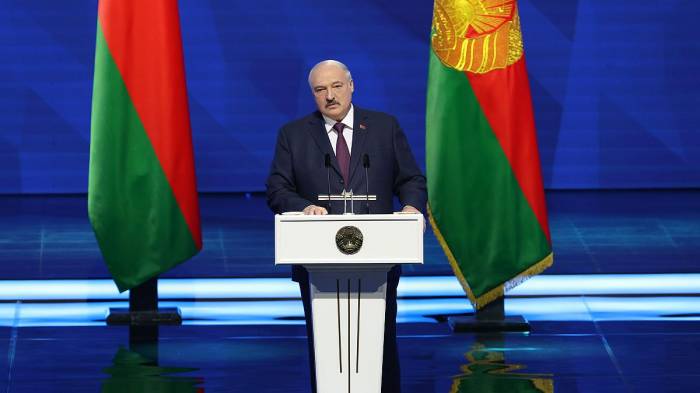
Photo: AP
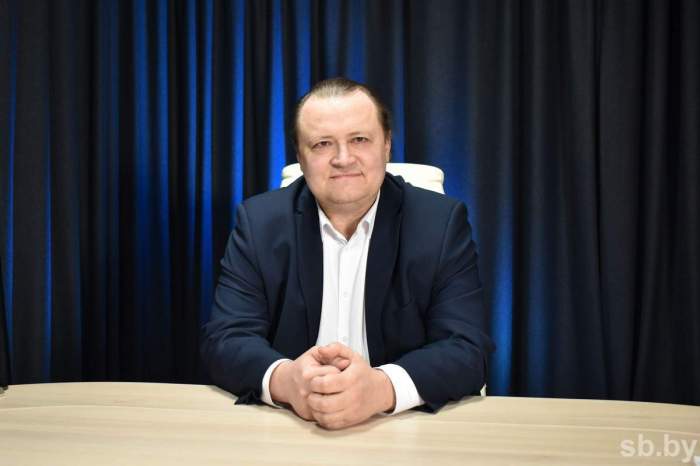
News.Az presents an interview with renowned international affairs scholar, historian, political scientist, and member of the expert group under the head of the Eurasian Economic Commission, Yuri Shevtsov. In this conversation, the expert shares his insights on the presidential election in Belarus scheduled for January 26, 2025, analyzes internal processes unfolding in Belarusian society, and evaluates external factors—from sanctions to the potential militarization of the region. Yuri Shevtsov offers a detailed explanation of why a significant portion of voters continues to support the current government and explores the role of nuclear weapons stationed on Belarusian territory in shaping national security and foreign policy.
- Which political parties and candidates are participating in the 2025 presidential election, and what are their key platforms?
- Right now, Belarus is experiencing a scenario similar to the 2015 presidential election. Back then, in 2015, Belarusian society consolidated around Lukashenko as the guarantor that the war in Ukraine would not spread into Belarus. Recall that 2015 came right after the events of 2014 in Donbas and Crimea.
There is another parallel: before the 2015 election, in 2010, there was an attempt to storm government buildings during the presidential elections. The people who tried to do this in central Minsk were dispersed, meaning that a “color revolution” attempt at the time failed. That same scenario did not unfold again in 2015, and society—ordinary citizens, the middle class—whatever their grievances toward Lukashenko might have been, voted for him en masse as the guarantor of peace and stable development.
The same thing is happening today. The Belarusian public is greatly shocked by the war in Ukraine, and the country is once again rallying around the same leader. It does not really matter what happened back in 2020, during the previous election and the accompanying unrest. At this point, I would not expect any surprises.
- How do current sentiments in Belarusian society affect voters’ willingness to support the government or, conversely, to seek an alternative?
- Judging by certain indicators, we see no sign of any opposition activity in Belarus right now. One could attribute this to repressive state measures against the opposition, but that alone is never a sufficient explanation. If society had an internal drive to conflict with the government, it would manifest itself in some form—if not open protest, then at least passive protest. But we are not seeing even passive protests against Lukashenko in Belarus today.
On the other hand, we should keep in mind the particular nature of the Belarusian opposition. Today, after the events of 2020 and the outbreak of the war in Ukraine, the Belarusian opposition—mostly based abroad in Poland, Lithuania, and Ukraine—has become much more radicalized. They have formed armed units, some of which are fighting in Ukraine, and opposition leaders keep calling for an armed struggle against Lukashenko.
They are also examining the possibility of invading Belarus from Ukraine with Belarusian nationalist units, following the example of how certain similar Russian units in Ukraine served as a “flag” for the Ukrainian army’s incursion into Russia’s Belgorod Region. Or there may be another scenario, but the idea of armed action is constantly being discussed openly. As a result, the opposition appears, in the eyes of the average Belarusian, as a very radical force aiming to start a civil war, to spill blood, and to bring to Belarus the same war that is now happening in Ukraine.
From the perspective of internal politics (and even, in a sense, external politics, if we count the Belarusian opposition as part of that), this creates a very favorable electoral situation for Lukashenko in these upcoming elections. He will almost certainly gather a genuinely high percentage of votes. In 2015, he received, if I recall correctly, roughly the same percentage as in the first election, back in 1994, which was very high. I would not rule out that this time he may get a similar or even higher result.
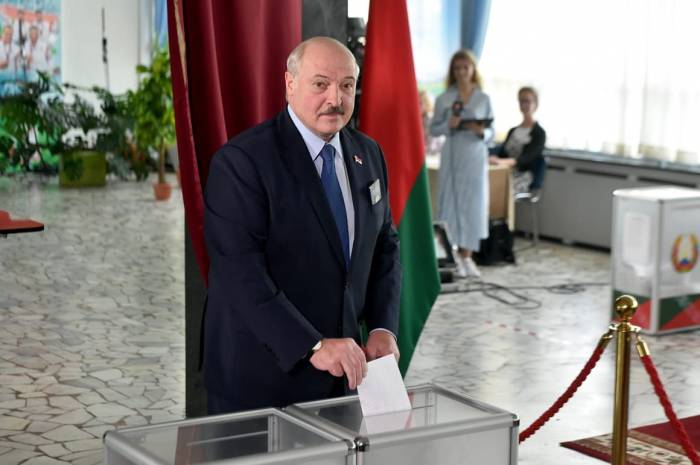
Photo: AFP
- Do the opposition or other political groups have any real means of changing the political situation in Belarus by the 2025 election?
- We must also consider Belarus’s foreign policy at a more serious level than just dealing with the domestic opposition. Belarus has indeed managed not to become directly involved in the war in Ukraine. This is usually attributed to the fact that the Russian General Staff sees no benefit in it. Everyone understands—in both Belarus and Russia—that if Belarus were drawn into the war, the front line would stretch by another thousand kilometers or so, forcing Russia to commit substantial resources, at least in terms of equipment, to that new front.
Hence there is no obvious necessity, from the perspective of the Russian-Belarusian alliance, to pull Belarus into direct combat, and therefore it has not happened. Consequently, from the viewpoint of the average Belarusian, Lukashenko has chosen a very successful foreign policy line in the ongoing war.
There is also a very clear awareness in Belarusian society of the threat of total militarization of life and the economy in this small country if it were embroiled in a serious confrontation with NATO or Ukraine. Even without a direct invasion from Ukraine or NATO, total militarization could become a possibility. Belarus has avoided this scenario largely because Russian nuclear assets—tactical nuclear weapons—have been deployed on its territory, and there is now talk of “Oreshnik.” These arms, especially the tactical nuclear weapons, deter the hawks in Poland and the Baltic states, as well as in NATO as a whole. After the West demonized Lukashenko, they now genuinely fear that he might “push the button” or at least seriously demand that Russia do so if something were to happen.
In fact, that is likely what would happen if, God forbid, it came to a direct confrontation with NATO. He would probably be capable of pressing the button or, at a minimum, demanding that it be pressed. It is important to understand that the Russian nuclear weapons stationed in Belarus are not just Russian nuclear assets. Russia has trained certain Belarusian units to use these nuclear warheads. In Russia, some Belarusian delivery vehicles have been modernized to carry these warheads, and Belarus has received some additional delivery systems capable of deploying them wherever deemed necessary. In other words, even though the tactical nuclear weapons on Belarusian territory are Russian and the final decision to use them remains with Russia, they are nevertheless under the direct control of Belarusian military personnel and can only be deployed with their involvement.
Thus, from Belarus’s perspective, this means it has, in some sense, approached the threshold of being a nuclear-armed state. However, it is not actually a nuclear power, so various nonproliferation agreements are not violated. For Belarus’s neighbors—especially radicals in NATO countries and Ukraine—this is a troubling situation. If something should happen, they might decide not to push the nuclear issue; with Lukashenko, they are genuinely uncertain. In any case, they realize that he might not back down and that today he has all the technical capabilities at his disposal.
Therefore, the presence of nuclear weapons in Belarus has sharply deterred those who might want to expand the war out of Ukraine into Belarus. This tactical nuclear weapon deployment has also allowed Belarus to avoid complete militarization of the country. We are not seeing any significant increase in the size of its armed forces or the transfer of the entire economy and public life onto a war footing. The average citizen in Belarus, aware of what could have happened, is largely satisfied with Lukashenko’s foreign policy. This further contributes to the likelihood that he will win a large number of votes in the current “pre-election” period.
Finally, let us touch on the situation for ordinary people. The sanctions imposed on Russia and Belarus in 2022 tightened an already existing sanctions regime. Belarus has been under sanctions since 1996, so its economy and society were essentially ready for this. As a result, these sanctions did not bring economic problems so much as they stimulated economic growth through import substitution, both in Belarus and Russia. This import substitution has been successful.
The economy in Belarus is growing at a rate of around four percent (in GDP terms), and that is something to be proud of. Household incomes are also rising rapidly. In fact, if we recalculate per capita income in US dollars, it seems Belarusians have never lived this well. Therefore, despite all the horrors and risks of the war, the average Belarusian’s standard of living has not declined; in fact, the opposite is true. Unemployment here is very low—if anything, there is a labor shortage. This has led to some degree of “targeted” or “organized” labor migration. That also increases the stability of Belarus in the sense that low unemployment and a controlled flow of migrants keep things in balance.
For the average Belarusian, in simple terms, there is no need for a different president. The incumbent satisfies them. That is probably all that can be said about our “pre-election” activity.
- How is the international community assessing the election preparations and Belarus’s participation in democratic processes?
- Regarding your question on the international community’s view of election preparations: for Belarus, that does not matter. Every presidential election since 1994 has, in some form, been condemned or not recognized by the international community, leading to major scandals. There have been times when all Western ambassadors left Belarus, only to return quietly later. None of this is of real importance to the Belarusian political system: whether the West recognizes the election results or not changes nothing.
As for Belarus’s allies: Russia will, as usual, recognize the election and its outcome. Relations with China, in principle, are also very good—if not excellent. A visit by Lukashenko to China is scheduled for January, before the presidential election, to underscore his close ties with China, and China will confirm that closeness. Lukashenko has also just completed a visit to Oman and the United Arab Emirates, primarily economic in nature, but significant. Arab states are already investing in Belarus and plan to continue doing so. So, from that standpoint, everything is fine.
This aspect is very important for Belarus: having nuclear weapons on its territory means they cannot be used without Belarus’s consent. At the same time, it implies that Belarus is on the verge of something akin to nuclear status. But again, it is not a nuclear state, so various nonproliferation treaties remain intact.
For Belarus’s neighbors—especially the more radical voices in NATO countries and in Ukraine—this is a painful reality because if someone “pushes the button,” they are unsure Lukashenko will refrain from doing the same. At the very least, they realize that he might go through with it. And now he has the technical means to do so.
Hence the presence of nuclear weapons in Belarus has served as a powerful deterrent against anyone wishing to extend the war beyond Ukraine’s borders and into Belarus. This tactical nuclear arsenal has allowed Belarus to avoid total militarization. The size of its armed forces has not significantly increased, and the country’s economy and public life have not been fully switched to a wartime footing. Belarusians, recognizing what might have been, are generally satisfied with Lukashenko’s foreign policy. This further solidifies his likely support in this “unofficial” pre-election campaign.
As for ordinary life, sanctions against Russia and Belarus imposed in 2022 only reinforced an already long-standing sanctions regime—Belarus has lived under sanctions since 1996—and the country turned out to be fully prepared for them. The measures effectively boosted economic growth through ongoing import-substitution initiatives in both Belarus and Russia, and these have been successful. Belarus’s current GDP growth rate is around four percent, which is notable, and incomes have been rising. Converting to dollars, Belarusians may be at their highest-ever standard of living. In other words, for the average person, despite all the risks, war has not brought a decline in their well-being. On the contrary, unemployment is very low, and there is a shortage of workers, resulting in a managed flow of labor migration that, in turn, strengthens stability. In simple terms, the average Belarusian sees no need for a different president, since the current one meets their needs.
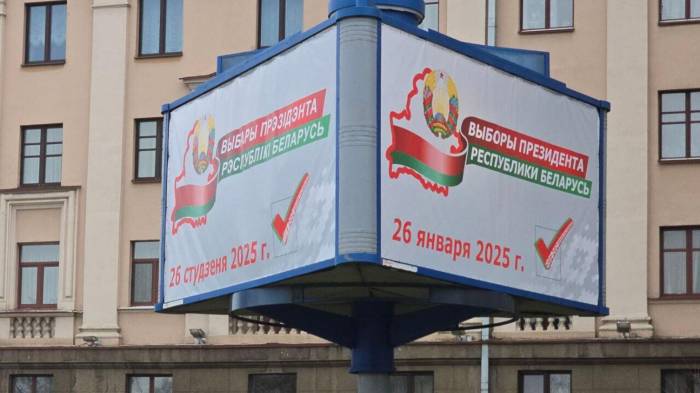
Photo: Sputnik Belarus
- What are the forecasts for voter turnout and potential results of the 2025 presidential election?
- The election campaign in Belarus is taking place in its usual style. Lukashenko travels around the regions to meet directly with people, primarily in workplaces. This method is effective because it helps avoid the electoral scandals that typically mark campaigns in countries where multiple political players vie for attention. Lukashenko maintains direct contact with his target electorate.
This year, there might be one slightly different element: Lukashenko’s authorized representatives have been traveling more actively to different regions, holding events and meeting with voters. However, that is a technical detail. Ultimately, society is uniting not around any grand ideology expressed by Lukashenko, but around Lukashenko himself, who is seen as the guarantor of stability and peace.
Hence the main threats in the current campaign do not concern voter sentiment. The primary dangers revolve around whether someone—perhaps in coordination with the West—might launch a sabotage or terrorist attack at the last minute, or even an invasion of some sort (the Russian intelligence services have warned of such possibilities). The intention would be to undermine Lukashenko’s credibility as a guarantor of stability and peace. However, so far there is no visible sign of anything like that, and perhaps it will all pass without any such acts.
If that remains the case, Lukashenko wins in the normal course of events. Moreover, the election in Belarus falls on January 26, while Donald Trump’s inauguration in the United States is on January 20, meaning international attention will be focused on Trump’s first steps as president rather than on what is happening in Belarus. Thus, I currently do not see any threats to Belarus or any surprises in the upcoming presidential election—barring the possibility of some unforeseen force majeure or reckless acts. Even if someone did attempt an incursion into Belarus from the south, for example from Ukraine, the Belarusian army could stop it on its own, and there is no sign of a larger war with NATO or Ukraine. In fact, if such an attempt were to occur, it would likely strengthen Lukashenko’s position rather than weaken it.


Similar news