From Dushanbe to Yerevan: Key developments shaping the South Caucasus - INTERVIEW


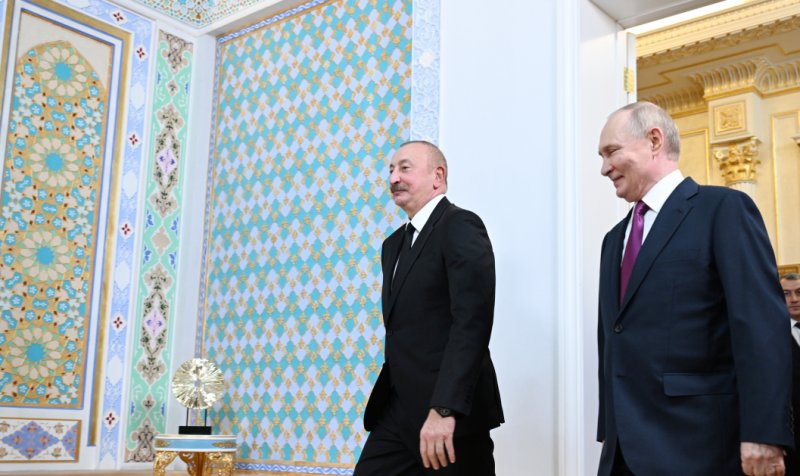
Amid shifting geopolitical dynamics in the South Caucasus, this interview examines key regional developments — from the pivotal Aliyev–Putin meeting in Dushanbe to Georgia’s municipal elections and Armenia’s evolving political landscape. Our interlocutor assesses how these events affect regional stability, interstate relations, and the balance of power.
In an exclusive interview with News.Az, Andrey Petrov, Deputy Director General of the Russian information and analytical agency Vestnik Kavkaza, shared his insights on several major political developments shaping the South Caucasus and the wider region.
– How would you comment on the meeting in Dushanbe between the leaders of Azerbaijan and Russia, Ilham Aliyev and Vladimir Putin? What are the expectations of both countries regarding its outcomes?
A thorough and direct dialogue between Vladimir Putin and Ilham Aliyev laid the groundwork for a comprehensive resolution of the tensions that had emerged in relations between the two allied states. As the Russian president emphasized, this was not a fundamental crisis, but an emotional one, triggered by the crash of the AZAL plane near Aktau.
At a basic level, contacts between the two countries remained steady: economic cooperation continued, transportation links were fully preserved, and cargo traffic even increased. Similarly, the national interests of both states — in terms of bilateral relations and regional cooperation — remained unchanged. The key issue was arranging a personal meeting between the leaders of Russia and Azerbaijan, which could serve as the foundation for resolving the differences that had arisen.
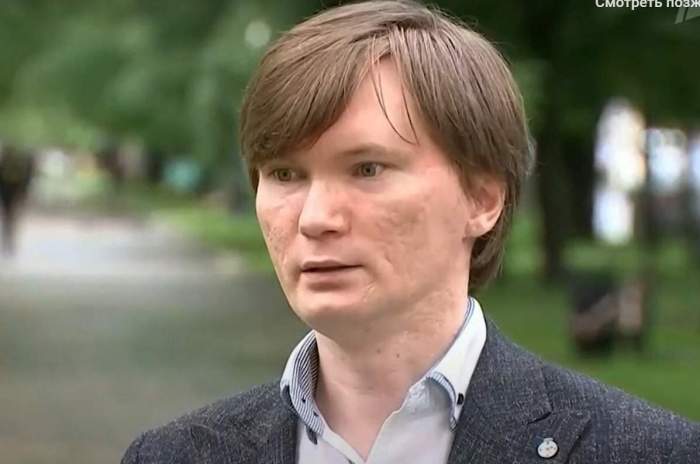 Photo: Andrey Petrov, Deputy Director General of the Russian information and analytical agency Vestnik Kavkaza
Such a meeting was organized in Dushanbe on the eve of the CIS summit. At the meeting, the Russian side addressed Azerbaijan’s concerns: Vladimir Putin explained that two missiles had been mistakenly launched at the AZAL plane over Grozny and pledged to hold those responsible accountable, as well as compensate the victims and their families. Since the crisis had no fundamental causes, this was sufficient for Putin and Aliyev to resume the friendly, trusting dialogue that has characterized their interactions for decades.
Neither Moscow nor Baku seeks confrontation with the other, despite what forces hostile to Russian–Azerbaijani relations might imagine, making the restoration of normal political relations inevitable.
In Russia, there is an understanding that Azerbaijan will now expect the fulfillment of the commitments voiced by Putin. Moscow, in turn, will work to restore contacts in the areas affected during the period of heightened emotional tensions. One can be confident that both sides will draw on this experience to prevent similar crises in the future. Russia and Azerbaijan continue to need each other, and their allied ties must be reliably protected from potential threats.
– How do you assess the results of the recent municipal elections in Georgia? What does this victory mean for the Georgian Dream party?
This outcome secures at least two and a half years of relative political calm for Georgia and the Georgian Dream party. The next opportunity for the opposition to attempt destabilization will be the 2028 parliamentary elections. Meanwhile, the government can more confidently offer the West a “reset” in relations, as the election season concluded in Georgian Dream’s favor with no successful attempts to undermine its position.
With this strengthened position, the authorities will be able to move forward with banning Saakashvili’s United National Movement party as unconstitutional.

Source: APA
As long as the opposition continues to receive external funding, it will keep organizing protests to secure this money. However, large-scale unrest is unlikely: many organizers are already in prison, legislation governing rallies has been tightened, and even those who once spent nights on Rustaveli Avenue clashing with police have largely lost interest in such “entertainment.”
Nevertheless, a certain degree of political tension will persist because the EU’s policy toward Georgia has not changed. Brussels still seeks to subordinate Tbilisi, and since previous measures failed, EU officials are likely to look for new ways to pressure the Georgian Dream party.
– The Georgian authorities have repeatedly invited U.S. President Donald Trump to “reset” Georgian–American relations, but Washington has ignored these appeals. In your view, could this factor push Georgia’s politics closer to Russia?
Although Georgian Dream’s opponents accuse it of being “pro-Russian,” in reality, the ruling party is pursuing a policy of foreign policy sovereignty. Georgia’s refusals to follow Western directives have not been motivated by affection for Moscow, but by national survival needs.
This highlights a common problem in how major powers perceive small states: they tend to downplay the sovereignty and national interests of smaller countries. Yet every country, regardless of size or GDP, has its own objective needs.
No country with rational and independent leadership will take self-destructive steps. Georgia did not open a “second front” against Russia, did not close the Georgian–Russian border, and did not impose unilateral sanctions on Moscow — all measures that would have harmed Georgian citizens and statehood first and foremost.
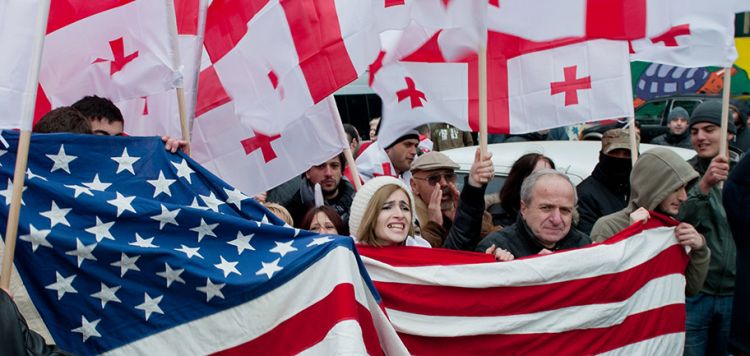
Source: EdNews
There is no basis for a turn toward Russia as long as the issues of Abkhazia and South Ossetia remain unresolved. Georgia is clearly dissatisfied with the current status quo, under which Russia recognizes Abkhazia and South Ossetia as independent states, yet Tbilisi lacks the means to change the situation in its favor. Under these circumstances, no conditions exist for shifts in Russian–Georgian contacts, let alone the restoration of full diplomatic relations.
Similarly, despite the deterioration of its relations with the EU, Georgia is not abandoning Euro-Atlantic integration, which is enshrined in its Constitution. The country is simply recalibrating the balance of its foreign policy components: national interests come first, everything else second. If Euro-Atlantic integration currently conflicts with national interests, its implementation is postponed.
This explains Tbilisi’s persistent appeals to Washington for a reset of relations damaged during Joe Biden’s presidency. Georgian Dream hopes Donald Trump will correct this oversight. Even if Trump ignores these appeals until the next US presidential election, Tbilisi’s foreign policy course will remain unchanged — Georgia will continue to move toward the West, but with greater self-respect than before.
– The political situation in Armenia is heating up as the date of the next parliamentary elections approaches. What are your forecasts in this regard?
In my observation, Armenian Prime Minister Nikol Pashinyan is currently working to contain the negative effects of his summer experiments with public opinion. The issue of changing the leadership of the Armenian Apostolic Church has receded into the background, while the government’s achievements in stabilizing Armenia’s peaceful situation have been brought to the forefront.
This new strategy appears more promising. Pashinyan’s opponents are now forced to criticize him for objectively positive actions that benefit the country and its citizens, such as the initialing of a peace treaty with Azerbaijan. The Armenian prime minister has also restored balance in Armenia’s foreign relations: the authorities have moderated their anti-Russian rhetoric and are maintaining roughly equal contacts with both Moscow and the collective West.

Source: Reuters
From an electoral standpoint, this is an effort to present himself to voters as a successful head of state — a sensible strategy. The more rationally Pashinyan behaves, the more irrational the opposition appears, still fixated on revanchism against Azerbaijan and isolationist policies.
During the summer, Pashinyan created an awkward situation for himself by framing the upcoming elections as “either me or Catholicos Garegin II,” apparently aiming to deprive the nationalist opposition of church support, which holds strong ideological influence among Armenian voters. This proved to be a misstep because it distracted from the real electoral choice: peaceful life under Pashinyan versus another lost war under nationalists Robert Kocharyan and Serzh Sargsyan.
Fortunately, by the end of summer, Pashinyan’s team recognized the problem and shifted tactics to focus on their own achievements. For the current government to be reelected, peace and stability are essential, and Yerevan is clearly working to pacify public opinion. As a result, the prospects for Civil Contract’s victory in the parliamentary elections are improving.
By Asif Aydinli


Similar news