From isolation to integration: The railway transforming Central Asia


Editor's note: Mars Sariyev is a Kyrgyz political scientist and regional security expert. The article expresses the personal opinion of the author and may not coincide with the view of News.Az.
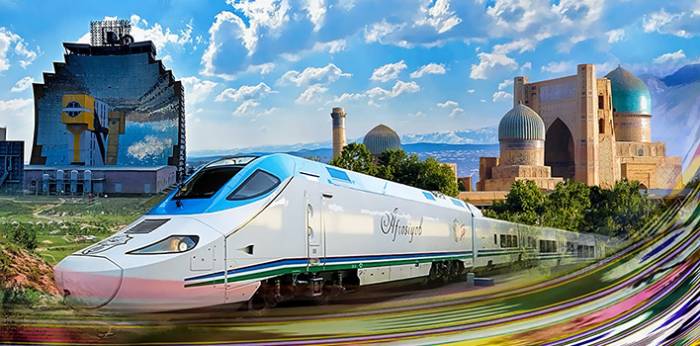
Central Asia is finally breaking free from the geographic deadlock that has constrained it for decades. The long-awaited construction of a railway linking China, Kyrgyzstan, and Uzbekistan is a game-changer for the entire region.
This ambitious project is not just about transportation—it is about redefining Central Asia’s position in global trade and politics. The new railway will not only accelerate the transportation of goods from China to the European Union but will also provide access to the Asia-Pacific region and create alternative trade corridors to the Middle East, reducing reliance on traditional transit routes that have long been under the influence of external powers.

For Uzbekistan, the benefits are particularly significant. Direct access to the Chinese market through Kyrgyzstan opens up new opportunities for the Uzbek economy, particularly in sectors such as agriculture, manufacturing, and energy exports. Uzbekistan, with its growing industrial base, can now export goods more efficiently, reducing transportation costs and increasing competitiveness in the global market. Moreover, the expansion into European markets presents enormous growth potential, especially considering Uzbekistan's increasing trade with the EU.
Kyrgyzstan, too, stands to gain considerably. The transit potential of the route is expected to generate around $300 million annually for the country, a significant boost for an economy that relies heavily on remittances and agriculture. In addition to the direct financial benefits, the railway will spur infrastructure development, creating jobs and stimulating regional business activities. Improved connectivity with China and Uzbekistan will encourage further investments in logistics hubs and industrial parks, facilitating economic diversification in Kyrgyzstan, which has long struggled with economic instability.
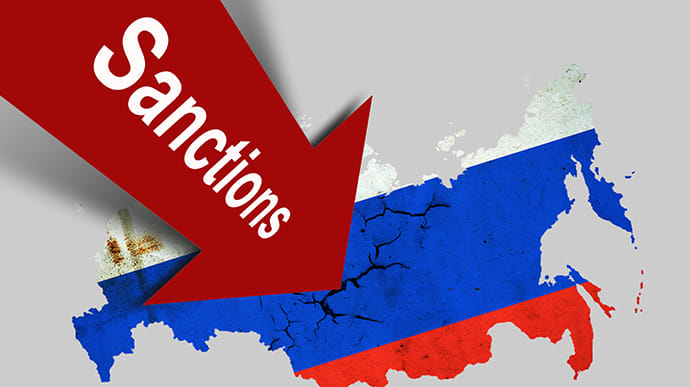
This project is particularly relevant given the ongoing transit issues with Kazakhstan. Frequent delays at border crossings and trade barriers have created logistical bottlenecks, making it increasingly necessary for Central Asian countries to find alternative transportation corridors. Against the backdrop of Western sanctions on Russia, alternative trade routes—such as the Middle Corridor, which runs from China through Kazakhstan, the Caspian Sea, and Azerbaijan to Europe—are becoming strategically vital. The new railway will not only complement these trade routes but will also establish a fundamentally new logistics infrastructure for the region, reducing dependency on any single transit country.
However, the significance of this railway extends beyond economics—it also carries profound political implications. Central Asian countries have long needed transportation routes that do not depend on Russia. Historically, much of the region’s trade infrastructure was built during the Soviet era, designed to integrate these states with the Russian economy. This railway project, by offering a direct link to China and alternative routes to Europe and the Middle East, represents a shift toward economic autonomy and diversification of foreign trade relations.

The project has faced years of geopolitical resistance, particularly due to concerns regarding railway gauge differences. China uses the European standard gauge (1,435 mm), while the former Soviet states adhere to the Russian gauge (1,520 mm). While this might seem like a purely technical matter, it is inherently political. Moscow has been reluctant to see China's influence expand in the region, as alternative transportation routes weaken Russian leverage over Central Asian economies. However, a compromise has been reached: the railway will use the Chinese gauge up to Makmal in Kyrgyzstan, where trains will be converted to the Russian standard for further transit into Uzbekistan and other post-Soviet states. This arrangement ensures compatibility with existing infrastructure while enabling smoother trade integration with both China and broader Eurasian networks.
Financial hurdles also posed challenges. Initially, it was proposed that China, Uzbekistan, and Kyrgyzstan would each contribute equally to the project’s funding. However, prolonged negotiations delayed the process. Ultimately, it was decided that Kyrgyzstan would take out a loan from China to finance its share of the construction. Once the railway becomes profitable, full control will transfer to Kyrgyzstan. For Uzbekistan and China, this arrangement is acceptable, as both have sufficient financial resources to support the initiative. Meanwhile, for Kyrgyzstan, despite initial concerns over debt sustainability, the long-term economic benefits are expected to outweigh the costs.
With all major obstacles now overcome, construction is set to begin soon. This development is expected to trigger an economic transformation in the region. Kyrgyzstan will gain direct access to the Asia-Pacific, Europe, and the Middle East, facilitating trade, accelerating the flow of goods, and strengthening regional economic ties. The railway will also support deeper integration between Central Asia and the South Caucasus, including Azerbaijan and Georgia, further expanding trade opportunities.

A crucial factor in this broader geopolitical shift is the likely opening of the Zangezur Corridor. Armenia, currently discussing constitutional amendments, recognizes the economic benefits of railway integration. If Yerevan adopts a pragmatic approach, it could become a key transport hub, strengthening trade relations with Türkiye, Iran, and Central Asia. Given the ongoing geopolitical realignments in the South Caucasus, improved connectivity between Central Asia and the Caucasus would further diminish dependence on Russian-controlled transit routes, promoting a more diversified and resilient economic framework across Eurasia.
Ultimately, this project is about far more than infrastructure and trade. It represents a geopolitical realignment across the region. Central Asian and South Caucasus nations now have the opportunity to break away from dependence on outdated transit routes, assert themselves as more independent players on the global stage, and unlock new avenues for growth. The success of this railway project will serve as a model for further regional cooperation, demonstrating that Central Asia can chart its own course without being confined by historical dependencies.
This is not just a railway—it is a path to the future.
(If you possess specialized knowledge and wish to contribute, please reach out to us at opinions@news.az).


Similar news