From trade war to dialogue: What the U.S.-China deal really means


By Tural Heybatov
Global media outlets have circulated sensational news — the United States and China have reportedly reached an agreement. According to available information, the two sides have agreed to suspend part of their mutual tariffs for a period of 90 days. This temporary suspension is set to take effect on May 14, as stated in a joint declaration released on Monday, May 12, following negotiations in Geneva aimed at ending the trade conflict, DW reports.
In addition, U.S. Treasury Secretary Scott Bessent announced that both sides agreed to reduce mutual tariffs to 115 percent. U.S. representative Jamieson Greer, who led the American delegation in Switzerland, confirmed that progress had been made with China on tariff issues. China was represented at the talks by Vice Premier of the State Council He Lifeng.
On the eve of this announcement, reports emerged on social media suggesting that both sides had agreed to significantly lower tariffs. According to sources, China temporarily reduced tariffs on U.S. goods from 125 percent to 10 percent for a period of 90 days. In response, the U.S. set a base tariff of 10 percent on Chinese imports and introduced an additional 20 percent tax on products linked to fentanyl — a powerful opioid — as part of efforts to combat the opioid crisis.
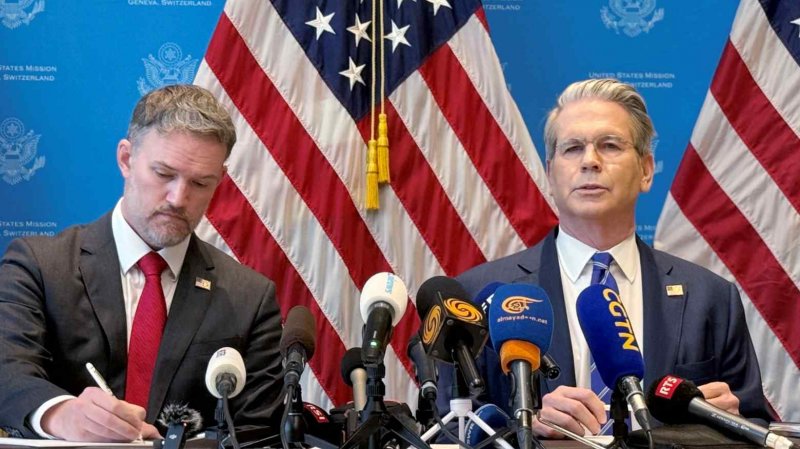 Photo: U.S. Treasury Secretary Scott Bessent, right, and U.S. Trade Representative Jamieson Greer attend a news conference after trade talks with China in Geneva on May 12. Photo: Reuters
According to China's Xinhua News Agency, the two countries agreed in Geneva to establish a mechanism for ongoing economic and trade consultations. The Chinese delegation included two deputy ministers. He Lifeng stated that the two sides discussed the implementation of key agreements reached during the U.S.-China summit in January. He emphasized that there is significant potential for cooperation and shared interests between the two countries, adding that the essence of their trade and economic relationship lies in mutual benefit. These relations, he noted, are crucial not only for the U.S. and China but for the global economy as a whole. He also stressed that disagreements between nations with different economic systems are normal and should be resolved through equal and constructive dialogue. At the same time, He Lifeng made it clear that while China does not seek a trade war, it is prepared to defend its interests if the U.S. continues to apply pressure.
The American side also expressed a surprisingly positive assessment of the meeting, defying the expectations of many observers. On the first day of negotiations, U.S. media circulated conflicting reports. Reuters even sparked speculation by claiming that the Chinese delegation had walked out of the talks — a move interpreted by some as a sign of dissatisfaction or even a complete breakdown in negotiations. However, shortly thereafter, reports citing eyewitnesses indicated that the Chinese delegation had returned to the venue.
U.S. President Donald Trump commented on the meeting on his social media platform Truth Social, stating that the parties had agreed on a “complete reset... in a friendly but constructive manner.”
“A very good meeting today with China in Switzerland. We discussed many issues and reached significant agreements. This will benefit both China and the United States. We look forward to seeing China open its market to American businesses. Major progress achieved!!!” Trump wrote, without providing further details or specific figures.
According to media reports, the negotiations lasted about eight hours and were far from easy. Neither side issued substantive statements afterward, but journalists noted that after the lunch break, U.S. officials appeared in good spirits as they returned to the meeting venue.
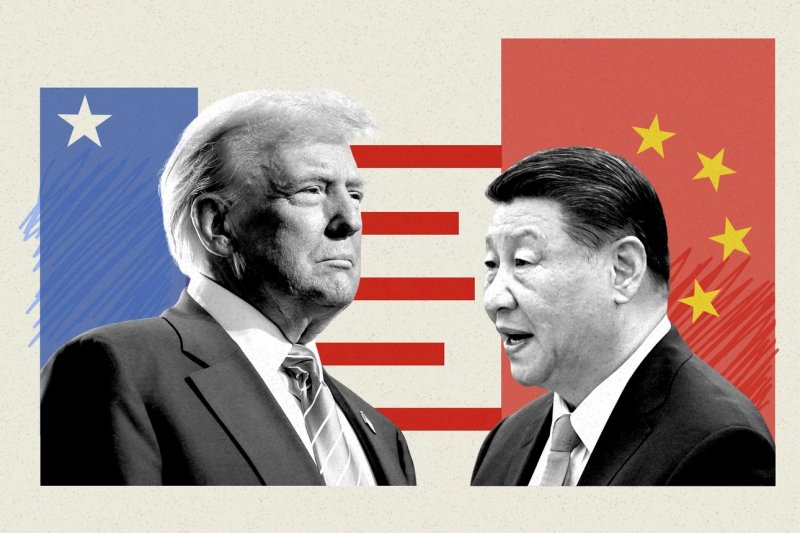 Photo: Politico
Many observers pointed out a noticeable shift in President Trump's rhetoric — he stopped issuing threats and focusing solely on American interests. This change suggests that something has indeed shifted in the dynamic between the two sides, although the lack of concrete details has left analysts hesitant to draw definitive conclusions. Nonetheless, Trump described the talks as “constructive” and reiterated the U.S. goal of greater market access for American companies in China, emphasizing that such progress would benefit both nations.
U.S. Trade Representative Jamieson Greer remarked that the agreement was reached more quickly than expected, which may indicate that the differences between the two countries were not as insurmountable as previously thought.
Just a month ago, the situation appeared on the brink of escalation after the U.S. announced a new list of tariffs, prompting China to respond in kind. The tit-for-tat measures quickly escalated, creating a seemingly uncontrollable standoff. However, it appears that both Washington and Beijing have recognized the need to de-escalate.
At this stage, it seems that dialogue between the U.S. and China has resumed. Just a week ago, the world braced for a full-scale trade war with potentially devastating consequences for the global economy. Today, however, there is renewed hope that the two sides have taken the first steps toward easing tensions. Whether this progress will hold — only time will tell.


Similar news