Gen. Ghulam Mustafa: If war comes, it won’t just be with Pakistan — China is watching – EXSLUSIVE INTERVIEW


News.Az presents an interview with Pakistani Lieutenant-General Ghulam Mustafa, a war veteran who commanded various military formations, including a Corps and the Army Strategic Forces Command (ASFC).
- What stage are the tensions between India and Pakistan at, and is there a real risk of escalation into open military conflict?
- There is a notable difference in how India and Pakistan are preparing for the current standoff.
While Pakistan is quietly strengthening its defenses and preparing for any potential provocation from India, New Delhi is signaling more openly—both to the international community and to its domestic audience—that it is gearing up for possible military action against Pakistan.
Prime Minister Narendra Modi has recently met with the heads of the Indian Navy and Air Force, as well as with his National Security Advisor. These high-level meetings, combined with the launch of civil defense exercises across India, suggest that the government is preparing the population for the possibility of a large-scale conflict.
However, when it comes to actual troop deployments, India is not yet fully ready for an offensive. Some units have been relocated to the deserts under the guise of exercises, but for a significant operation against Pakistan, India would need to redeploy forces from its eastern border and reposition additional units currently stationed in Kashmir. With more than 7,000 troops already committed in the region, mounting a rapid offensive would take time—a critical advantage for Pakistan.
On the other hand, Pakistan can mobilize and deploy its forces much faster than India. While Pakistan remains fully prepared, it has only repositioned specific units to guard against potential surgical strikes across the Line of Control (LoC) and the Working Boundary—particularly near the Sialkot sector, which faces Jammu. Pakistan considers the entire territory up to Jammu as Indian-occupied Kashmir, and on its own side, regards this area as part of its international border.
Pakistan’s Navy remains relatively restrained in its movements, but the Air Force is on high alert and has already positioned assets at forward air bases to minimize response times. These preparations reflect a posture of deterrence rather than aggression.
As for India’s capability: yes, it has the resources to conduct military operations against Pakistan. However, whether it is truly prepared—logistically, politically, and militarily—for a large-scale campaign is still in question. While India’s political leadership and media are amplifying rhetoric, creating a drumbeat of war, the ground reality is more complex.
The Indian government has maneuvered itself into a corner. Following the events of April 2 in Indian-administered Kashmir, which it blamed on Pakistan, the Modi administration launched a narrative that Pakistan must be punished. This rhetoric has been repeated across Indian media and by political leaders. Now, in an attempt to preserve the image of India as an emerging global power on par with China and Russia, New Delhi feels compelled to act.
This action could take several forms: a targeted air strike, a naval maneuver, or a coordinated ground incursion across the LoC in conjunction with air support. India may target areas in Azad Jammu and Kashmir that it claims are training grounds for militants crossing into Indian-held Kashmir. A limited operation of this nature could allow India to claim it has "taken revenge"—without escalating into a full-scale war.
Pakistan is prepared for such scenarios across all domains. Moreover, intelligence suggests that India might be considering a delayed response—a “revenge served cold.” This means that instead of acting immediately, India could sustain the current tensions for several weeks and then carry out a calculated strike at a politically opportune moment.
In short, while India is sending loud signals and rallying domestic and international opinion, its actual military posture remains in transition. Meanwhile, Pakistan is fully alert and capable of responding swiftly to any provocation.
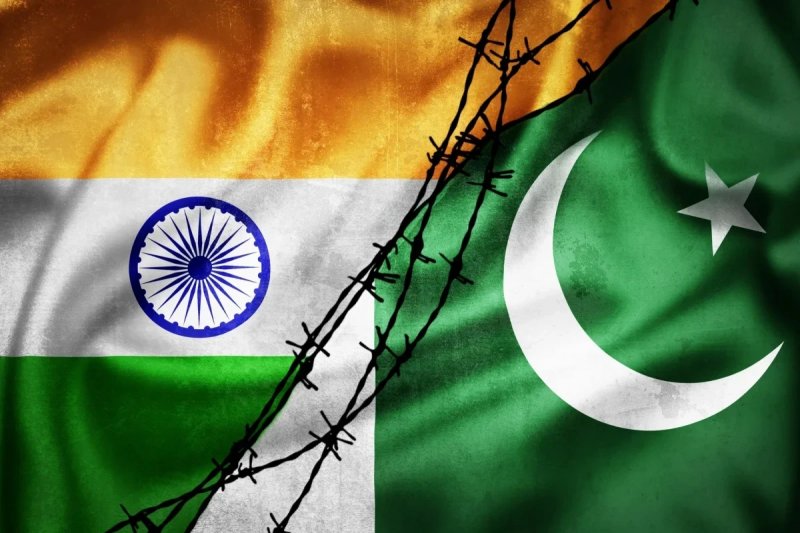 Photo: Shutterstock
- Does Pakistan feel real support from China in the face of growing tensions with India, and how exactly is this support manifested - diplomatic, economic or military? Do you think China is ready to openly intervene and stand up for Pakistan if India starts a large-scale war against it? And in what form might this intervention manifest itself - military, diplomatic or indirect?
- It is clear that India’s strategic miscalculation concerning China is now acting as a major constraint on its regional posture. This misjudgment also impacts its key allies—namely the United States, the United Kingdom, and France. As India has deepened its strategic partnership with the United States, this tension is drawing in broader Western alliances, including NATO.
What has taken many by surprise is the clarity and openness with which China has voiced its support for Pakistan. This development has prompted a serious recalibration within India’s strategic community. Indian defense analysts have long warned that any escalation against Pakistan would risk drawing China into a broader conflict, forcing India to prepare for a two-front war. This is now a very real concern.
We have already seen consequences of this recalibration within India's military structure. High-ranking officers from the Army and Navy have been reassigned in Kashmir, signaling a recognition of this evolving threat environment.
From a military capability standpoint, China significantly outpaces India. The Chinese armed forces are approximately three times the size of India’s. China’s Air Force is now a technologically advanced force, capable of rivaling not only India’s, but also potentially confronting Western air forces should a broader conflict erupt. Its air defense systems have undergone significant upgrades, closing much of the technological gap that once existed between China and the West.
China’s naval expansion is another critical component of its rise. The country has moved from a focus on coastal defense to building a “blue-water navy” capable of projecting power far beyond its immediate maritime borders. While China’s navy may not yet rival the longstanding maritime dominance of the U.S., U.K., or France, it has become a formidable defensive force—something India cannot currently match.
China’s land-based missile systems further underscore this imbalance. With long-range capabilities and the ability to carry various warheads, China's missile arsenal poses a serious threat to any adversary within its reach. In this area as well, India struggles to keep pace.
Moreover, China has adopted a command structure similar to that of the United States, organizing its military into regionally based combat commands—such as the Indo-Pacific and Western Theater Command. These commands are not just administrative; they are fully functional and have been tested through joint exercises that integrate various elements of China's military power into a highly coordinated force.
In sum, China’s superiority over India is evident not only in terms of numbers and technology but also in organizational efficiency and strategic preparedness. If India and the U.S. were to initiate a large-scale confrontation with Pakistan, it would likely give China the pretext to act decisively on India’s eastern border, including contested regions like Ladakh.
While exact military figures change over time, the overall balance of power—particularly in the land domain—favors China. In a hypothetical China vs. India conflict, China has a clear advantage. Even in a China vs. American-led coalition scenario, China holds the upper hand in ground warfare due to its proximity and large land forces.
Western powers could support India with their naval and air capabilities, but deploying significant ground forces into the region would take considerable time and logistical effort. While the combined air and naval strength of Western allies may offer parity in certain areas, China’s numerical advantage, coupled with its regional proximity, would be difficult to overcome.
As for the question of whether China would provide direct military support to Pakistan, only Beijing can definitively answer that. However, current signals are strong. China and Pakistan maintain a deep strategic partnership. Their forces are interoperable, and both countries conduct joint military exercises, particularly in air and naval domains.
Chinese military activity along the Ladakh region and in Kashmir further suggests preparation for a potential escalation. Chinese officials and scholars have gone as far as publicly stating that Pakistan is to China what Israel is to the United States—a critical ally whose security is seen as a strategic imperative.
Given China’s deepening military preparedness and its unwavering support for Pakistan, India faces a sobering reality. Its assumptions about regional dominance must now contend with the hard facts of Chinese capabilities and commitments. The strategic balance in the region is shifting—and not in India’s favor.
- What are the key differences between the defense budgets of China and India, and how do they affect the development of military technologies in both countries? How qualitatively and quantitatively do the armed forces of China and India differ, including the size of the army, navy, air force and nuclear potential?
- To be absolutely clear: China possesses a significant and undeniable advantage over India across nearly every domain of military capability. This includes land forces, technological sophistication, air power, naval strength, and increasingly, the domain of cyberspace. In fact, China's cyber capabilities are so advanced that they could potentially compromise and even take control of critical aspects of India's cyber infrastructure.
Matching China’s capabilities is a formidable challenge for India. The most fundamental issue lies in the stark difference in defense budgets. While India is steadily increasing its military spending, the gap remains vast. China’s economy provides it with the capacity to fund large-scale military modernization and strategic initiatives, far beyond what India can currently support.
China sees itself not just as a regional power, but as a global superpower. It is positioning itself—strategically, tactically, rhetorically, and economically—as the primary challenger to the United States’ global supremacy. The gap between these two powers, China and the U.S., is closing rapidly, and China’s rise is generating significant anxiety within the Western world.
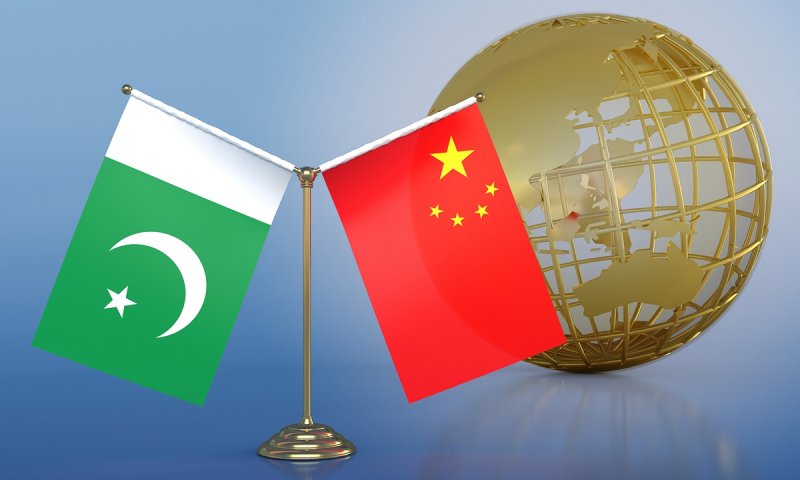 Photo: VCG
- How crucial is Pakistan’s geographic position to China’s maritime strategy, and what risks does Beijing face if Western powers succeed in weakening the China–Pakistan partnership?
- Pakistan holds a geographically advantageous position that allows it to dominate one of the most critical maritime chokepoints in the world — the Strait of Hormuz — with relative ease. The Bab el-Mandeb Strait is also within operational reach of Pakistan, adding another layer of strategic value. Together, these two entry points, alongside the Strait of Malacca, form the backbone of global maritime trade and energy supply routes. Their control or disruption can significantly influence geopolitical dynamics.
Western powers have long viewed these chokepoints as leverage to contain China's growing maritime influence. By exerting control over the Strait of Hormuz, Bab el-Mandeb, and the Strait of Malacca, they aim to pressure or even strangle China’s supply chains in the event of a conflict. This forms a key part of the West’s broader strategic calculus.
India perceives itself as a potential partner in this effort, aiming to play a pivotal role in securing these maritime zones in alignment with U.S.-led interests. However, China is acutely aware that if Pakistan were to be coerced or forced out of its strategic partnership with Beijing, the consequences would be significant. Without access to Pakistani territory and cooperation, China would face severe limitations in projecting power across the Indian Ocean and maintaining the security of its maritime supply lines.
In essence, Pakistan is not just a regional partner for China — it is a strategic gateway to the Indian Ocean. Any disruption in this partnership would severely handicap China's ability to sustain its "String of Pearls" strategy and maintain a resilient supply chain across critical sea lanes.


Similar news