Why did thousands gather outside the U.S. Embassy in Havana after the indictment of Raúl Castro?


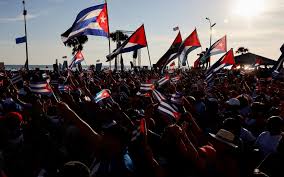
The gathering of thousands of people outside the United States Embassy in Havana following the indictment of former Cuban leader Raúl Castro has become a major political development, drawing attention across Latin America and beyond.
The demonstrations reflect the deep sensitivities surrounding Cuba's sovereignty, its long and complicated relationship with Washington, and the enduring influence of the Castro family on Cuban politics.
RECOMMENDED STORIES
Below is a detailed FAQ explaining the background, significance, and potential consequences of the protests.
What happened in Havana?
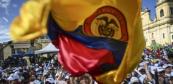
Thousands of Cubans reportedly gathered outside the U.S. Embassy in Havana to protest the indictment of former Cuban leader Raúl Castro. Demonstrators expressed opposition to what they view as foreign interference in Cuba's internal affairs and showed support for national sovereignty.
The protest quickly became one of the most visible public reactions to the legal action against Castro, attracting widespread media attention.
Who is Raúl Castro?
Raúl Castro is one of the most influential figures in modern Cuban history. He served as Cuba's president from 2008 to 2018, succeeding his brother, Fidel Castro, who led the country following the 1959 Cuban Revolution.
Before becoming president, Raúl Castro spent decades in senior government and military positions and played a central role in shaping Cuba's political and security institutions.
Although he stepped down from the presidency and later relinquished leadership of the Communist Party, his political legacy continues to influence Cuba.
What does an indictment mean?
An indictment is a formal legal accusation alleging that an individual has committed a crime. It does not constitute a conviction or proof of guilt.
The purpose of an indictment is to initiate legal proceedings and present charges before a court.
Individuals who are indicted generally retain the presumption of innocence until proven guilty through judicial proceedings.
Why has the indictment generated such a strong reaction in Cuba?
Many Cubans view actions targeting former national leaders through the lens of Cuba's decades long confrontation with the United States.
For supporters of the Cuban government, legal action against Raúl Castro is perceived not merely as a judicial matter but as a political act directed at the Cuban state and its revolutionary legacy.
As a result, reactions often extend beyond the individual involved and become symbolic expressions of national identity and sovereignty.
Why did protesters gather outside the U.S. Embassy?
The U.S. Embassy serves as the primary diplomatic representation of Washington in Cuba.
By protesting outside the embassy, demonstrators sought to direct their message toward the United States government and express opposition to actions they believe affect Cuban national interests.
Such demonstrations are often intended to attract both domestic and international attention.
What slogans or messages were protesters likely emphasizing?
While messages may vary among participants, demonstrations of this nature commonly focus on themes such as:
-
National sovereignty
-
Opposition to foreign intervention
-
Defense of Cuba's political independence
-
Support for national leaders
-
Resistance to external pressure
These themes have historically played a prominent role in Cuban political discourse.
How important is Raúl Castro in contemporary Cuban politics?
Although no longer serving in active leadership positions, Raúl Castro remains a highly significant historical and political figure.
Many supporters credit him with helping maintain political stability during periods of economic difficulty and overseeing important reforms, including the gradual opening of parts of the Cuban economy.
Critics, however, associate his leadership with restrictions on political freedoms and broader governance concerns.
This mixed legacy contributes to strong reactions whenever his name becomes involved in major international controversies.
How have Cuba and the United States historically viewed each other?
Relations between Havana and Washington have been marked by decades of tension.
Major turning points have included:
-
The Cuban Revolution
-
The Bay of Pigs invasion
-
The Cuban Missile Crisis
-
Economic sanctions
-
Diplomatic disputes
-
Migration issues
-
Periodic normalization efforts
These historical experiences continue to shape public perceptions on both sides.
Could the indictment affect U.S.-Cuba relations?
Yes.
Legal actions involving prominent Cuban political figures can complicate already sensitive diplomatic relations.
Possible consequences may include:
-
Increased political tensions
-
Diplomatic protests
-
Stronger anti-U.S. rhetoric
-
Reduced opportunities for cooperation
-
Additional friction in bilateral discussions
The extent of any impact will depend on how both governments respond.
Why are issues of sovereignty especially sensitive in Cuba?
Sovereignty occupies a central place in Cuba's national identity.
Successive Cuban governments have emphasized resistance to external influence as a defining feature of the country's political history.
As a result, many Cubans react strongly to actions perceived as foreign attempts to influence domestic affairs.
This historical perspective helps explain the intensity of public demonstrations surrounding controversial international developments.
How does public opinion in Cuba differ regarding Castro-era leadership?
Views are far from uniform.
Supporters often argue that Castro-era governments:
-
Expanded access to education
-
Improved healthcare services
-
Preserved national independence
-
Promoted social equality
Critics contend that the same period was characterized by:
-
Political restrictions
-
Economic inefficiencies
-
Limited civil liberties
-
Constraints on opposition activity
These differing interpretations continue to influence political debates inside and outside Cuba.
Could the protests strengthen the Cuban government domestically?
Large demonstrations centered on national sovereignty can sometimes reinforce government narratives emphasizing unity against external pressure.
Political leaders often seek to present such events as evidence of public solidarity and national cohesion.
However, the longer term political effects depend on broader economic and social conditions rather than a single protest alone.
What role does symbolism play in these demonstrations?
Symbolism is often crucial.
For many participants, the issue extends beyond legal proceedings and reflects larger questions involving:
-
National dignity
-
Historical memory
-
Independence
-
International legitimacy
-
Relations with major powers
Consequently, demonstrations frequently carry emotional and political significance that exceeds the immediate controversy.
How might the international community react?
International responses are likely to vary.
Some governments may emphasize judicial accountability and the rule of law.
Others may express concerns about sovereignty or the political implications of legal actions involving former heads of state.
Regional organizations and foreign ministries could also issue statements reflecting their respective diplomatic positions.
Could the protests spread to other cities?
That depends on public sentiment, political mobilization efforts, and future developments related to the case.
If the controversy remains prominent in national discourse, additional demonstrations could occur elsewhere in Cuba.
However, predicting the scale or duration of future protests remains difficult.
How important are public demonstrations in Cuba?
Public demonstrations hold considerable political significance because they can serve as visible indicators of public sentiment and government mobilization capacity.
Events involving major national figures often attract attention not only within Cuba but across Latin America and the wider international community.
For observers, such demonstrations offer insight into the country's political climate and public mood.
Could the indictment have broader geopolitical implications?
Potentially.
Any development that increases friction between Cuba and the United States may influence wider regional dynamics.
Countries across Latin America often monitor U.S.-Cuba relations closely because they intersect with broader debates involving sovereignty, diplomacy, sanctions, and regional cooperation.
The controversy could therefore become part of larger geopolitical discussions beyond Cuba itself.
What happens next?
Several factors will determine the next stage of events:
-
The progress of legal proceedings
-
Official responses from Havana and Washington
-
Public reaction inside Cuba
-
International diplomatic engagement
-
Media coverage and political developments
The situation remains fluid, and future developments could shape both domestic political discourse and bilateral relations.
Why does this story matter internationally?
The protests outside the U.S. Embassy in Havana are significant because they highlight the enduring impact of historical tensions between Cuba and the United States. The reaction demonstrates how legal actions involving prominent political figures can quickly evolve into broader debates about sovereignty, national identity, diplomacy, and international relations.
Whether the controversy leads to lasting diplomatic consequences or remains primarily symbolic, it has already underscored the continued sensitivity of U.S.-Cuba relations and the enduring political significance of Raúl Castro within Cuba's national narrative.
By Faig Mahmudov


Similar news