Giant shield in the East: Chinese military complex capable of changing the balance of power


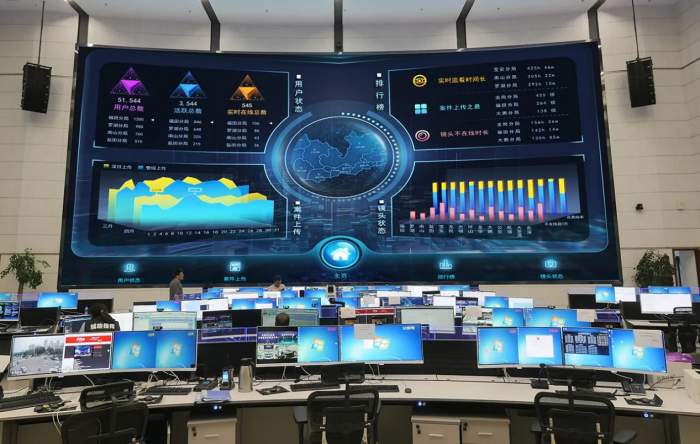
Recent satellite imagery combined with intelligence reports reveals that China is embarking on a major military infrastructure project: the construction of what could soon become the world’s largest Army Command Center (ACC). Located just outside Beijing, this facility is reportedly spread over an area of more than 6 square kilometers—an expanse estimated to be ten times larger than the U.S. Pentagon. Dubbed the “Beijing Military Town” by defense analysts, the project not only marks a dramatic escalation in China’s military capacity but also signals a fundamental shift in its strategic posture.
A new era for command and control
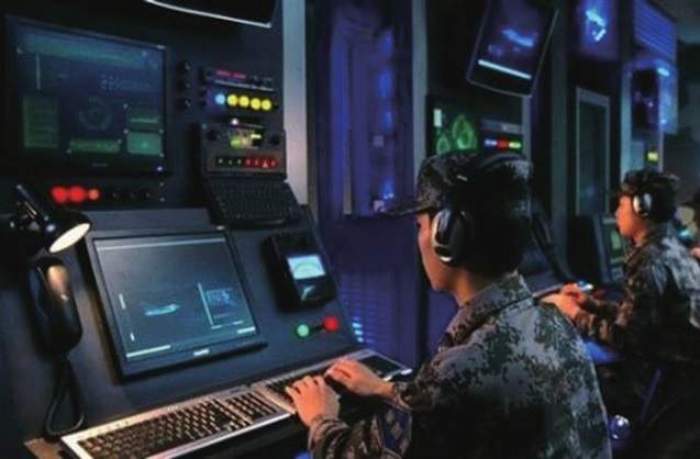
The scale and secrecy surrounding this ACC have drawn considerable attention from global intelligence communities. Satellite images taken from mid-2024 show a massive construction site with large, deep pits—a design feature that military experts interpret as the early stages of reinforced bunkers. These bunkers are likely intended to serve as secure shelters for China’s military leadership in the event of extreme conflict scenarios, including the possibility of nuclear warfare. Such preparations underscore a dual purpose: not only is Beijing investing in state-of-the-art conventional warfare capabilities, but it is also building the resilience necessary for leadership continuity during nuclear or other catastrophic events.
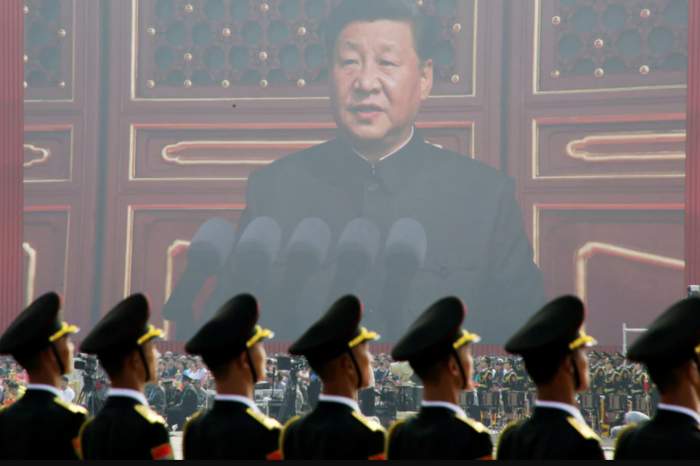
Dennis Wilder, former head of the CIA’s China analysis division, has remarked that should the reports be confirmed, this sprawling military center will be a tangible expression of China’s ambitions. According to Wilder, the facility is emblematic of Beijing’s broader objective—to develop an advanced, resilient nuclear warfighting capability alongside world-class conventional forces. In the context of an increasingly multipolar and volatile international environment, such a move signals that China is positioning itself as a formidable global power.
Comparative military capabilities: China versus the United States
The construction of this vast command center is part of a broader strategy that is mirrored in China’s overall military modernization efforts. When one compares the military capabilities of China and the United States, the differences in strategic focus and resource allocation become apparent. A detailed comparative analysis of various military sectors reveals contrasting doctrines and priorities between the two nations.
1. Ground forces and armored assets
One of the cornerstones of China’s military buildup is its extensive ground forces. Currently, China fields approximately 5,000 tanks, a number that slightly surpasses the United States’ reported 4,657 tanks. This modest numerical edge is reflective of China’s focus on bolstering its armored warfare capabilities. In addition to tanks, China leads in towed artillery with 1,434 units compared to the U.S.’s 1,267. Such investments suggest a strategic emphasis on mobile, long-range firepower designed to support large-scale, conventional ground operations. While technological advancements in warfare have introduced new paradigms, the importance of traditional armored and artillery units remains central to territorial defense and rapid maneuverability on the battlefield.
2. Rocket systems and missile technology
In the realm of rocket artillery, China again appears to be in the ascendant. The nation boasts an arsenal of 3,180 Multiple Launch Rocket Systems (MLRS), a figure that dwarfs the U.S. inventory of 694 systems. This marked disparity indicates a strategic calculation to enable rapid, concentrated firepower capable of decimating key enemy targets during high-intensity conflicts. However, when the focus shifts to ballistic missile capabilities, the balance tips in favor of the United States. The American military fields approximately 1,300 ballistic missiles compared to China’s 424. This advantage is critical in the context of strategic deterrence and power projection, underscoring the U.S.’s sustained commitment to maintaining a robust long-range strike capability.
3. Nuclear deterrence
Perhaps the most consequential aspect of this comparison is the divergence in nuclear arsenals. The United States commands a formidable nuclear force, with around 5,500 warheads, whereas China’s estimated stockpile stands at roughly 500. This stark contrast reinforces the U.S. position as the primary architect of global nuclear deterrence. While China has been steadily advancing its nuclear capabilities, the relatively smaller size of its nuclear arsenal suggests a strategy focused on achieving credible deterrence rather than pursuing parity with the American nuclear force. Nonetheless, the construction of the ACC near Beijing may serve as a visible manifestation of China’s long-term intention to enhance both its conventional and nuclear warfighting capabilities.
4. Naval and air power
On the maritime front, the differences between the two powers are equally pronounced. Despite having a larger total number of warships (730 compared to the U.S.’s 472), China lags in terms of high-value assets that are critical for power projection. The United States operates 11 aircraft carriers to China’s 2, and it commands a greater number of amphibious assault ships (9 versus 3). These platforms are essential for deploying military power globally, particularly in strategically significant regions like the Indo-Pacific and the Atlantic. Moreover, while the overall count of naval vessels provides a snapshot of naval capacity, the technological sophistication and operational readiness of the U.S. fleet—especially its submarine force (64 U.S. submarines versus 61 Chinese)—remain superior. This advantage is pivotal in maintaining underwater dominance and ensuring effective sea-based deterrence.
In the air, the U.S. maintains a clear technological and numerical lead. With 1,000 attack helicopters and 1,854 fighter aircraft, American airpower plays a vital role in both close air support and strategic operations. In contrast, China’s 1,207 fighter jets and 289 transport aircraft point to a significant emphasis on rapid troop deployment and ground support, though the quality and versatility of these assets are often seen as trailing behind their American counterparts.
5. Personnel and force structure
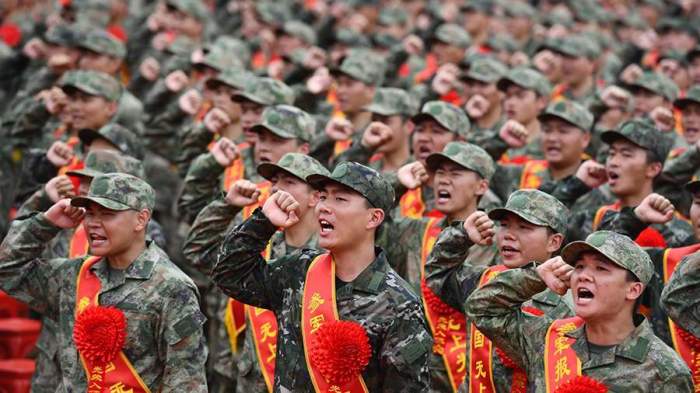
Beyond hardware, the composition and size of military personnel highlight another area of divergence. China leverages its demographic advantage, with approximately 2,035,000 active-duty soldiers and an additional 510,000 reserve personnel. This emphasis on massed ground forces aligns with a doctrine that prioritizes large-scale mobilization. Conversely, the United States maintains a slightly smaller active force of about 1,328,000 soldiers, supplemented by 779,500 reserves. The U.S. military’s strategic emphasis tends to be on technological superiority, rapid deployment, and flexibility rather than sheer numbers. This difference in approach reflects divergent national doctrines: while China appears to be preparing for protracted, high-intensity regional conflicts, the United States focuses on power projection and rapid, precision engagement across the globe.
Implications for global security and strategic stability
The implications of China’s expanding military infrastructure and its broader force structure extend far beyond regional considerations. The development of the vast ACC near Beijing is not merely an infrastructural upgrade—it is emblematic of a profound strategic recalibration. By investing in a facility designed to ensure continuity of command in the event of a nuclear confrontation, China signals its readiness to engage in a multifaceted approach to modern warfare. This encompasses both the enhancement of conventional capabilities and the modernization of its nuclear deterrent.
For the United States and its allies, these developments necessitate a reevaluation of strategic assumptions. The construction of a facility of such unprecedented scale raises questions about China’s long-term military doctrine and its ambitions on the world stage. Analysts suggest that Beijing’s dual emphasis on massed conventional forces and resilient nuclear capabilities represents an effort to hedge against a rapidly changing international security environment, one characterized by increasing uncertainty and shifting alliances.
The comparative analysis between China and the United States highlights that while the U.S. retains clear advantages in high-tech weaponry, nuclear force, and naval power, China’s investments in ground forces and rocket systems indicate a different strategic calculus. This divergence in military priorities could have profound implications for deterrence dynamics in the Indo-Pacific region and beyond. As China continues to invest heavily in large-scale, cost-effective military assets, the risk of miscalculation or escalation in times of crisis may increase, thereby intensifying global security concerns.
In conclusion, China’s ambitious construction of what may become the world’s largest Army Command Center is a bold statement of intent. It reflects a strategic ambition that goes beyond conventional military modernization to encompass a comprehensive approach to deterrence and command resilience. This development, set against the backdrop of a broader comparative analysis between Chinese and U.S. military capabilities, underscores a fundamental shift in global military dynamics.
The United States, with its focus on technological superiority, advanced nuclear deterrence, and unparalleled power projection capabilities, continues to be a dominant force in shaping global security. However, China’s emphasis on building massive ground forces, mobile rocket systems, and secure command structures signals an alternative vision of military power—one that prioritizes numerical strength and strategic redundancy.
As international tensions rise and the balance of power continues to evolve, policymakers and defense strategists around the world will need to grapple with these developments. Understanding the strategic nuances of China’s military investments, alongside the enduring strengths of the U.S. military, is essential for anticipating future trends in global security. In an era defined by rapid technological change and complex geopolitical rivalries, the race to modernize military capabilities is not just about maintaining an edge—it is about ensuring stability in an increasingly unpredictable world.
Ultimately, the evolving military strategies of China and the United States will continue to shape the global security landscape. As Beijing pushes forward with its massive ACC and other military modernization efforts, the world watches closely, aware that the next few years could redefine the very nature of deterrence and power in the 21st century.


Similar news