Experts: Deaths of Azerbaijanis in the Sea of Azov require a thorough investigation


.png)
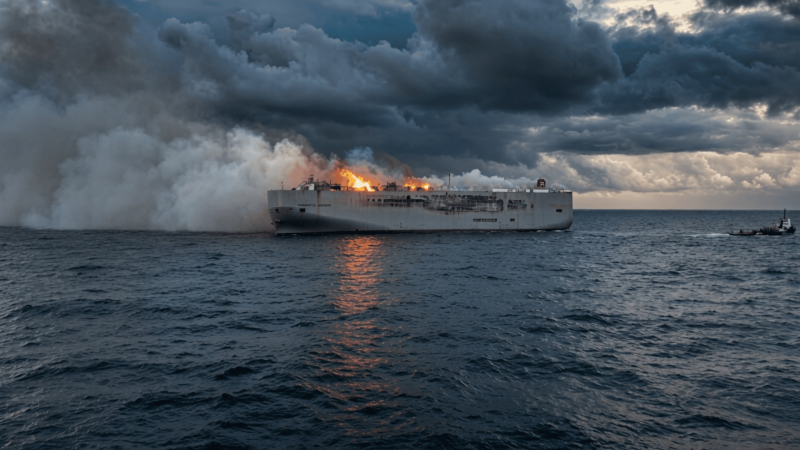
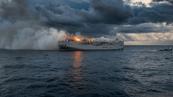
The deaths of five Azerbaijani citizens in a drone attack on two foreign-flagged cargo vessels in the Sea of Azov represent not only a humanitarian tragedy but also raise serious questions about the safety of civilian maritime transportation in modern conflict zones. The incident once again demonstrates that civilian shipping operating in areas of active hostilities faces significantly greater risks than in the past.
A notable aspect of the tragedy is that, although Azerbaijan did not own the vessels, they carried 25 Azerbaijani crew members. This highlights the reality that, in an increasingly globalized maritime transport sector, the safety of citizens is no longer linked solely to the activities of national shipping companies.
The incident also brings issues of international law and accountability back into focus. Determining who carried out the attack, under what circumstances the vessels were targeted, and whether appropriate safety procedures were followed will be among the key questions addressed during the investigation.
Azerbaijan’s immediate response to the incident, including the involvement of its diplomatic missions and relevant state institutions, demonstrates the importance the country places on protecting its citizens. At the same time, the tragedy underscores the growing need to reassess risks for civilian vessels operating in conflict zones, strengthen safety standards for crews, and enhance the protection of international maritime routes.
These questions make it essential to examine the incident not only from a humanitarian perspective but also through legal, political, and security lenses.
Commenting on the incident from the perspective of international and maritime law, Azerbaijani legal expert and Director of the Norma Law Center, Shamil Pashayev, told News.Az that the protection of civilians and civilian objects during armed conflicts constitutes one of the fundamental principles of international humanitarian law.
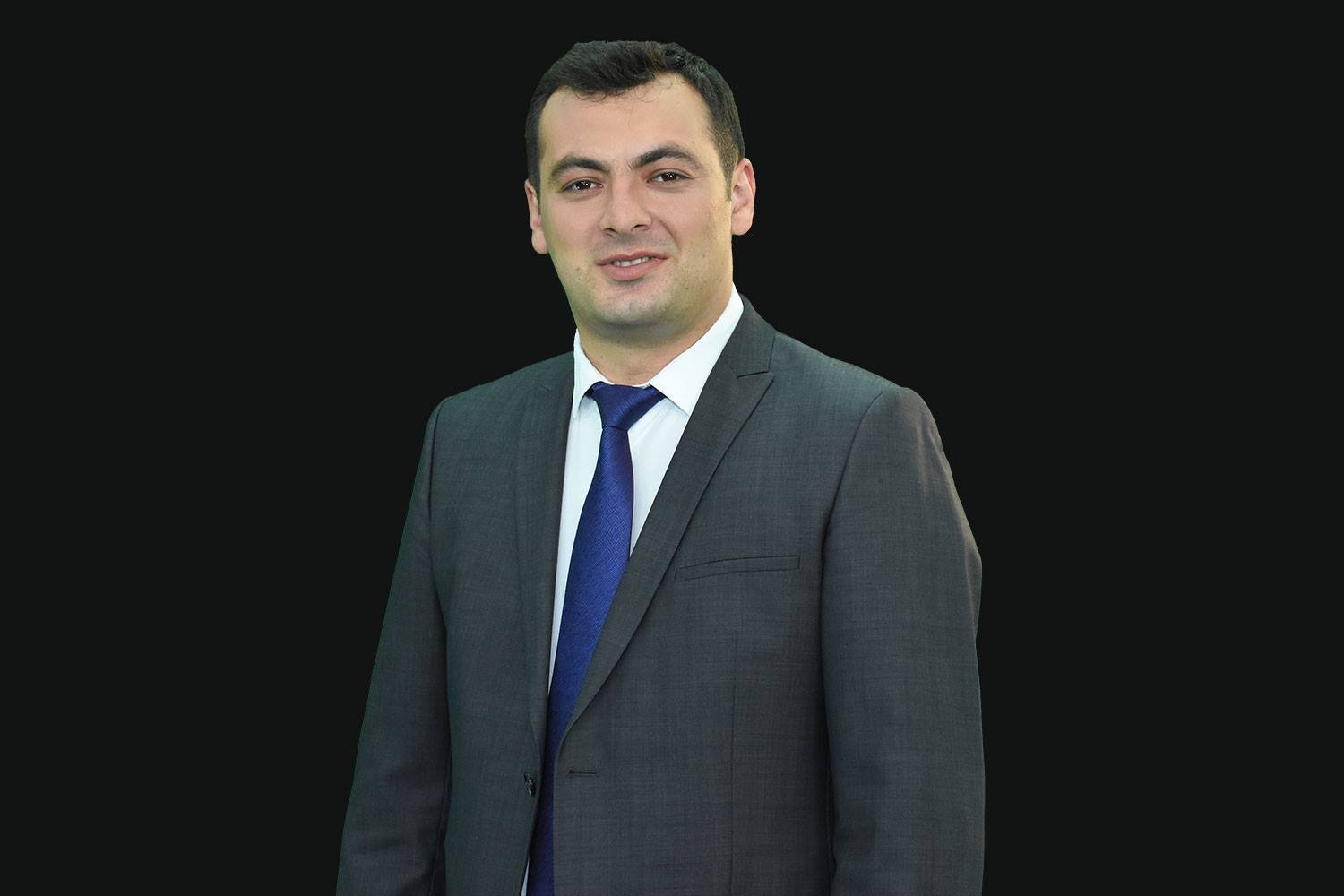
Photo: Shamil Pashayev, Azerbaijani legal expert and Director of the Norma Law Center
According to him, international legal instruments, including the International Convention for the Safety of Life at Sea (SOLAS), the Geneva Conventions and their Additional Protocols, as well as other international treaties, impose specific obligations on states in this regard.
Pashayev noted that international law requires parties to an armed conflict to distinguish between civilians and combatants, as well as between civilian and military objects.
"It also prohibits the deliberate targeting of civilian objects and obliges parties to comply with the principle of proportionality. However, the experience of contemporary armed conflicts demonstrates that violations of these principles continue to occur on a significant scale." he said.
According to the expert, one of the most contentious issues in conflicts such as the Russia–Ukraine war, the Iran–Israel confrontation, and other armed disputes concerns the legal classification of particular objects and facilities.
“One party may claim that a specific object is civilian in nature, while the opposing side may argue that the same object is being used for military purposes or is contributing to military operations. This significantly complicates the application of international humanitarian law. Consequently, determining the legal status of an object and assigning legal responsibility can only be achieved through an independent and impartial investigation,” he said.
Pashayev emphasized that responsibility for ensuring the safety of individuals aboard a civilian vessel may be shared among several actors. "First and foremost, the shipowner and operator bear obligations related to risk assessment and the protection of the crew. At the same time, the flag state under whose jurisdiction the vessel sails also exercises certain supervisory functions and responsibilities under international maritime law," he said.
He further noted that if an investigation concludes that an attack on a vessel violated applicable norms of international law, the issue of international legal responsibility on the part of the state that carried out the attack may arise.
According to Pashayev, the deaths of Azerbaijani citizens in such an incident provide the Azerbaijani state and its competent authorities with a number of legal mechanisms.
“The criminal and criminal procedural legislation of the Republic of Azerbaijan provides for certain jurisdictional powers in cases where Azerbaijani citizens become victims of crimes committed abroad. If the relevant state authorities fail to conduct an effective investigation or do not take adequate measures to identify and prosecute those responsible, Azerbaijan may initiate appropriate legal procedures in order to protect the rights and legitimate interests of its citizens,” he explained.
The expert also stressed that the operation of civilian vessels in areas where military activities are ongoing or where security risks are elevated inevitably creates additional dangers. Since parties to a conflict often regard such areas as falling within their sphere of control, the risks to civilian maritime navigation increase substantially.
He noted that recent years have witnessed numerous incidents involving damage to civilian vessels, commercial shipping routes, and civilian infrastructure in conflict zones, raising serious concerns about the effective implementation of international legal norms.
"In this context, shipowners, operators, and crew members must carefully assess all potential risks before entering areas affected by armed conflict," he said.
Addressing the issue of compensation, Pashayev stated that the question of liability will ultimately depend on the findings of the investigation. Compensation, he said, may be provided through insurance mechanisms, by the shipowner or operator, or, if international legal responsibility is established, by the state found responsible for the incident.
In conclusion, Pashayev emphasized that under current international security conditions, risk management for civilian vessels operating in conflict zones has become critically important. In his view, commercial considerations should never take precedence over the safety and security of human life.
Meanwhile, commenting on the deaths of Azerbaijani citizens in the Sea of Azov, Ukrainian military and political analyst Oleksandr Kovalenko argued that the vessels involved were operating in an active war zone and that all parties concerned should have been aware of the risks.

Photo: Oleksandr Kovalenko, Ukrainian military and political analyst
According to Kovalenko, the ships on which the tragedy occurred were sailing in the Sea of Azov, which he described as Ukrainian waters temporarily occupied by the Russian Federation. He noted that the vessels were heading to ports in the region, loading and unloading cargo not only in the Sea of Azov itself but also in cities under Russian control, including Mariupol and Berdyansk, as well as other Azov coastal cities with port infrastructure.
“In this regard, the crews should have fully understood what they were undertaking and the risks involved. This is a combat zone. It is not merely a zone of localized hostilities or a situational conflict, but the site of the most intense and large-scale war on the European continent since the Second World War,” Kovalenko said.
He argued that responsibility lies with the country that chartered the vessels, as well as with the captains and shipowners who allowed the ships to enter an area of exceptionally high risk.
Commenting on the possibility of an international investigation, Kovalenko said Azerbaijan has every right to seek one. However, he suggested that any investigation would inevitably reach the conclusion that the vessels were operating in a combat zone.
“Baku can certainly demand an international investigation, but it is important to understand one thing. The outcome of such an investigation will lead to only one version of events. The vessels were located directly in a war zone. Responsibility rests with the country that initiated these hostilities – the Russian Federation – and which, coincidentally, chartered these vessels,” he said.
Kovalenko also dismissed suggestions that the incident could seriously damage relations between Azerbaijan and Ukraine. He emphasized the long-standing ties between the two countries and expressed confidence that the Azerbaijani leadership understands the broader context of the conflict.
“I do not believe this incident will affect bilateral relations between Azerbaijan and Ukraine, which have been built on many years of cooperation and strong connections. I believe official Baku fully understands the depth and complexity of the situation,” he stated.
The analyst noted that ethnic Azerbaijanis are serving in Ukraine’s defense forces and fighting alongside Ukrainians. He contrasted this with activities taking place in Russian occupied territories, arguing that the export of grain and steel products from occupied Mariupol and Berdyansk constitutes the exploitation of Ukrainian resources.
“These vessels and their crews were participating in activities organized by the Russian Federation in the occupied territories. Azerbaijani citizens fighting within Ukraine’s defense forces are standing on the side of the rights and freedoms of Ukrainians and are defending Ukrainian land together with them. This is well understood in Baku, and I do not think it will complicate bilateral relations in any way. On the contrary, relations continue to strengthen year after year,” Kovalenko said.
He further stressed that civilian vessels operating in the Black Sea and the Sea of Azov remain exposed to significant dangers. As an example, he pointed to what he described as Russia’s use of a “shadow tanker fleet” in the Black Sea to transport oil products, as well as vessels involved in carrying grain, steel and other cargoes from occupied territories.
“Such vessels become legitimate targets because they operate within a combat environment. The temporarily occupied territories and even the territory of the Russian Federation itself cannot be considered safe,” he argued.
According to Kovalenko, the risks extend far beyond the front line. He maintained that Russia itself has become part of the wider battlefield due to regular Ukrainian strikes on military and logistical targets.
“I do not believe that compensation to the families of those who died will be possible beyond the standard provisions that exist for workplace accidents or deaths. Once again, if compensation is to be paid by anyone, it should be paid by the country that initiated this bloodshed,” he said.
Kovalenko reiterated that, in his view, responsibility for the conflict lies solely with the Russian Federation. He also warned foreign nationals that Ukraine remains a high risk environment because of the ongoing war.
“For any foreign citizen, the territory of Ukraine remains a territory of heightened risk. Ukraine was attacked, and for five years a bloody full-scale war has been taking place there, one of the largest conflicts in Europe since the Second World War,” he said.
He advised foreign citizens and companies to avoid transportation routes through territories occupied by Russia, including maritime routes in the Sea of Azov and the Black Sea.
Going further, Kovalenko argued that even Russia itself should now be considered a risk zone due to the growing reach of Ukrainian military operations.
“I would go even further and say that the territory of the Russian Federation itself is also a risk zone. We can see how Ukraine is expanding the scale and range of its strikes every day. There is no completely safe place in Russia – from Belgorod to Moscow, from Bryansk to Saint Petersburg, from Rostov-on-Don to Grozny. Ukrainian drones are already capable of reaching as far as Yekaterinburg,” he said.
Kovalenko claimed that the strike capabilities of Ukrainian drones and missiles continue to increase and now exceed 2,000 kilometers, adding that he expects this range to grow even further by the end of 2026.
He also argued that Ukraine is increasingly targeting logistical routes used by Russia in occupied territories, including routes that have been used for cargo transportation and tourism to Crimea.
“Today there is not a single completely peaceful night in Crimea. Ukrainian forces regularly conduct operations against Russian military infrastructure and occupation-related facilities. There is no absolutely safe place either in the Russian Federation or in the territories it occupies,” he said.
Concluding his remarks, Kovalenko urged foreign citizens to avoid involvement in projects located in occupied territories and to refrain from working, investing or traveling there whenever possible.
“Foreign citizens should avoid participating in projects in these territories, working there or even visiting them. The risks are simply too high,” he concluded.
First Class State Counselor of the Russian Federation and Doctor of Political Sciences Tatyana Poloskova told News.Az that the June 5 drone attack on two cargo vessels carrying Azerbaijani crew members represents a major tragedy and highlights the dangers facing civilian shipping in active conflict zones.

Photo: Tatyana Poloskova, First Class State Counselor of the Russian Federation and Doctor of Political Sciences
According to Poloskova, the vessels involved in the incident, Natra, sailing under the flag of Belize, and Zircon, sailing under the flag of Palau, were attacked in the Taganrog Bay while traveling from Türkiye to Rostov-on-Don. As a result of the drone strikes in the Sea of Azov, five Azerbaijani citizens lost their lives and three others were hospitalized. A total of 25 Azerbaijani sailors were on board the two vessels.
Commenting on the incident, Poloskova noted that Russia's Foreign Ministry has accused Kyiv of carrying out what it described as “bandit-style raids” against civilian vessels, arguing that such actions undermine maritime navigation and security. Ukraine, however, has denied any involvement in the incident.
Expressing her condolences to the families of those who died, Poloskova said she was deeply affected by reports from the hospital, including footage showing a young Azerbaijani sailor reassuring his relatives not to worry about him despite his injuries.
“First and foremost, I would like to express my sincere condolences and sympathy to the families of those who lost their lives and wish a speedy recovery to the injured. Yesterday, I watched a television report in which one of the hospitalized sailors, a very young man, asked his relatives not to worry about him. I understand the feelings of mothers and loved ones. Due to the nature of my professional activities, I have traveled extensively, including to difficult countries and conflict zones,” she said.
Poloskova stressed that the broader security context cannot be ignored, emphasizing that the vessels were operating in an active war zone where military activities are ongoing and where attacks on infrastructure and transport routes have become increasingly common.
“I would also like to emphasize that a full-scale war is currently underway. Russian cities, strategic facilities, ports, and other infrastructure are being targeted. The vessels found themselves directly within an active combat zone. It is clear that this was neither a humanitarian mission nor an evacuation operation, and therefore no one could guarantee them a secure maritime corridor,” she stated.
In her view, civilians and commercial operators should avoid entering areas where active hostilities are taking place. She pointed out that the tragedy in the Sea of Azov was not an isolated case and referenced another maritime incident that occurred on the same day.
“People should not agree to travel to such regions. Moreover, this is far from the first such incident. On the very same day, June 5, a Turkish fishing vessel was attacked and sunk in the Black Sea off the western coast of Crimea. One crew member was killed and four others were injured. Similar incidents have occurred before. Believe me, no amount of money is worth a human life or the grief of loved ones,” Poloskova said.
Addressing the issue of responsibility, she argued that primary accountability for the presence of civilian vessels in a combat zone lies with those who made the operational decision to send them through a high-risk route.
“Responsibility for the fact that these vessels were operating in a combat zone lies primarily with the shipowner or the management company, those who ordered the vessels to follow that route. There should be judicial proceedings, and if a court reaches the appropriate conclusion, those individuals or the legal entity they represent should be required to pay compensation. Such matters can only be resolved through legal proceedings,” she noted.
Poloskova also commented on whether Azerbaijan could seek an international investigation into the incident. While acknowledging that such a move is legally possible, she said many questions surrounding the tragedy still require clarification.
“Can Baku demand an international investigation? Theoretically, yes,” she said.
Drawing parallels with the crash of the Azerbaijani passenger aircraft near Aktau, she argued that unanswered questions remain in a number of major incidents involving civilian transportation in conflict-affected areas.
“In the tragic case of the downed passenger aircraft, many questions remained unanswered: Why were Russian airports unable to accept the damaged airliner after the incident in Grozny when Mineralnye Vody Airport was reportedly not closed at the time? Why was the aircraft forced to continue across the sea to Aktau? How did air defense systems come to strike a civilian aircraft? And there were many other unresolved issues,” she said.
According to Poloskova, although the circumstances surrounding the attack on the vessels differ because the ships were operating within an active combat zone, a thorough investigation is still necessary to establish all facts.
“In the present case, the vessels came under fire in an active combat zone. Nevertheless, all outstanding questions surrounding this incident must also be clarified. If the Azerbaijani leadership decides to request an international investigation, then such a demand would be justified and should proceed accordingly,” she stated.
Discussing the possible diplomatic consequences of the incident, Poloskova said she does not expect the tragedy to have a significant impact on relations between Azerbaijan and Ukraine. At the same time, she criticized attempts to use the incident as a political tool.
“I do not believe this incident will significantly affect relations between Azerbaijan and Ukraine. In my view, attempts by some Russian officials to pressure Baku by saying, ‘Look at what Ukraine is doing,’ are unprofessional. However, if it is ultimately established that a Ukrainian drone was responsible, then Ukraine should take appropriate steps, including at the very least offering an apology,” she said.
Poloskova concluded by stressing that all parties involved in civilian shipping operations must fully understand the risks associated with entering active conflict zones.
“At the same time, I would reiterate that when a civilian vessel enters an active combat zone, both its owners and crew must clearly understand that they are, quite literally, operating on a battlefield. No one can guarantee their safety under such circumstances,” she said.
She added that vessels with Azerbaijani crews, as well as civilian shipping in general, should avoid active combat zones, including the Sea of Azov, whenever possible.


Similar news