Global economy faces urbulence in last quarter of 2025, economists warn


.png)
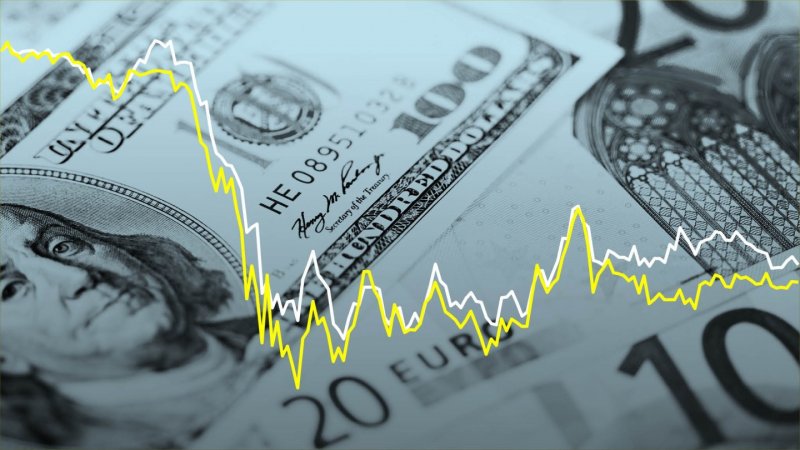
Economists are warning that the global economic system could face a deeper financial crisis in the final quarter of 2025, spanning October to December. Rising geopolitical tensions, tighter monetary policies in major economies, shifts in capital flows, and trade imbalances are key factors weakening financial stability. Declining liquidity, higher risk premiums, and falling investor confidence are increasing volatility in asset prices, amplifying instability in both financial and real sectors.
Monetary tightening by the U.S. Federal Reserve, the European Central Bank, and the People’s Bank of China is raising borrowing costs while slowing production and consumption. Persistent inflation is forcing central banks to maintain high interest rates, deepening the liquidity crunch. Meanwhile, strained trade relations and ongoing supply chain disruptions are slowing global growth.
To maintain stability, governments must coordinate fiscal and monetary policies effectively and identify risks early. Investors are advised to focus on portfolio diversification and accurate market analysis. Without such measures, expected financial shocks could spread through transmission channels, affecting both developed and developing economies and prompting structural adjustments in the real sector.
Azerbaijani economist and Member of Parliament Vugar Bayramov told News.Az that the global economic system is entering a new crisis phase driven by geopolitical tensions, structural economic challenges, and heightened market uncertainty, a situation that demands agile decision-making and strategic planning from both governments and investors.
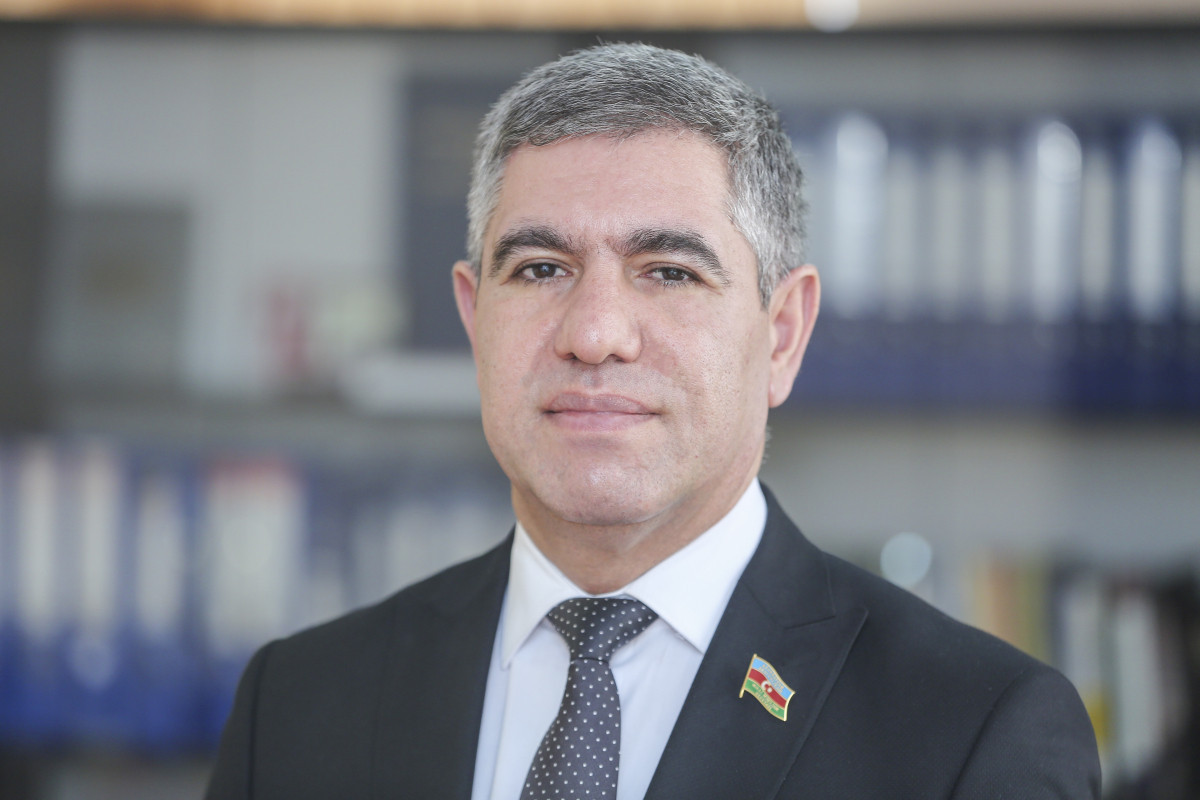
Photo: Vugar Bayramov, Azerbaijani economist, Member of Parliament
“The global economy is currently experiencing one of the most complex and turbulent periods of recent decades. Geopolitical shifts, structural imbalances in leading economies, and deepening uncertainty in financial markets signal the onset of a new and potentially prolonged crisis cycle," he said.
Bayramov explained that simultaneous developments in major economic powers such as the United States, China, and Europe extend beyond national borders, exerting both direct and indirect pressure on the global financial architecture.
“These dynamics are weakening international trade linkages, altering capital flows, and increasing risk levels in investment markets. In such a climate, timely and accurate risk assessment by states and investors becomes crucial. Responding swiftly to global economic shifts, adopting long-term strategic policies, and building adaptive mechanisms against potential shocks play a decisive role in maintaining macroeconomic stability and capitalizing on emerging opportunities,” he emphasized.
Another Azerbaijani economist, Eldaniz Amirov, highlighted three factors exacerbating the anticipated global financial crisis: China’s economic stagnation, the erosion of political and financial stability in Europe, and the worsening fiscal crisis in the United States.
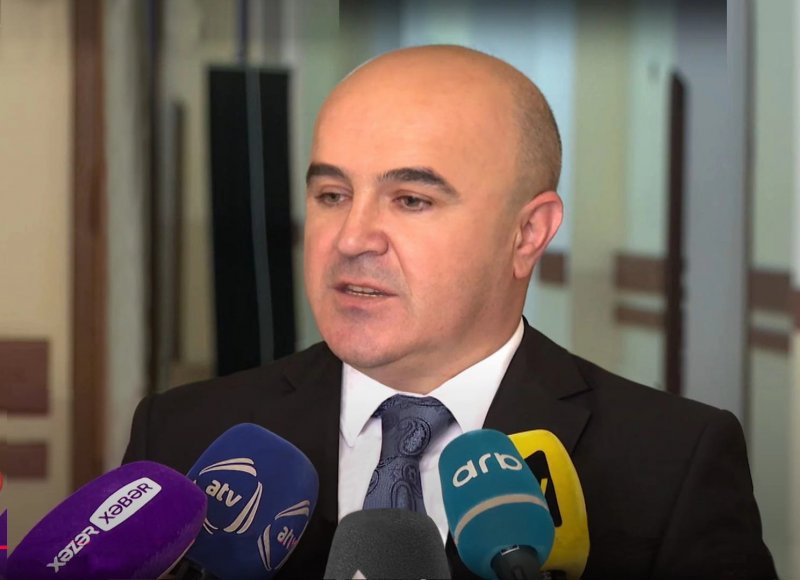
Photo: Eldaniz Amirov, Azerbaijani economist
“There are three main drivers deepening the expected financial downturn worldwide,” he said. “First is the ongoing stagnation in the Chinese economy. Second is the deterioration of political and financial stability across Europe. Third is the intensifying fiscal crisis in the United States,” the expert noted.
He added that the partial shutdown of the U.S. federal government has led to a decline in public procurement, a freeze in budgetary expenditures, and a slowdown in economic activity across multiple sectors. "This has amplified uncertainty for global investors, leading to a stronger flight to safety, with gold emerging as the most reliable investment asset. Gold prices are approaching historical highs, and if the current dynamics persist, they could surge to as much as $5,000 per ounce within the next year. This reflects a notable rise in investor risk aversion across global markets,” the expert pointed out.
Amirov added that economic situations in Europe and China are further aggravating global uncertainty.
“In France, the government is grappling with a direct fiscal crisis, rising interest burdens, widening budget deficits, and a broader shift in European economies toward a de facto war economy, all of which are disrupting capital circulation. In China, the sharp decline in demand in the real estate sector is deepening economic stagnation,” the expert explained.
“These developments are not confined to regional markets; they reverberate globally. Structural weaknesses in the world’s second-largest economy are weakening trade flows, straining global supply chains, and triggering volatility in commodity markets,” he concluded.
Despite these trends, Amirov said the likelihood of a full-scale, systemic global financial meltdown remains low. A gradual adjustment process is expected, though some deepening of instability is possible.
“If the Russia–Ukraine conflict does not escalate into a broader global confrontation, financial instability risks may gradually subside. Nevertheless, economic losses for many countries are inevitable. Slower GDP growth, declining investment inflows, and contracting consumer markets pose significant threats and create additional fiscal and structural burdens for economies worldwide,” he concluded.


Similar news