Central Asia’s resources expand globally with SOCAR expertise and BP investment



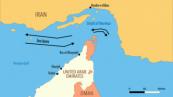
Amid the ongoing crisis surrounding the Strait of Hormuz, the global oil market is rapidly approaching a period of heightened turbulence. International analytical centres are reporting an unprecedented decline in global reserves: according to estimates by Morgan Stanley, reserve volumes fell by nearly 5 million barrels per day in March and April alone. Such a rapid market drawdown has not been seen even during previous energy shocks.
As a result, global commercial oil stocks have dropped to their lowest levels in the past eight years. In effect, this represents a buffer of roughly 100 days of global consumption — a development that is beginning to raise concerns not only among traders but also among the governments of the world’s largest economies, Forbes writes.
A particularly sensitive issue is the decline in OPEC production. In April, the cartel’s output fell to its lowest level in nearly four decades. Analysts warn that if the current trend continues, OECD countries could by autumn face the so-called “operational minimum” of reserves — a level at which oil logistics, refining, and supply stability begin to face serious disruption.
The OECD (Organisation for Economic Co-operation and Development) is an international economic organisation comprising 38 countries with developed market economies. Its stated goal is to promote sustainable economic growth, improve living standards, and expand global trade.
Against this backdrop, the geoeconomic configuration of the energy market is also changing rapidly. For Russia, which remains one of the largest oil suppliers outside the potential blockade zone around the Strait of Hormuz, the current situation creates additional opportunities.
However, an even more significant development is that the current crisis is effectively accelerating the formation of a new energy architecture across Eurasia. In this context, particular attention should be paid to recent developments in Uzbekistan.
Credit: BP
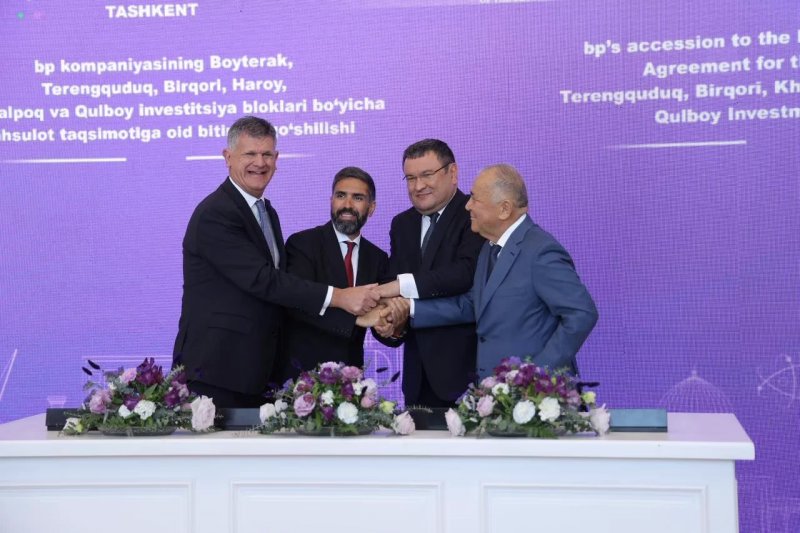
Britain’s BP has officially joined a major oil and gas project on the Ustyurt Plateau, becoming part of a production-sharing agreement for six promising blocks. The company acquired a 40 per cent stake, while Azerbaijan’s SOCAR and Uzbekneftegaz retained 30 per cent each. SOCAR remains the project operator.
According to Uzbek media reports, the agreement covers the Boyterak, Terengkuduk, Birkori, Kharoy, Karakalpak, and Kulboy blocks, located in the Ustyurt region of Karakalpakstan.
BP’s regional president for Azerbaijan, Georgia, and Türkiye, Giovanni Cristofoli, told journalists that the agreement had effectively ushered in a new era for the company. BP now has the opportunity, in cooperation with SOCAR and Uzbekneftegaz, to begin developing Uzbekistan’s vast resources.
“BP is expanding its upstream operations [exploration, drilling, and production], increasing activity in oil and gas, and we see Uzbekistan as one of the strategic areas where we can truly grow,” Cristofoli was quoted as saying by Uzbek media.
Seismic exploration is already under way as part of the project, yielding what BP describes as “remarkable data”.
It should be recalled that Uzbekistan’s Ministry of Energy, SOCAR, and Uzbekneftegaz signed the production-sharing agreement (PSA) on 24 July 2025 for a five-year term. SOCAR and BP had previously expressed interest in the Ustyurt region of Karakalpakstan. In May 2018, Uzbekneftegaz, SOCAR, and BP Exploration (Caspian Sea) signed a corresponding memorandum. In 2021, BP withdrew from plans to develop oil and gas fields in Ustyurt amid the global shift towards the “green transition”.
Credit: Report
BP’s participation itself is highly symbolic. Just a few years ago, the British energy giant was actively promoting a strategy of avoiding new hydrocarbon projects in favour of the green transition. Now, however, the company is effectively revising its previous course and returning to large-scale oil and gas exploration.
The reason is clear: the global market has once again recognised that hydrocarbons cannot be fully replaced in the coming decades, while energy security remains more important than political declarations.
Equally noteworthy is that the project is being implemented as a tripartite partnership involving BP, SOCAR, and Uzbekistan. This is no longer merely a commercial agreement; it reflects a new model of cooperation in Central Asia, where Azerbaijan is gradually emerging as one of the region’s key energy and technological intermediaries.
In this case, SOCAR is acting not only as an oil company but also as an instrument of Baku’s geoeconomic influence. In recent years, Azerbaijan has significantly expanded its presence in energy projects beyond its own fields — from Türkiye to Central Asia. Uzbekistan represents a logical continuation of this strategy.
Moreover, the emphasis is not solely on resource extraction. Representatives of both BP and SOCAR have separately highlighted technology, workforce development, and knowledge transfer. This is a critically important point. Today, Central Asia competes not only for investment but also for access to modern exploration technologies, digital modelling, and oilfield service solutions. Projects such as this therefore also serve as instruments for economic modernisation.
The Ustyurt region itself is attracting considerable interest. Preliminary estimates suggest it may contain vast hydrocarbon reserves — up to 100 million tonnes of oil and tens of billions of cubic metres of gas. If these forecasts are confirmed, Uzbekistan could significantly strengthen its position on the regional energy map.
More broadly, these developments underscore an important trend: the global energy crisis is gradually shifting investor attention towards relatively stable and politically predictable regions of Eurasia. Against the backdrop of instability in the Middle East, Central Asia is increasingly being viewed as a potential alternative for long-term investment in the oil and gas sector.
This is precisely why the BP-SOCAR-Uzbekneftegaz agreement goes far beyond a standard production-sharing arrangement. In effect, it marks the beginning of a new phase in Uzbekistan’s energy integration — combining Western capital, Azerbaijani expertise, and Uzbekistan’s resource base.
By Tural Heybatov


Similar news