Government reshuffles show Russia preparing for prolonged war - Expert opinions


By Sabina Alizade
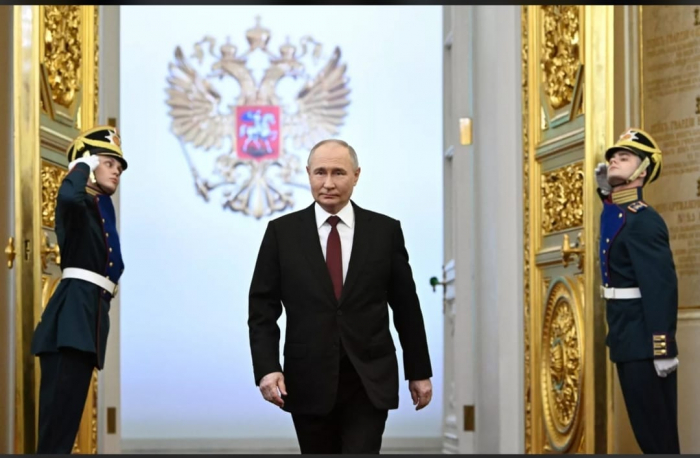
On 12 May, Russian President Vladimir Putin made a series of government reshuffles that have sparked extensive comments among experts. Many believe these changes indicate the country's preparation for a possible long-term war. One of the key decisions was the appointment of economist Andrey Belousov as new defence minister .
Belousov, known for his economic expertise and long-term collaboration with the Russian leader, emerges as an unexpected yet strategic choice by Putin. Previously serving as minister of economic development, his new appointment signals the Kremlin's intent to adapt the national economy to the conditions of a prolonged military conflict. This may also include efforts to combat corruption within the military-industrial complex (MIC), which is crucial for maintaining defence sector efficiency during wartime. Meanwhile, former Defence Minister Sergey Shoigu, who has dodged corruption charges, has assumed a pivotal role as secretary of the Security Council. His appointment not only underscores his influence but also highlights the significance of this position. Some analysts even refer to him as the de facto prime minister, considering his authority and the critical issues he will face. Belousov's appointment and other government reshuffles are not the only signs of shifts in Russian politics and security. The resignation of Nikolai Patrushev the former secretary of the Security Council, has drawn significant attention. His resignation is interpreted by some as a concession to one of the power factions within Russia, reflecting the ongoing struggle between the military and intelligence services. At the same time, the appointment of Patrushev's son as deputy prime minister may indicate Putin's attempt to maintain the balance within the political elite.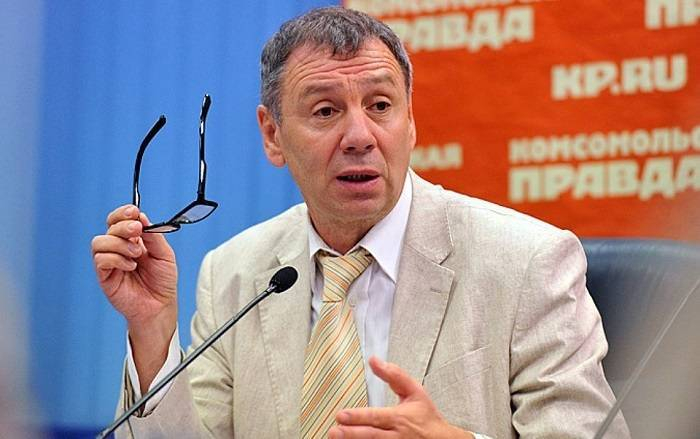 In a statement to News.Az, Russian state and public figure, diplomat, and political scientist Sergey Markov remarked that Vladimir Putin has largely retained the government's socio-economic segment because it is performing well. "Everyone knows that the Russian economy withstood the severe sanctions blow, the 'perfect sanctions storm,' organized by the Americans, the European Union, and the British. Moreover, the growth rate of the Russian economy is slightly higher than that of the EU, and even the US. The standard of living in Russia has not declined.
 But while the socio-economic segment remains unchanged, there are clear changes in the power segment, the most significant being the change of the defence minister. As Kremlin spokesman Dmitry Peskov stated, the defence minister has two main objectives. The first is to prevent the theft of funds allocated for defence, which have increased by 2.5 times. With the arrest of Deputy Defence Minister Timur Ivanov, we saw that corruption is quite rife there. Therefore, fighting corruption is one task." The second and more important task, as noted by the political scientist, is ensuring that the Russian army is innovative, modern, and armed with the latest weapons. Such an army is always victorious and responds swiftly to new challenges on the battlefield. "In terms of the pace of changes in weapon systems and the army, Russia must outpace the rest of the world and thus emerge victorious.
This is the innovation task set before Belousov." Andrey Belousov, one of the most prominent representatives of the government's economic segment (also known as a military Keynesian), has always advocated for the development of the economy's industrial sector through strong state conventions during military operations. Regarding the former Defence Minister Sergey Shoigu, the expert noted that he was not dismissed but rather promoted to the position of Security Council secretary. Shoigu achieved real management prowess, creating a new type of army in just one year. The army that withstood the Nazi-armed Ukrainian forces in 2023 is now even launching offensives against the West. "Russia does not want a long war. Russia is preparing for a long war. Russia knows well that if it is ready for a long war, the West will not want this long war. If Russia is not prepared for a long war, then the West will try to impose this long war on Russia. 'If you want peace, prepare for war,' says the wisdom of the ages," Markov stated.
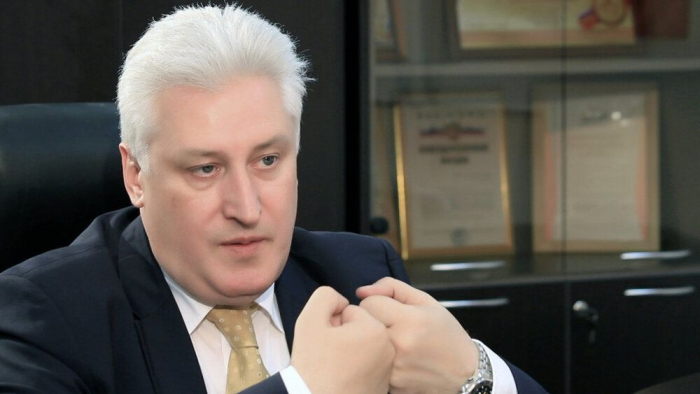 Russian journalist, military expert, editor-in-chief of Natsionalnaya Oborona magazine, and founder and director of the Analytical Centre of Global Arms Trade LLC, retired colonel Igor Korotchenko stated that the key appointments proposed by Russian President Vladimir Putin in the new government, particularly the unexpected but justified appointment of Andrey Belousov as the new defence minister were noteworthy. "Russia has allocated unprecedentedly large funds.
 This, of course, is related to the initiation of military operations in Ukraine and the overall confrontation between Russia and the West. However, the funds are significant, and the optimization of these financial expenses requires effective control. Additionally, it is clear that the defence-industrial complex should not just consume money but also present innovative solutions that could be needed in the civilian sectors of the industry in terms of high technologies and provide all the costs for national defence. In this regard, Belousov's important task will be fighting corruption." The arms race, everyone remembers the experience of the USSR, so despite the increase in military spending and defence allocations, we should not turn into an analogy of North Korea. From this perspective, the defence minister's task will be to control financial resources, their expenditure, and fight corruption and bureaucracy as efficiently as possible. The Russian expert noted that these points were actually highlighted during Belousov's confirmation procedure in the Federation Council. Belousov's systematic strategic vision is important. He is a cybernetics engineer by profession, an economist, and a proponent of strengthening the role of the state in the economy. Everyone in Russia links this appointment to the further enhancement of Russia's capabilities in military production and military power creation, including addressing forward movement problems during the special military operation. "As for the direct management of military operations against the Ukrainian armed forces, all issues related to the planning and execution of military operations, as well as ensuring the continuity and uninterrupted resolution of operations will be planned, executed, and managed by Chief of the General Staff of the Russian Armed Forces Valery Gerasimov.
Therefore, in this new configuration, we expect a significant strengthening of the Russian army and navy's capabilities, the arrival of new types of weapons, optimization of financial resources, and an enhanced social component in terms of care for soldiers and officers directly involved in military operations during combat operations against the Ukrainian armed forces," Korotchenko said. He also emphasized that the former Defence Minister Sergey Shoigu has received a new appointment — he is now secretary of the Security Council with the president's nomenclature and will oversee Russia's arms exports. "Despite most of the weapons now going directly to the combat zone, there are still orders for Russian weapons, and arms sales are always geopolitics. These are close ties between states. Russia not only sells weapons but also exports national security to partner countries that establish relevant military-technical cooperation. In general, we have the Security Council and its apparatus. They prepare the most important decisions in terms of trend analysis — proposing to the president, ensuring the passage of relevant proposals, and holding relevant meetings of the Security Council. As they say, with the extensive experience gained in the Ministry of Defence under real combat conditions, Shoigu will be able to fully exercise his powers in the apparatus of the Security Council under the real war conditions we are currently in." "Now there are popular comments in the West that Belousov's appointment as defence minister signifies Russia's desire to prepare for a long, long war. No one intends to wage a prolonged war. Again, the main thing is to optimize resources so that the funds allocated to the Ministry of Defence are spent as efficiently as possible," he added.
Drawing attention to Denis Manturov's appointment as first deputy prime minister , the political scientist noted that he manages our industry and deals with trade and economic relations with many countries. This, of course, recognizes his powers. Previously serving as a minister, Manturov's replacement by the governor of Kaliningrad Region is notable. Essentially, he left the Ministry of Industry and Trade and now returns to the ministerial position and will closely cooperate with Manturov. Naturally, the economy is one of the new government's priority directions. "Here, Putin tried to maintain continuity by promoting several ministers who were deputy prime ministers. It is the right decision not to disrupt the existing structure. Because overall, the government has performed well internationally. Under large-scale sanctions, not only did Russia not collapse, it also maintained its economy, stability, and dynamic development. In these conditions, the government needs only fine-tuning, not reconstruction from scratch, and that is what the president did. Another key appointment I want to highlight is the appointment of the governor of Tula Region, Alexey Dyumin, as the presidential aide overseeing the defence-industrial complex. He is a very strong manager. Before his governorship, he led Tula Region, the main centre of Russia's defence production. There are many military and defence plants. Dyumin has experience working and serving in the Ministry of Defence. He led special operations forces, so he is a versatile, highly qualified, and skilled person. His appointment to the immediate Kremlin as a close associate of Putin is also a very good personnel decision.
Today, the main job is for the defence industry to work for the army so that the army can achieve decisive victories during the fighting in Ukraine." Regarding the general progress of Russia's military development, last year it was decided to increase the number of armed forces by 500,000 people. Today, two military districts are being re-established: the Moscow Military District and the Leningrad Military District. This is due to the accession of previously neutral countries like Finland and Sweden to NATO. Under these conditions, it was necessary to strengthen the groupings in these directions. Given the increased military activity of the North Atlantic alliance near Russia's borders, we must ensure Russia's security as efficiently as possible. Therefore, overall, the military component in the economy will naturally increase, but once again, we will not become North Korea. All sectors of the economy will develop dynamically and harmoniously. Even under sanctions, we have good currency revenues from oil and gas exports. Thus, the Russian economy is geared towards new development frontiers to continue fulfilling its primary tasks, moving forward confidently, improving living standards, and achieving the position of one of the world's power centres. This power is ensured not only by military potential but also by a very good economic foundation for development."
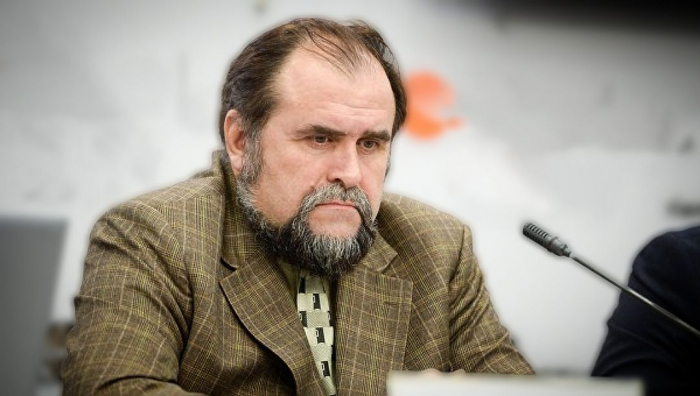 Meanwhile, Ukrainian expert Oleksandr Orkimenko believes that the reshuffles in the Russian government confirm that Putin's power has completely collapsed. "Currently, this confirms once again that Putin is trying to win, he has lost, and has completely lost control. Now, in fact, power will not be personally controlled by Putin. It will be controlled by another Kremlin force, and they will place different people. In general, the situation in the Kremlin is now similar to that of the USSR. Like the struggles between Khrushchev and Brezhnev. What we see is a classic power battle. From an economic standpoint, Rosstat's official data show that sanctions are killing the Russian economy. For example, inflation in the Russian economy is very high now. Moreover, they are trying to minimize it as much as possible. That's why Putin is now going to China to ask for money. The Russian economy cannot survive without China's help. He is going to ask China for money to save Russia." The Ukrainian expert regretfully notes that the war's prolongation became evident back in 2020. Ukraine had been preparing for a long war for a considerable time. Ukrainian President Volodymyr Zelensky said that unfortunately, the war will be long. So everything is like in the Soviet Union. "It is easy to start a war, but difficult to end it. But the fact is that Putin has no power. By the way, the arrest of Kuznetsov, a top Defence Ministry officer, shows that he was undermining Shoigu.
 This confirms that Shoigu is not just Putin's personal friend, but in fact, he is Putin's shadow. The fact that the closest person is undermining him is a fact. He belongs to another Kremlin tower, and the games there will be a little different. This does not mean the war will end. No. Look, there are some Russian oligarchs who are making good money on this war. So unfortunately, the war continues. But Shoigu's resignation shows that the Russian army is losing this war. And now we really need to completely defeat Russia, and for this, we need military assistance from the US and NATO countries. Now, in the war, the main thing is still weapons. People are important, but weapons are more important."
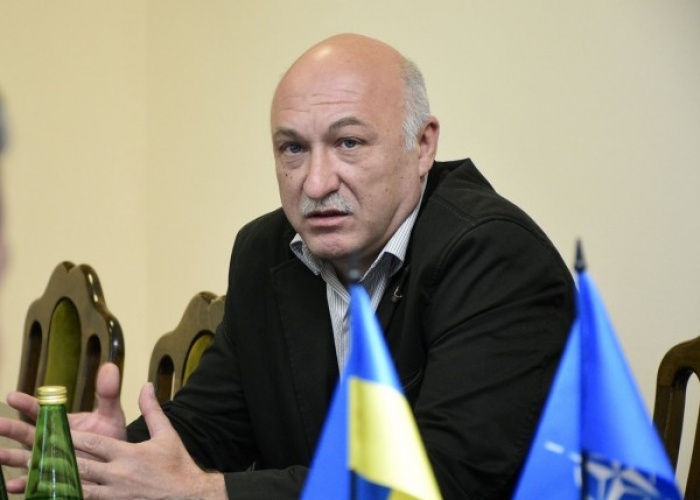 Ukrainian military expert Pavel Lakiychuk said that the reshuffles in the Russian government following the inauguration are more ritualistic than global, although they partly reflect the "Kremlin towers' struggle." "The appointment of the 'civilian economist' Andrei Belousov as defence minister is not unprecedented. Let’s recall the economist Serdyukov. Although it is not customary to speak well of him in Russia now, he managed to implement a number of unexpected radical reforms in the Russian military machine: military-administrative reform, reorganization and reduction of central military management bodies, reorganization of the reserve system and reservist training system, outsourcing of the Russian Armed Forces supply system, and the launch of a rearmament programme. Although Serdyukov 'ended badly,' a 'typical Soviet general' would not have implemented such a turnaround. The Shoigu era has become an era of stagnation for the Russian army. The new army manager Belousov made an interesting statement that there is no 'mobilization of the economy' in a vacuum, but there is 'mobilization of society.' This is a serious bid to shift Russian society onto a war footing, which Putin has been demanding from his government. It is not about preparing the economy for a long war, but about changing the paradigm of society and the army as a whole. War becomes the goal, the main content, and the driving force of Russian society. Launching such a process is difficult but possible. However, slowing it down and stopping it will be even more challenging," Lakiychuk noted.


Similar news