Hazel Çağan Elbir: Armenia’s national identity Is being built around a terrorist legacy - INTERVIEW


In recent years, the glorification of controversial historical figures in Armenia has raised serious concerns among regional observers and policymakers.
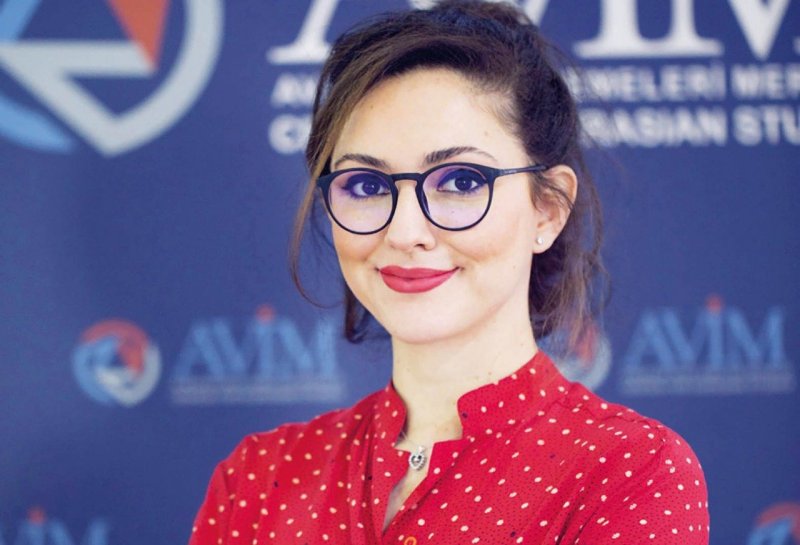
One such figure is Monte Melkonian, a member of the Armenian Secret Army for the Liberation of Armenia (ASALA), who was responsible for deadly terrorist attacks and later took part in military operations during the Karabakh conflict. Despite this legacy, Melkonian is celebrated as a national hero in Armenia, with military institutions named in his honor and official commemorations held regularly. In an exclusive interview with News.Az, Hazel Çağan Elbir, an analyst at the Turkish Center for Eurasian Studies, shares her expert perspective on how this glorification affects regional security, Armenia’s national identity, and the potential for reconciliation in the South Caucasus. She also reflects on the evolving rhetoric of Armenian Prime Minister Nikol Pashinyan and whether recent developments signal a genuine shift toward peace and regional cooperation.
– In your opinion, how does the glorification of terrorists such as Monte Melkonian in Armenia affect regional security and inter-state relations?
– On July 31, 1980, in Athens, Galip Özmen, the Administrative Attaché of the Turkish Embassy, and his daughter Neslihan Özmen were brutally murdered by a terrorist from the Armenian Secret Army for the Liberation of Armenia (ASALA), Monte Melkonian. Years later, in 1992, this same terrorist became responsible for the killings of Azerbaijanis, including dozens of children, during the Karabakh war. For many years, Monte Melkonian has been revered by the Armenian state as a "national hero." After his death, he was awarded the highest military honors of the now-defunct so-called "Nagorno-Karabakh Republic" and the Republic of Armenia, including the Military Cross First Class and the Golden Eagle Medal. He was buried with full military honors on June 19, 1993, at the Yerablur Military Pantheon. But that was not the end. On July 28, 1994, a military training unit was named after him.
Later, according to the Government Decree No. 983 of August 10, 2017, the name of the Armenian Military Academy was officially changed to the Monte Melkonian Military College Foundation. On September 1, 2017, a new campus of the Monte Melkonian Military College was inaugurated in Dilijan to mark the start of the academic year. During the ceremony, the flags of the Monte Melkonian Military College and the Republic of Armenia were raised.
The Armenian Minister of Defense declared the motto of the college to be “The Path to Heights.” Monte Melkonian’s birthday, November 25, was declared a public holiday. This information remains publicly available on the official website of the Armenian Armed Forces. If such unwavering dedication to a terrorist—up to naming a military college after him—is not a threat to regional states, then what is?
– How would you assess the role of Monte Melkonian’s glorification in shaping Armenia’s national identity?
– Just imagine: Armenia's official page on the social network X (formerly Twitter) has repeatedly published materials related to Monte Melkonian, which reflects a broader ideological strategy and the historical narrative being shaped in the country. In both 2016 and 2021, he was honored as a national hero and a prominent symbol of Armenian identity. The 2016 post quoted Melkonian's well-known call: “Don’t raise a glass for me, but continue my cause.” This statement underscores the long-term orientation of nationalist discourse toward preserving the ideals that he is believed to have embodied. As a terrorist, Monte Melkonian invokes emotional mobilization and audience engagement, suggesting that his legacy should guide future generations.
In the 2021 post, the emphasis shifted to personalizing the heroic image: “Today is the birthday of Monte Melkonian – national hero, legend of the Armenian nation, Commander. His name will forever remain in Armenia’s history. We bow before the immortal hero!” This approach strengthens the mythologization of his persona, reinforcing Melkonian’s symbolic status as a figure supposedly tied to the national spirit and historical resilience. These publications deserve attention as part of a broader context in which national identity is shaped through the glorification of controversial historical figures. It is important to note that the emphasis on Melkonian is not limited to internal propaganda but also serves as a tool of external positioning, aiming to reinforce Armenia’s international image through the lens of a “struggle for ideals.”
– How do you assess Nikol Pashinyan’s changing rhetoric and initiatives aimed at rethinking historical narratives and addressing monuments symbolizing a conflict-driven past? Could this mark the beginning of a new era in Armenian politics, focused on reconciliation and regional cooperation?
– I would say this: since 2021, the terrorist Monte Melkonian has largely disappeared from Armenian news websites on his birthday—except for a few laudatory materials that obscure his past. In this context, the recent rhetoric of Armenian Prime Minister Nikol Pashinyan is particularly noteworthy, as it increasingly aligns, at least partially, with the positions of Türkiye and Azerbaijan. For instance, on April 24, 2023, Pashinyan called for the renovation of Circular Park in Yerevan, where a so-called monument to the terrorists involved in Operation “Nemesis” is located. On September 20, 2024, a session of the Yerevan Municipality, chaired by Pashinyan, was held to discuss several urban development projects.
Among the topics was the future of Circular Park, where a monument stands commemorating members of the “Nemesis” operation—a terrorist campaign responsible for the assassinations of Turkish officials and Armenians in Anatolia. These recent moves by Pashinyan have drawn fierce and sometimes offensive criticism from the Armenian diaspora, who have labeled them “radical.” One example is his statement: “We are offended when someone uses the term ‘Western Azerbaijan.’ But when we say ‘Western Armenia,’ we don't consider that it might be offensive to others?” This shift away from a compulsive fixation on the past, and an attempt to create a new, modern, and peaceful atmosphere under Pashinyan’s leadership, is cause for hope. One can only hope that Armenia, under Pashinyan, will continue to decisively move away from a policy of glorifying terror, foster good neighborly relations, and open up to regional cooperation and peace.


Similar news