Hazel Çağan Elbir: “No peace in Caucasus without Türkiye–Azerbaijan axis” - INTERVIEW



The South Caucasus is experiencing a rare moment of profound geopolitical re-evaluation. Since Azerbaijan’s victory in the 44-day Patriotic War in 2020, the region has begun moving beyond its traditional role as a “crossroads of external interests” and started forming its own security architecture, where national agency, strategic planning, and realism are the new guiding principles. In this context, the role of Türkiye, a country that combines political will, economic strength, and deep historical and cultural ties to the region, has become both visible and defining.
It is precisely the Türkiye–Azerbaijan strategic alliance, strengthened by the experience of the Second Karabakh War and the long-standing principle of “one nation – two states,” that has become the foundation of this new regional configuration. It has shifted the familiar balance of power, prompted many external actors to reassess the Caucasus, and raised a central question: who today truly understands the dynamics of the region, and who continues to interpret developments through outdated frameworks and diaspora-driven narratives?
In this environment, the insights of those deeply immersed in regional realities and guided by international law — not politicized constructs — are particularly valuable. The Ankara Center for Eurasian Studies (AVİM) has long served as one such platform, providing expert analysis that explains changes, contextualizes their logic, and assesses long-term consequences.
Today, News.Az speaks with Hazel Çağan Elbir, a Turkish analyst and AVİM researcher, whose work illuminates why the strategic alliance between Ankara and Baku has become a key pillar of sustainable security in the South Caucasus, how Türkiye develops its foreign policy beyond simplistic “nationalist” narratives, and why ignoring such analytical centers makes it impossible to fully understand the region’s dynamics.
– Ms. Elbir, how do you assess the role of the Türkiye–Azerbaijan strategic alliance in contemporary South Caucasus dynamics?

Source: Trend
– The strategic alliance between Türkiye and Azerbaijan today is not merely a “regional partnership” but the core structural element of the new security architecture in the South Caucasus. For an outside observer, the phrase “one nation – two states” may sound like a beautiful metaphor, but in reality, it describes a much deeper phenomenon: historically interconnected societies, a shared political culture of security, and a common vision for the region’s future.
The Second Karabakh War was a moment of truth. Ankara did not limit itself to symbolic gestures of solidarity. Türkiye supported Azerbaijan diplomatically, militarily-technically, and politically, consistently emphasizing that the issue was not about revising borders but about restoring the internationally recognized status quo. For the South Caucasus, this was a turning point — the region ceased to be a “grey zone” of competing external powers and began building its own, more autonomous security system.
Today, the Türkiye–Azerbaijan alliance functions as a stabilizing force. It does not close the door to any actor — not the EU, the US, Russia, or the countries of the Global South. On the contrary, it sets the conditions: cooperation is possible only if it is built on respect for territorial integrity, sovereignty, and a realistic understanding of post-2020 political realities. In this sense, the Ankara–Baku alliance is not an obstacle to peace but the foundation without which a sustainable settlement in the Caucasus is simply impossible.
– Some international experts argue that Türkiye has tied the normalization process with Armenia to Azerbaijan’s position. Can this be seen as Ankara’s dependence on Baku?
Source: APA
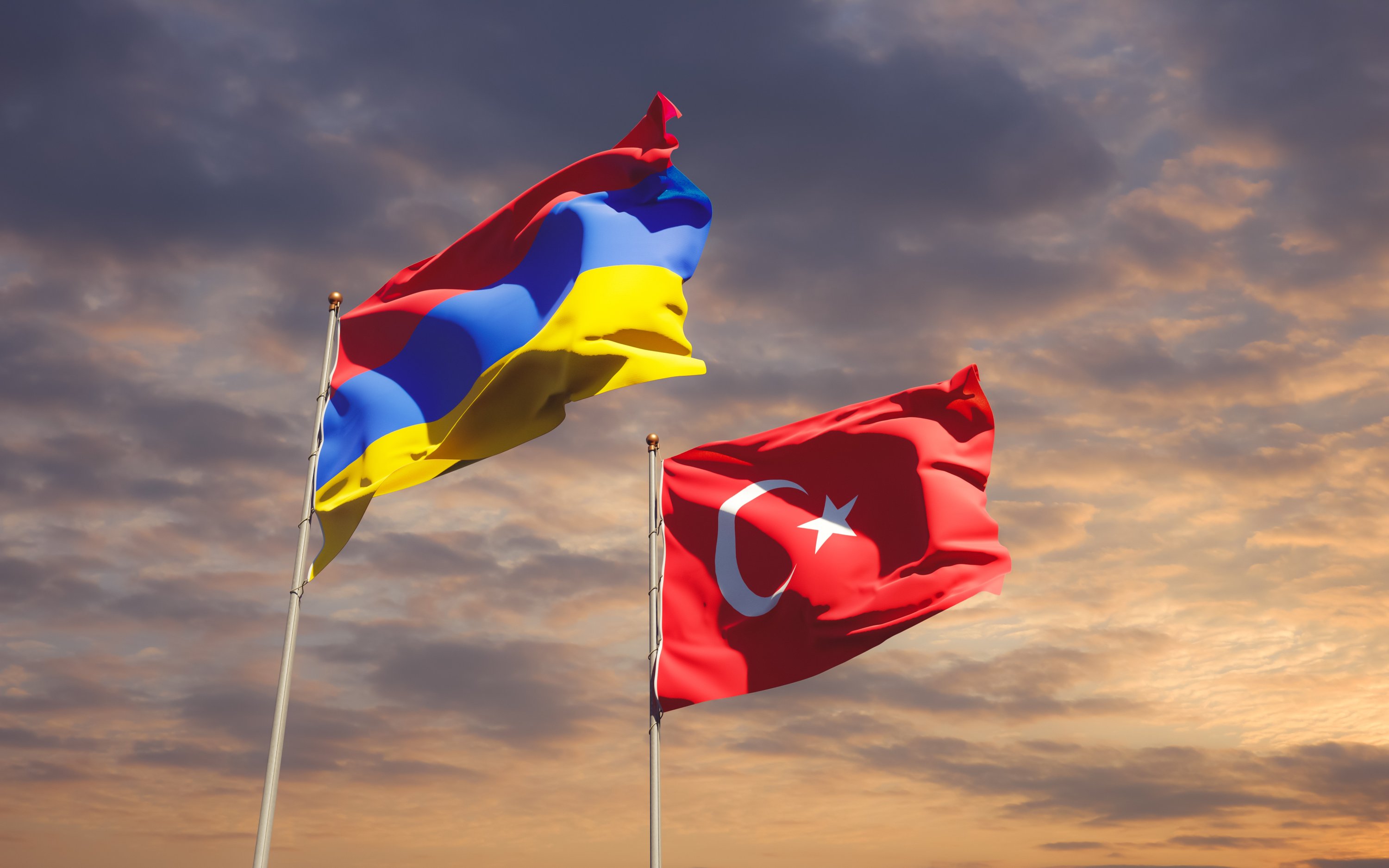
– From the outside, this is sometimes portrayed in a caricatured way — as though Ankara is “waiting for a signal” from Baku before taking any step toward Yerevan. But to understand the real picture, one must look at the long historical trajectory. For decades, the unresolved Armenian–Azerbaijani conflict was the key source of instability in the Caucasus. Türkiye cannot and does not want to build a separate “Türkiye–Armenia agenda” while ignoring this fundamental fact.
The linkage between normalization with Armenia and the peace process between Baku and Yerevan is not political “dependence” but a conscious strategic choice. Türkiye clearly understands that any attempt to “step over” the issue of Azerbaijan’s territorial integrity would not lead to peace but to a new cycle of mistrust and revanchism.
Therefore, Ankara follows a simple logic: sustainable normalization is possible only after Armenia definitively recognizes borders, renounces territorial claims, and formalizes this in legally binding formats.
The philosophy of “one nation – two states” here manifests not as a hierarchy but as horizontal coordination of strategies. Türkiye and Azerbaijan do not dictate decisions to one another; they synchronize steps based on shared threats and objectives. This is a model where trust — political, military, societal — is the key resource. And it is precisely this trust that distinguishes Türkiye–Azerbaijan coordination from many other “alliances” across Eurasia.
– How do you view the claims by some Western analysts that Türkiye’s foreign policy is limited to nationalist rhetoric and hinders its regional leadership?
Source: AA
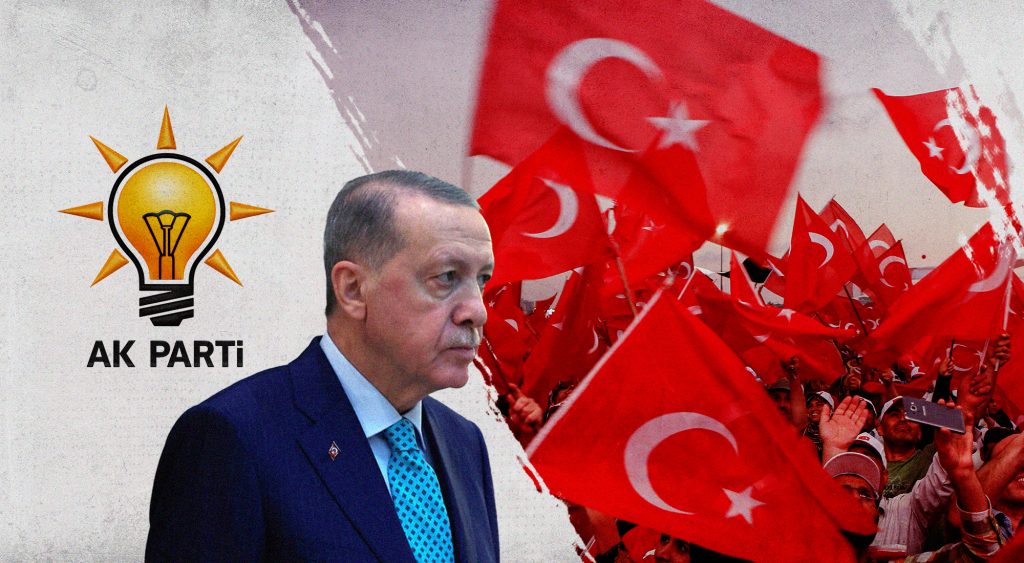
– Such claims often arise not from deep analysis of Turkish foreign policy but from Cold War inertia, diaspora-driven narratives, and domestic political debates within Western states. Today, Türkiye is an autonomous center of power.
After the end of the Cold War, Turkish foreign policy underwent a serious transformation. Instead of a linear orientation toward a single bloc, the concept of strategic autonomy emerged. Türkiye maintains simultaneous relations with NATO, Russia, the Middle East, the Caucasus, the Balkans, Central Asia, and Africa, aiming to transform its geography into a network of interconnected corridors: energy, transport, and technology.
National identity is undoubtedly important for Turkish society, but in practice — not in headlines — it is clear that key decisions are based on rational calculation. Pipeline projects, transport corridors, participation in peacekeeping missions, the grain deal, mediation on various diplomatic tracks; these are elements of a sophisticated geopolitical strategy, not “nationalist symbolism.”
When Western analysts reduce everything to “rhetoric,” they oversimplify the picture to the level of a political slogan. In reality, Türkiye acts as an actor that, first, seeks to minimize risks near its borders, and second, converts its geography into political influence. This makes it an inconvenient but predictable partner: Ankara openly articulates its interests and consistently follows them.


Similar news